Giraffe Facts
"A giraffe's tongue can be about 18 to 20 inches long."
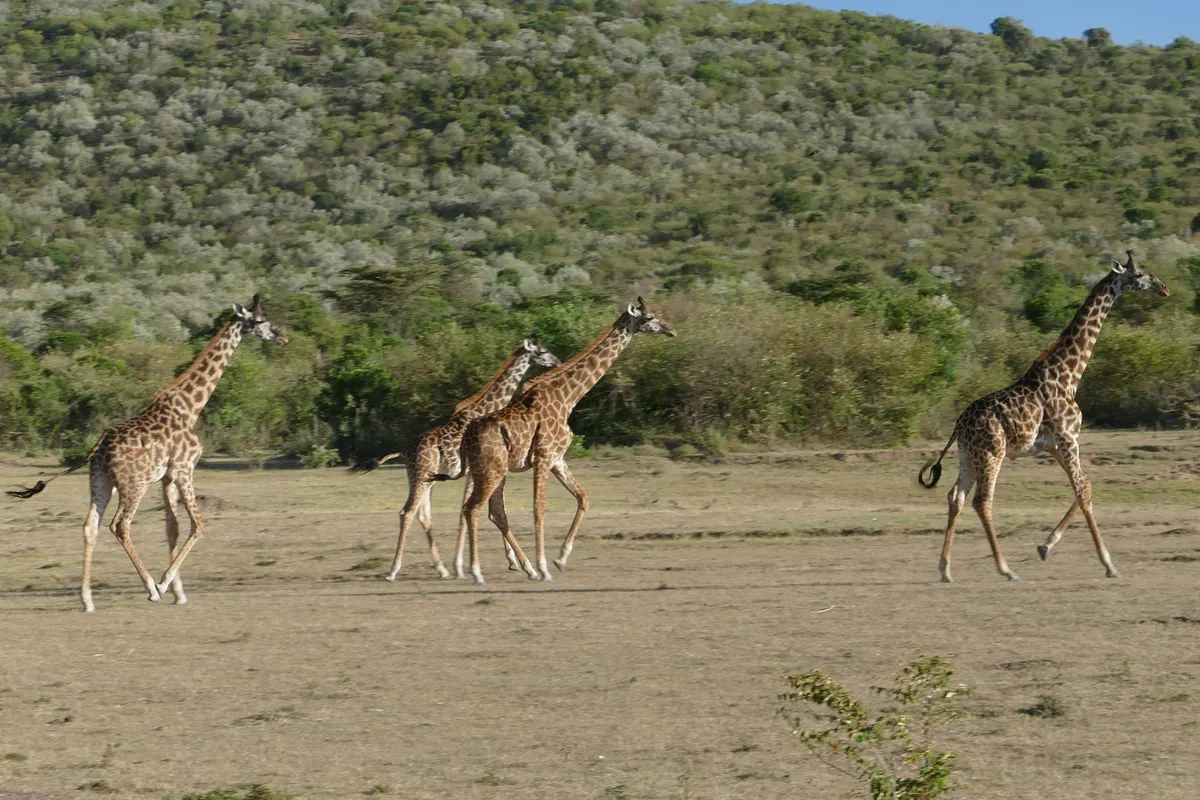
Giraffes are the tallest land animals on Earth. They use their long necks and tongues to browse leaves high in trees and live in loose herds across African...
Loading page content

"A giraffe's tongue can be about 18 to 20 inches long."
Giraffes are the tallest land animals on Earth. They use their long necks and tongues to browse leaves high in trees and live in loose herds across African...
Explore giraffe photos for learning and classroom observation, from high browsing and calf care to wide savanna scenes.
Click any photo to view it larger. 8 images available.
Core article
Habitat, diet, behavior, and more — everything on one page.
Towering above the acacia canopies of the African savanna, the giraffe stands as a living monument to the extremes of evolutionary engineering. As the tallest terrestrial animal on the planet, its radical morphology—defined by stilt-like legs and a neck that defies gravity—allows it to exploit a biological niche entirely out of reach for any other herbivore. Yet, maintaining such a massive, vertical structure requires astonishing internal physiological adaptations, particularly a cardiovascular system operating at pressures that would instantly kill a human.
The giraffe is formally classified within the kingdom Animalia, phylum Chordata, class Mammalia, and the order Artiodactyla (even-toed ungulates). It belongs to the family Giraffidae, an ancient lineage that today contains only one other living relative: the elusive, forest-dwelling okapi of Central Africa.
Historically considered a single species (Giraffa camelopardalis) with numerous subspecies, recent advanced genomic analyses have heavily disrupted this consensus. Many modern taxonomists and conservation organizations now recognize up to four distinct species of giraffe (the Northern giraffe, Southern giraffe, Reticulated giraffe, and Masai giraffe).
Evolutionarily, the Giraffidae family emerged during the Miocene epoch. The radical elongation of the neck and limbs is a classic example of directional selection. Biologists hypothesize this evolution was driven by a combination of intense foraging competition (allowing giraffes to browse on foliage untouched by smaller ungulates) and sexual selection, as males with longer, heavier necks consistently dominate reproductive combat.
The physical dimensions of a mature giraffe are staggering. Adult males can attain heights of 14 to 19 feet, with females being slightly smaller, and weights ranging massively from 1,200 to an imposing 4,200 pounds.
Despite its tremendous length (frequently exceeding 6 feet), the giraffe’s neck contains exactly seven cervical vertebrae, the exact same number found in almost all mammals, including humans. The difference lies in the extreme elongation of each individual bone. Their skull is adorned with ossicones—horn-like structures formed from ossified cartilage covered in skin, which are present in both sexes. Their coat features a spectacular, geometric pattern of brown, rust, or nearly black patches separated by a network of light hair, providing excellent disruptive camouflage against the dappled light of woodland environments.
The internal anatomy is a fascinating example of biological hydraulics. To pump blood vertically up that immense neck against the pull of gravity and supply the brain, the giraffe possesses a massive, highly muscular heart weighing up to 25 pounds, generating a resting blood pressure roughly double that of an average human. Conversely, when a giraffe lowers its head to drink, a highly specialized network of elastic blood vessels in the upper neck (the rete mirabile) acts as a pressure-relief valve, preventing the sudden surge of blood from rupturing the brain's delicate capillaries.

The geographic distribution of the giraffe is completely endemic to the African continent. While historically roaming across vast tracts of North and West Africa, their modern range is highly fragmented, concentrated primarily in sub-Saharan East and Southern Africa, with key populations in Kenya, Tanzania, Namibia, Botswana, and South Africa (and a tiny, critically endangered population of West African giraffes in Niger).
They exhibit a strong preference for open, xeric biomes. Their optimal habitats include expansive savannas, dry open woodlands, and semi-arid scrublands. They specifically avoid dense, closed-canopy tropical forests where their immense height becomes a severe encumbrance, and they generally require environments with an abundance of tall, broadleaf deciduous trees.

As an obligate herbivore, the giraffe is a highly specialized, high-level browser. Its unique height grants it exclusive access to the uppermost canopy strata of the savanna, effectively eliminating interspecific competition for food with shorter ungulates like impalas and zebras.
Their diet consists primarily of leaves, tender shoots, flowers, and seed pods, with a marked preference for various species of Acacia trees. Acacia foliage is highly nutritious but heavily defended by long, lethal thorns. To harvest this treacherous food source, the giraffe employs a remarkably adapted, prehensile tongue. Measuring 18 to 20 inches in length and pigmented dark blue-black (likely to prevent sunburn during extensive daytime foraging), the tongue dexterously slithers around thorns to grasp and strip leaves from the branches. Furthermore, their saliva is highly viscous, heavily coating any swallowed thorns to protect the digestive tract.
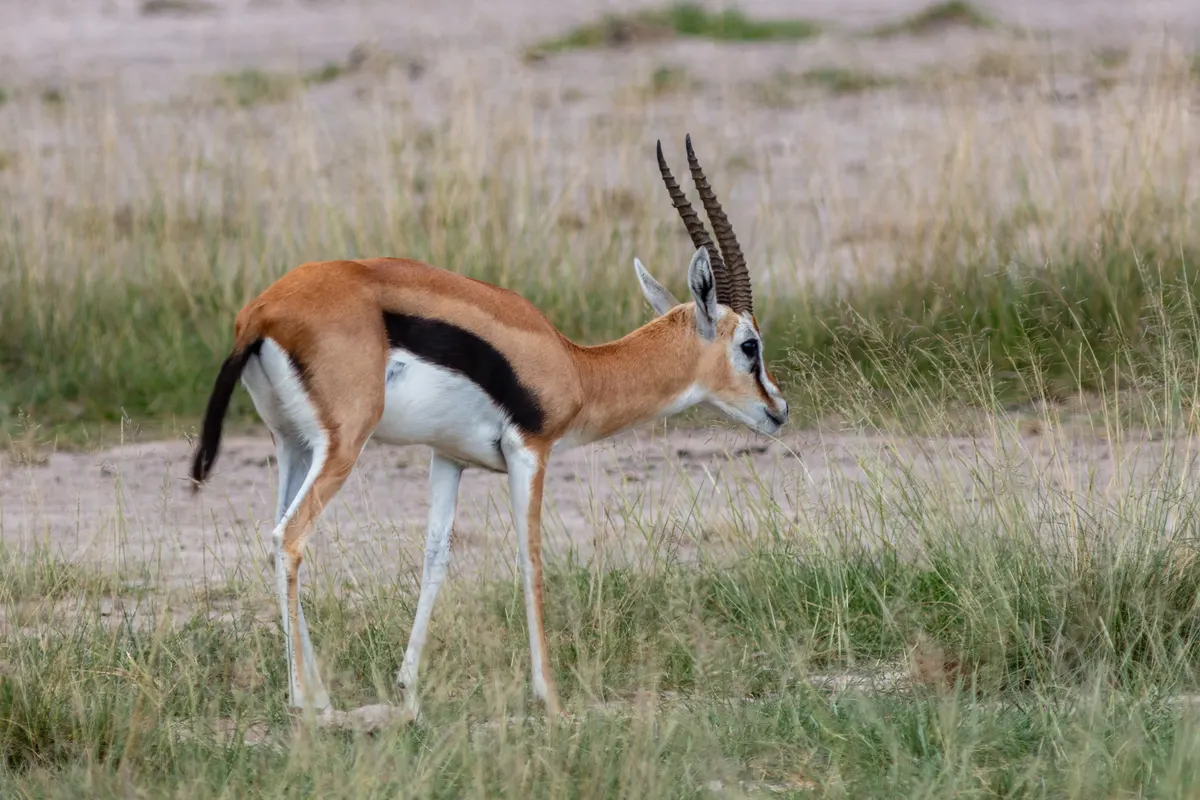
As ruminants, they possess a complex, four-chambered stomach to ferment and extract nutrients from fibrous foliage. They spend hours ruminating (chewing cud). Much like desert gazelles, giraffes are highly efficient at extracting hydration directly from their leafy diet, allowing them to survive for days or weeks without visiting a standing water source—a critical advantage in arid environments where waterholes are prime ambush sites for apex predators.

Giraffes are gregarious animals, but their social structure is characterized as a "fission-fusion" system. They form loose, open herds that lack strong hierarchical leadership or permanent membership. Individuals, particularly females, frequently move between different groups depending on resource availability and local ecology, though mothers and their recent calves form strong, temporary bonds.
Because of their immense size, adult giraffes have few natural predators; only large prides of lions or massive crocodiles pose a legitimate threat, and a well-placed kick from a giraffe's heavy hoof can easily shatter a lion's skull. Consequently, their behavior is generally calm and watchful, utilizing their incredible height and acute vision to scan the horizon for threats, often inadvertently acting as an early-warning system for other savanna prey species.
Reproductive competition among males, however, is intensely violent. Bulls engage in a specialized form of combat known as "necking." Standing side-by-side, they swing their massive heads and heavy necks like medieval flails, delivering devastating, bone-jarring blows to the opponent's ribs and flanks. These battles determine dominance and secure exclusive mating rights.

Following a lengthy gestation period of approximately 15 months (roughly 450 days), the female gives birth, remarkably, while standing up. The neonate calf experiences a dramatic entrance into the world, dropping nearly 6 feet to the ground, which effectively severs the umbilical cord and shocks the calf into taking its first breath.
Despite the rough landing, the calf is highly precocial. Within an hour, the 6-foot-tall, 150-pound infant is standing, nursing, and capable of walking. This rapid mobility is essential for survival on a predator-dense savanna. Unlike gazelles that hide their young, giraffes employ a unique "crèche" system; multiple females will pool their calves together in a specific area, allowing one or two mothers to stand guard while the others disperse to browse.
Calves face astronomical mortality rates during their first six months, frequently falling prey to lions, leopards, and hyenas. If they survive to adulthood and reach their full formidable size, wild giraffes can achieve lifespans of 20 to 25 years.
(Population and conservation trend data sourced from the IUCN Red List of Threatened Species)
While often perceived as abundant due to their high visibility in major national parks, giraffes are undergoing a devastating, frequently overlooked population collapse—a phenomenon biologists term a "silent extinction." The IUCN currently lists the overarching species as "Vulnerable," with global populations plummeting by nearly 30% over the last three decades, and several specific subspecies classified as "Endangered" or "Critically Endangered."
The primary drivers of this crisis are severe, human-induced habitat loss and fragmentation. The relentless expansion of agriculture, pastoralism, and human settlements rapidly degrades the savanna ecosystems and severs historical migration corridors. Furthermore, they suffer heavily from poaching; in many regions, they are illegally hunted with wire snares for bushmeat to feed impoverished local populations, and occasionally for their tails and pelts.
A giraffe's tongue can be about 18 to 20 inches long.
Giraffes are the tallest land animals in the world.
Each giraffe has a unique patch pattern.
Newborn calves can stand not long after birth.
Giraffes sleep only for short periods at a time.
Male giraffes sometimes swing their necks in contests called necking.
Select a question to reveal the answer.
A giraffe is a tall African mammal with a very long neck and legs. It is the tallest land animal on Earth.
Giraffes live in African savannas, open woodlands, and grasslands where trees grow far apart.
Giraffes are herbivores. They mainly eat leaves, shoots, flowers, and seed pods from tall trees such as acacias.
Adult giraffes can grow to about 14 to 19 feet tall. Males are usually taller than females.
A giraffe's long tongue helps it pull leaves from thorny branches high above the ground.
A baby giraffe is called a calf. Calves can stand and walk soon after they are born.
Giraffes usually live in loose groups called herds. The group may change as animals move around for food.
Giraffes are listed as Vulnerable overall. Habitat loss and broken-up migration routes have reduced some wild populations.