A walrus is a creature built for extreme cold and deep diving, characterized by immense bulk. Adult males (bulls) are significantly larger than females (cows), reaching lengths of 11.5 feet and weighing a staggering 3,700 pounds—heavier than a compact car. To survive the freezing Arctic waters, a walrus is insulated by a layer of highly vascularized blubber that can be up to 6 inches thick, comprising nearly a third of the animal's total body weight.
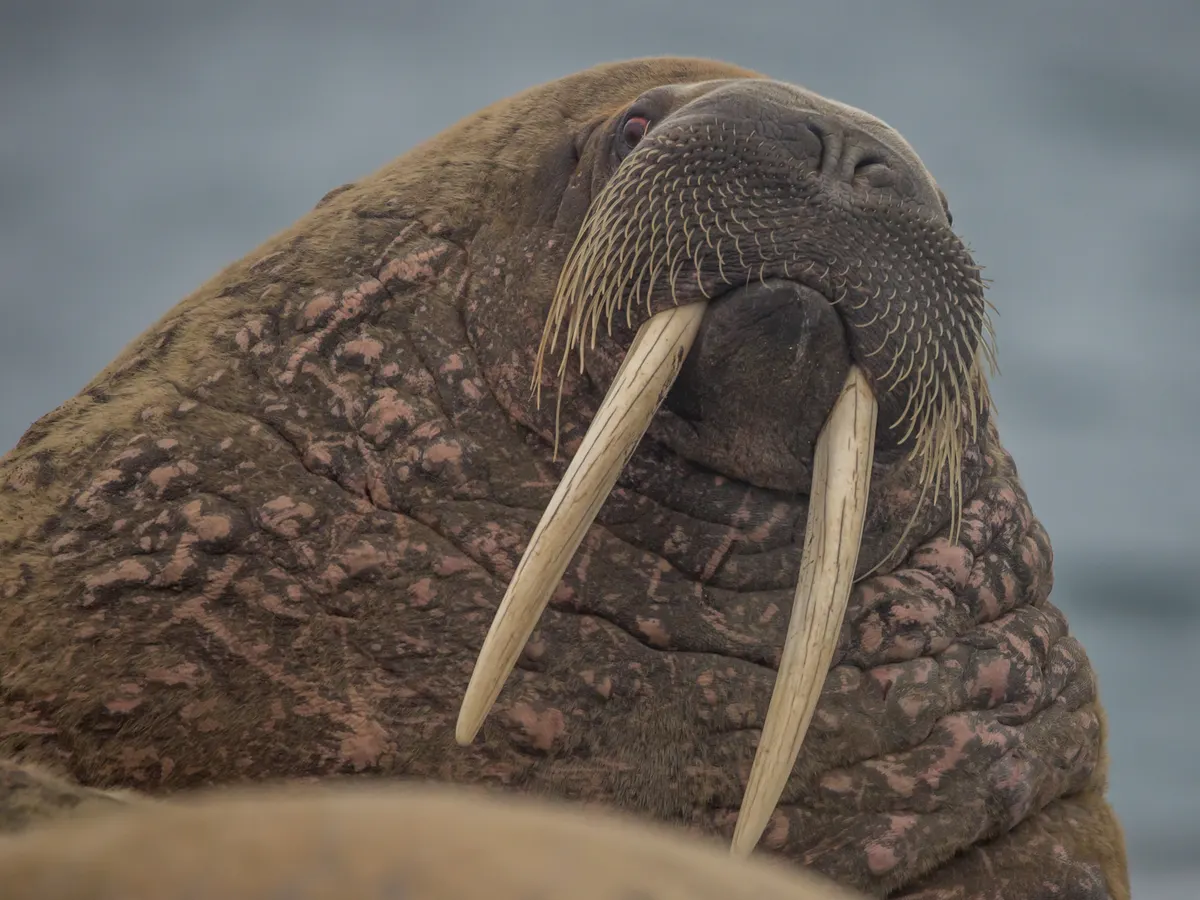
Their most famous physical features are their enormous tusks. Present in both males and females, these tusks are actually continuously growing upper canine teeth that can reach lengths of up to 3 feet in large males. The tusks are multipurpose tools: they are used to break through thick sea ice to create breathing holes, to haul their massive weight out of the water, and as formidable weapons to establish dominance or defend against polar bears.
Surrounding their tusks is a broad snout covered in a thick, stiff mustache of roughly 400 to 700 highly sensitive vibrissae (whiskers). Because the Arctic seafloor is dark and murky, walruses rely almost entirely on these whiskers to detect the shapes and contours of buried prey.
Interestingly, a walrus's skin color fluctuates wildly based on its activity and temperature. In freezing water, blood flow to the skin is heavily restricted to conserve core heat, making the walrus appear a ghostly pale grey or white. When they haul out onto the ice and bask in the sun, blood rushes back to the skin's surface, turning them a vibrant, sunburned pink or cinnamon brown. They also possess specialized air sacs in their necks (pharyngeal pouches) that they can inflate like internal life jackets, allowing them to sleep vertically in the water with their heads bobbing above the surface.