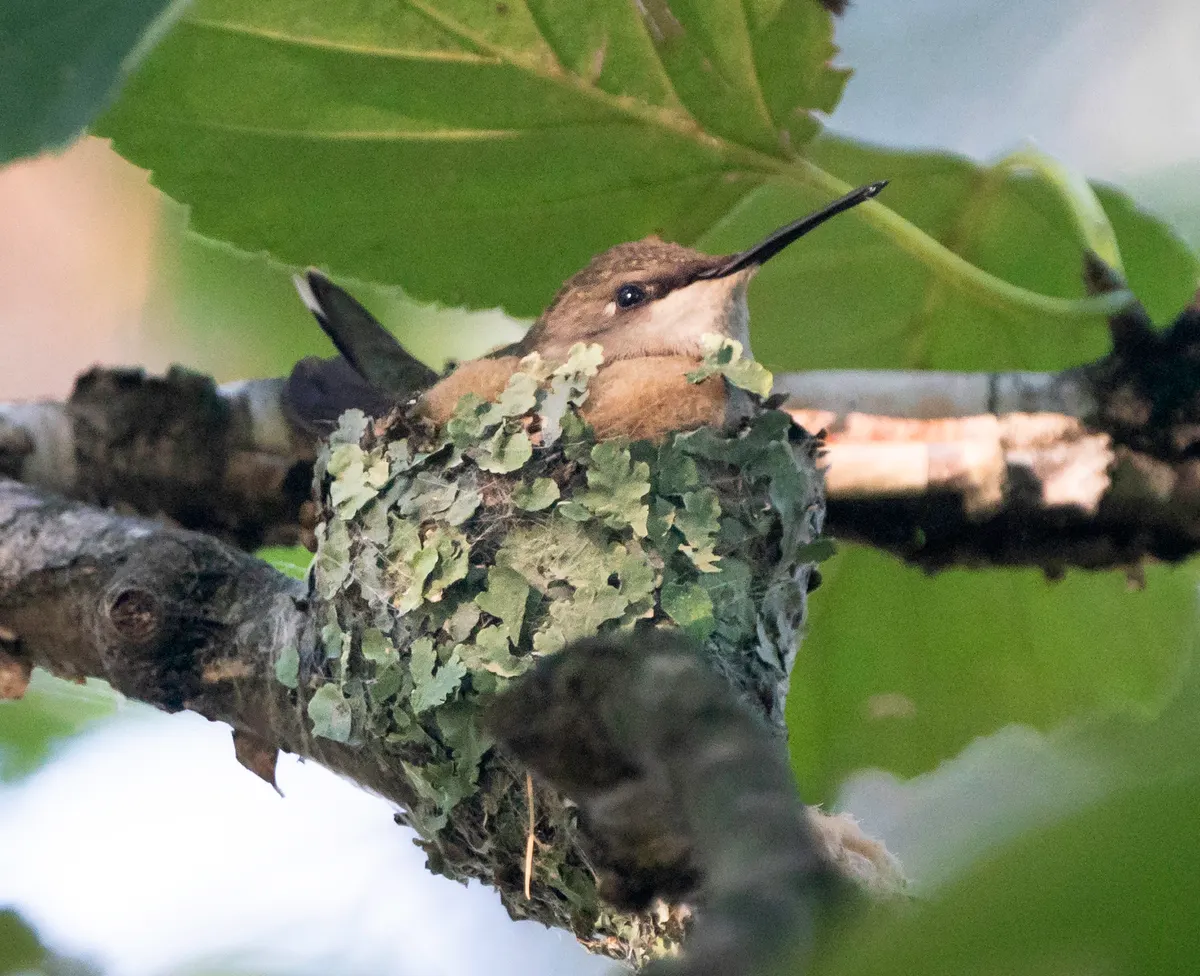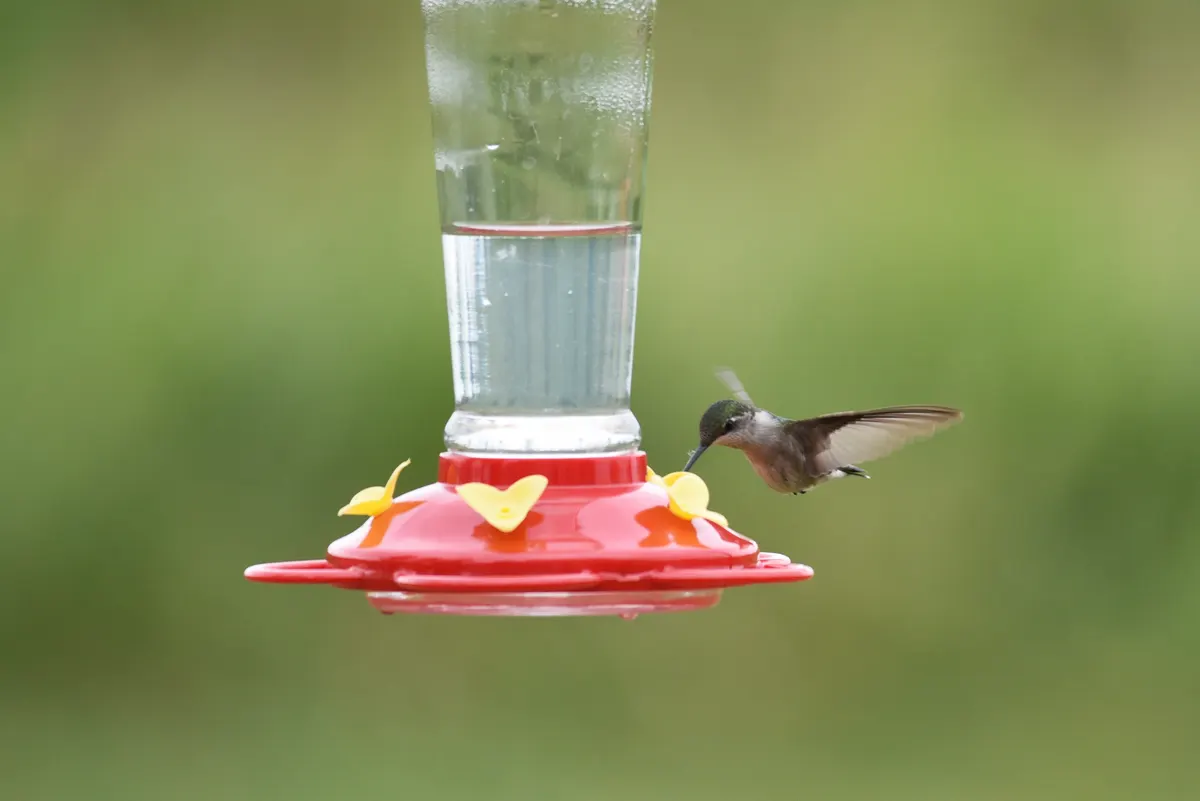
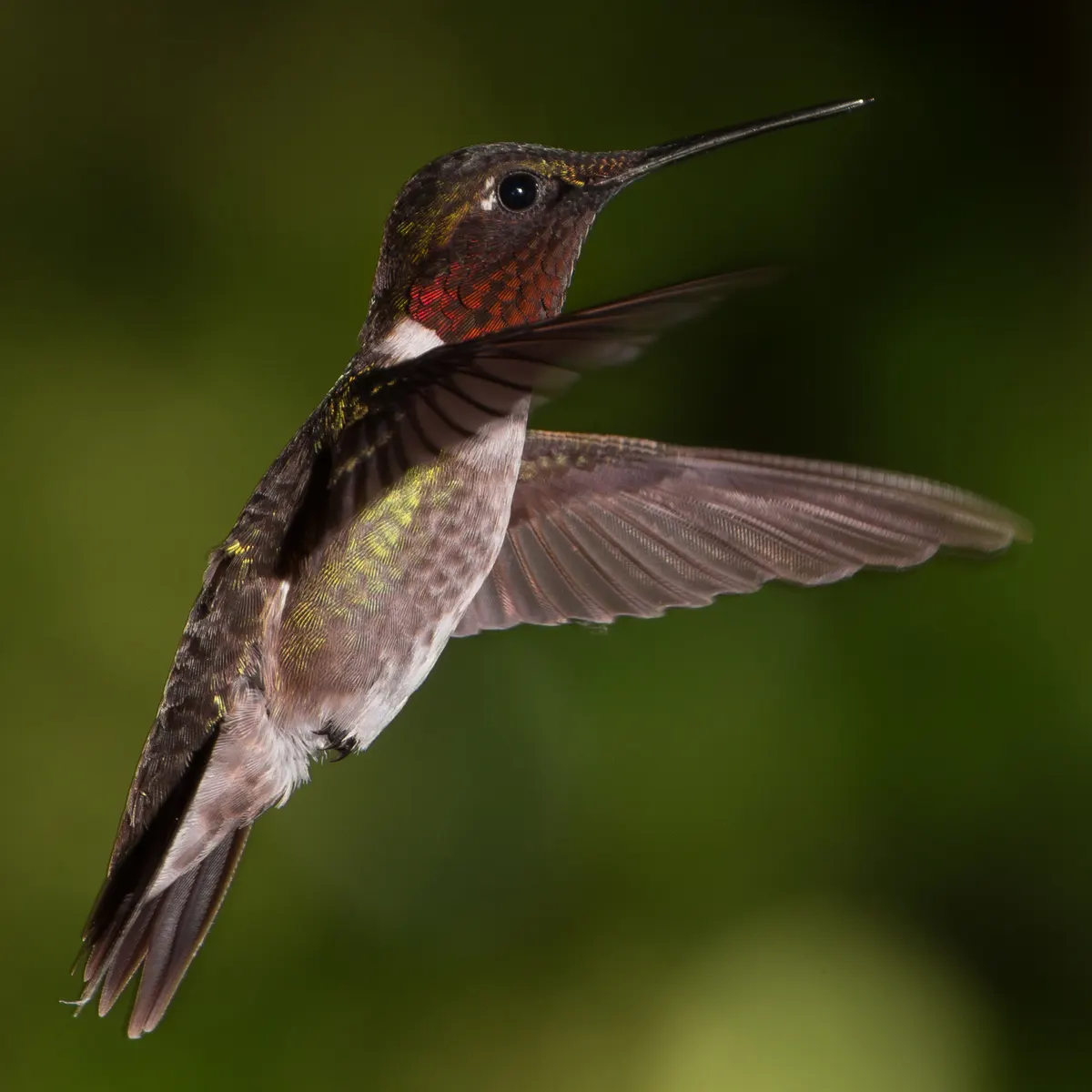
Reproduction is solely the responsibility of the female. After copulation, the male immediately departs, leaving the female to construct the nest, incubate the eggs, and provision the nestlings entirely on her own.
The nest is a microscopic architectural fascinating example, roughly the size of a large thimble (1 to 2 inches across). The female constructs it atop a downward-sloping branch, meticulously weaving together bud scales, plant down, and lichens. Crucially, she binds the structure using spider silk, which provides exceptional structural integrity while allowing the nest to expand elastically as the nestlings grow.
The clutch invariably consists of two minuscule, elliptical white eggs. Incubation lasts approximately 12 to 14 days. The altricial chicks hatch blind and naked. The female feeds them via regurgitation, pumping a slurry of semi-digested insects and nectar directly into their crops. Nestlings fledge in 18 to 22 days. The lifespan of a ruby-throated hummingbird in the wild typically ranges from 3 to 5 years, though some banded individuals have been recorded living up to 9 years.
A monumental aspect of their life cycle is their annual migration. In autumn, they initiate a staggering southward journey. Many individuals cross the Gulf of Mexico in a single, non-stop flight—a 500-mile transit over open water that takes 18 to 22 hours, burning virtually all of their accumulated fat reserves.