
Loxodonta africana / Ceratotherium simum
African Elephant vs White Rhinoceros
African elephants and white rhinoceroses share savanna landscapes and large body size, but their anatomy, feeding, social structure, and conservation pressures are different.
By An Nguyen · Updated
At a glance
Published species data from both WildlifeDB profiles, aligned trait by trait. Size metrics highlight the larger value with a relative bar.
- Scientific name
- African ElephantLoxodonta africana
- White RhinocerosCeratotherium simum
- Classification
- African ElephantMammalia · Elephantidae
- White RhinocerosMammalia · Rhinocerotidae
- Native range
- African ElephantAfrica
- White RhinocerosAfrica
- Primary habitat
- African ElephantSavanna
- White RhinocerosSavanna
- Diet
- African ElephantHerbivore
- White RhinocerosHerbivore
- Typical food
- African ElephantGrasses, Leaves, Bark, Fruit
- White RhinocerosGrass, Low-growing plants
- Body length
- African Elephant18 feet – 24 feet
- White Rhinoceros11 feet – 15 feet
- Shoulder height
- African Elephant8 feet – 13 feet
- White Rhinoceros5 feet – 6 feet
- Weight
- African Elephant6000 pounds – 13000 pounds
- White Rhinoceros3,500 pounds – 5,500 pounds
- Top speed
- African ElephantUp to 25 mph
- White RhinocerosUp to 30 mph in short bursts
- Wild lifespan
- African Elephant60 to 70 years
- White Rhinoceros35 to 40 years
- Social pattern
- African ElephantHerd living, Trunk communication, Memory-based travel
- White RhinocerosGrazing, Mud wallowing, Territory marking
- Key adaptations
- African ElephantTrunk, Large ears, Thick skin
- White RhinocerosThick skin, Keratin horns, Wide grazing lips
- Conservation
- African ElephantEndangered · Decreasing
- White RhinocerosNear Threatened · Decreasing
- Reproduction
- African ElephantAbout 22 months; Usually 1 calf
- White RhinocerosAbout 16 months; Usually 1 calf
Trunk and tusks against horn and wide lips
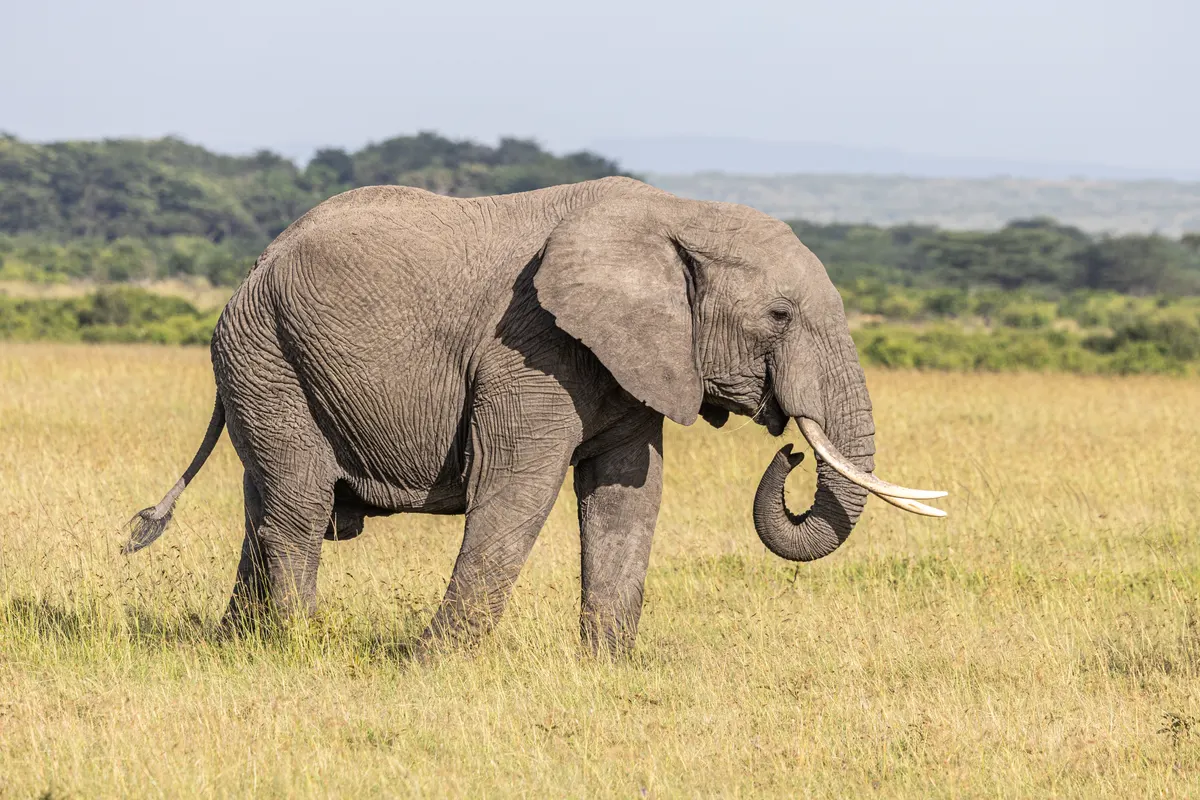
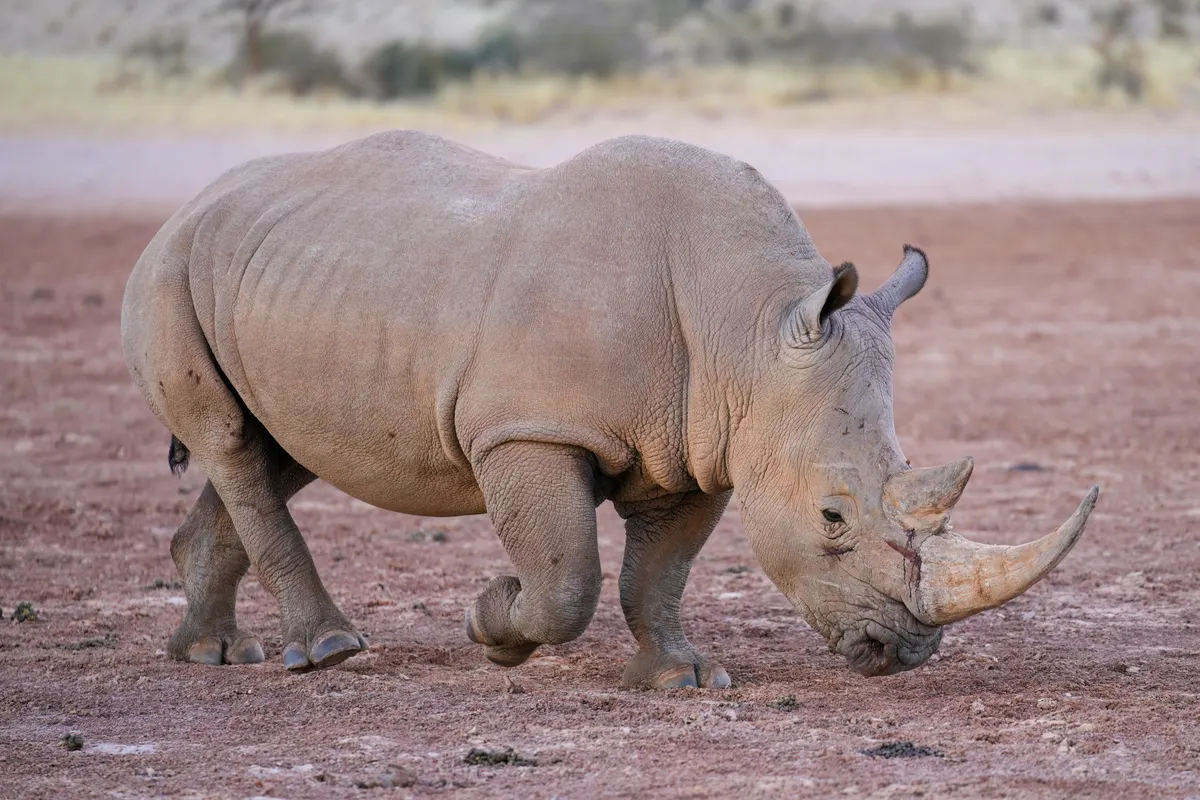
The head settles the identification before size ever matters. An African elephant carries a trunk, a muscular fusion of nose and upper lip used for breathing, smelling, touching, drinking, feeding, and social contact, along with ivory tusks and very large ears. A white rhinoceros carries two keratin horns on the snout and a broad, squared upper lip.
Keratin is the protein in hair and fingernails. A rhino horn is not bone, and it is not the equivalent of a tusk: an elephant's tusks are teeth. Confusing the two leads to the wrong conclusion about how each animal feeds and how poaching pressure works on each species.
How much bigger is an elephant?
African elephants run about 18–24 feet long, stand 8–13 feet at the shoulder, and weigh 6,000–13,000 pounds. White rhinoceroses span about 11–15 feet, stand 5–6 feet at the shoulder, and weigh 3,500–5,500 pounds. At the upper end the elephant is roughly twice the mass and several feet taller.
Posture changes what an observer actually sees. An elephant holds its head high on a long neck; a grazing rhino carries its head low, close to the grass. Both move faster than their bulk suggests — the elephant profile lists up to 25 mph and the rhino profile up to 30 mph in short bursts — so neither is a slow giant that can be approached safely.
Both graze, but not the same plant layer
Both animals are herbivores, which is where the similarity stops. Elephants eat grasses, leaves, bark, and fruit, and the trunk lets them strip, pull, and carry vegetation from ground level up into trees. A single animal can graze and browse in the same hour.
The rhinoceros record lists grass and low-growing plants only. Wide lips and a low head are a cropping tool, not a handling tool, and a white rhino can take more than 100 pounds of grass in a day. Two large herbivores can therefore feed in the same clearing without competing directly for the same food.
Matriarchs against loose rhino ranges
Elephant groups are built around experienced females called matriarchs, with young animals travelling in the herd and adult males following different patterns. Memory of water and seasonal routes is part of how the herd survives a dry year, which is why elephants are covered on the social animals hub.
White rhinoceroses are looser. The profile emphasises grazing, mud wallowing, scent-marking territory, and guarding calves rather than a large permanent herd; an individual may be solitary or associate briefly with others depending on conditions.
Twenty-two months against sixteen
Both animals bear a single calf, and both invest heavily in it, but the timescales differ. An African elephant's gestation runs about 22 months — among the longest of any mammal — and an elephant may live 60 to 70 years in the wild. A white rhinoceros gestates for about 16 months and lives roughly 35 to 40 years.
That gap matters for conservation arithmetic. A population that replaces itself slowly recovers slowly, and the elephant's longer generation time means poaching losses take longer to make up even where protection succeeds.
Two ways of reshaping a savanna
Both species change the savanna around them. Elephants break branches, open thickets, and disperse seeds through dung. Rhinos crop grazing lawns short and dig wallows that other animals later use. Their size is ecological influence, not only a visual trait.
Both also need more than a protected boundary on a map. Elephants require very large ranges and long movement corridors; rhinos need secure forage, wallows, and water. Fences, roads, and land conversion can disrupt either species even inside a reserve.
Endangered against Near Threatened
The elephant record is Endangered with a decreasing trend. The white rhinoceros record is Near Threatened, and recent continental estimates also show a decreasing population. The labels differ, but the practical threats overlap: ivory and horn poaching, habitat conversion, and the isolation of small populations. "Big African animal" is not a single conservation category.