Okapi Facts
“Okapis were unknown to Western science until 1901.”
The okapi is a shy forest giraffe from the Congo rainforest. It eats leaves and fruit in dense understory and is the only living relative of the giraffe besides extinct fossil forms.
Loading page content
“Okapis were unknown to Western science until 1901.”
The okapi is a shy forest giraffe from the Congo rainforest. It eats leaves and fruit in dense understory and is the only living relative of the giraffe besides extinct fossil forms.
Explore okapi photos organized for learning and classroom observation.
Click any photo to view it larger. 8 images available.
Core article
Habitat, diet, behavior, and more — everything on one page.
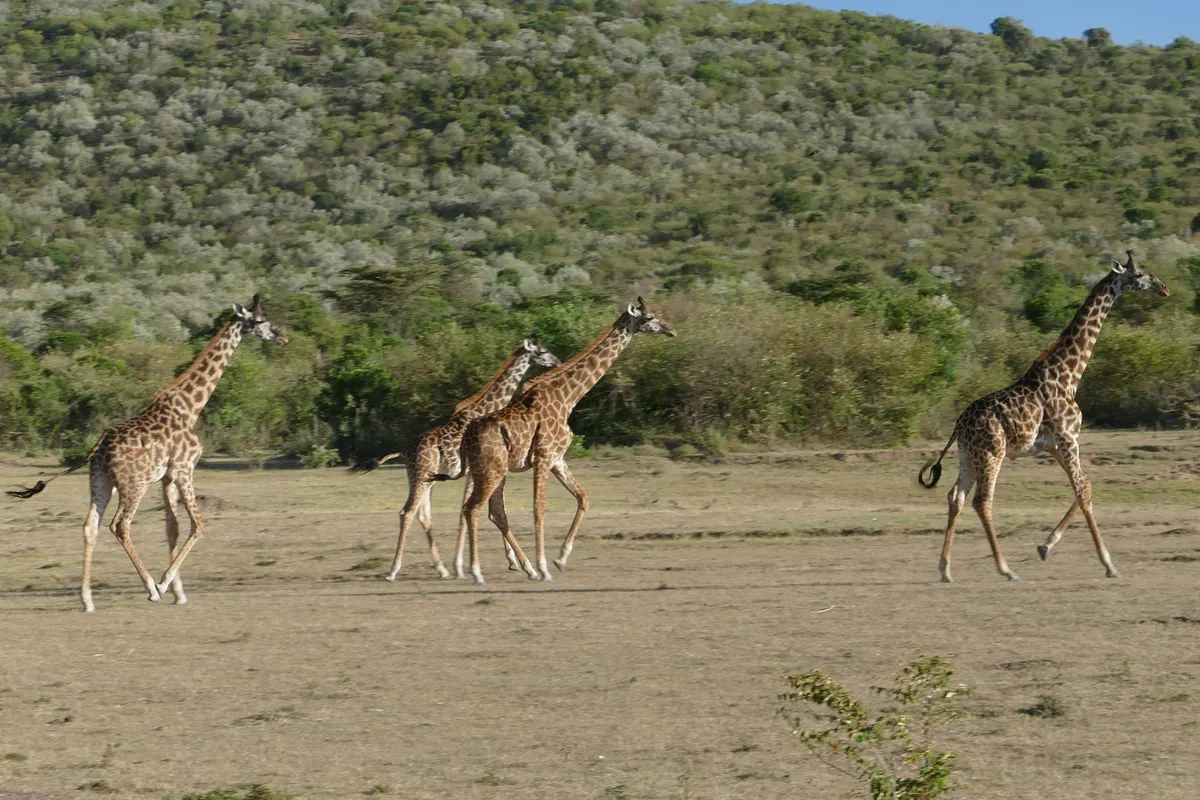
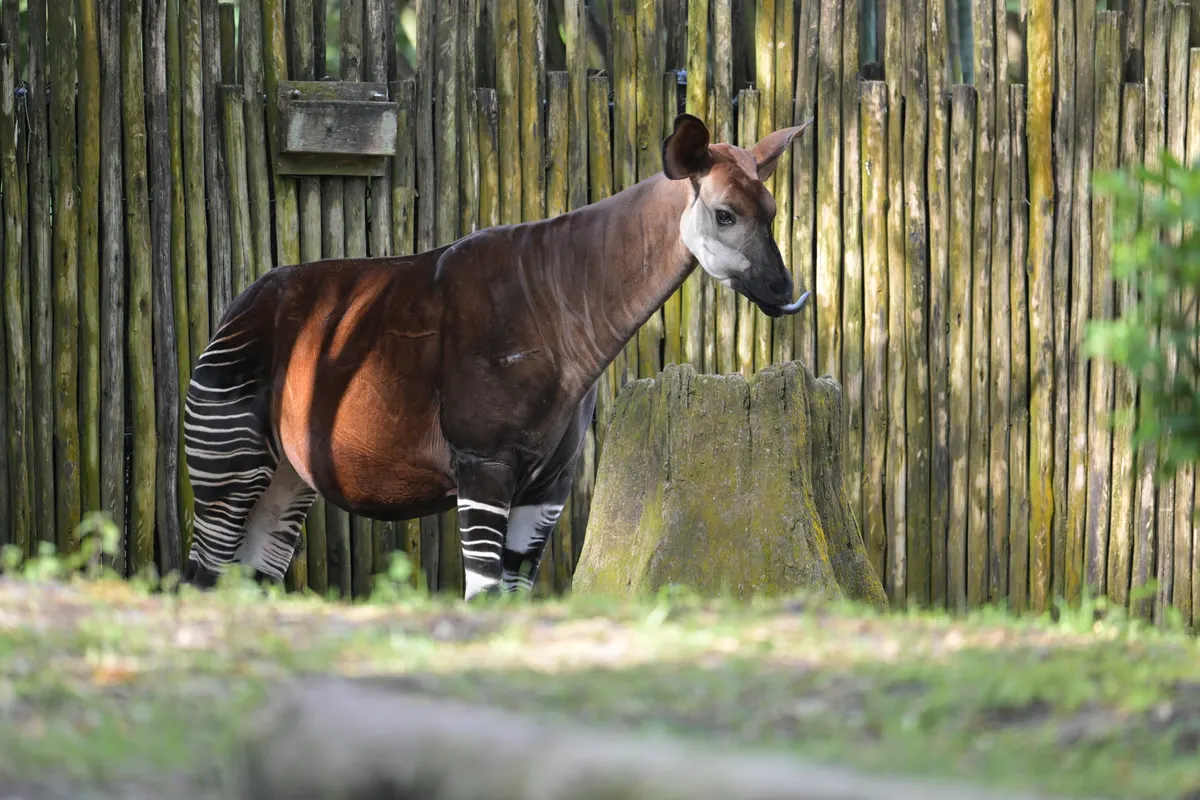
The okapi (Okapia johnstoni) looks like it was assembled from parts of several animals. It has the long neck and large ears of a giraffe, bold zebra-like stripes on the hind legs, and a body about the size of a horse. In fact, the okapi is the giraffe's closest living relative—the only other member of the family Giraffidae alive today.
Okapis live in the dense rainforests of the Democratic Republic of the Congo (DRC). They are so secretive that local people knew of them long before Western scientists confirmed the species in 1901. Most of what we know comes from field studies in protected areas such as the Okapi Wildlife Reserve and from managed populations in zoos.
Because okapis stay in thick forest understory and rarely cross open ground, they are hard to count in the wild. That makes conservation planning difficult, but the evidence we have points to a species in serious decline.
The okapi belongs to the order Artiodactyla (even-toed ungulates) and the family Giraffidae. Its only living giraffid relative is the giraffe (Giraffa camelopardalis).
Genetic studies suggest giraffes and okapis diverged roughly 11 to 16 million years ago. While giraffes adapted to open woodlands and savannas with extreme neck length, okapis took a different path. They evolved a shorter neck, striped camouflage, and a body built for moving quietly through closed forest habitat.
Fossil giraffids once ranged across Africa, Europe, and Asia. Today only these two lineages remain. The okapi's scientific name honors Sir Harry Johnston, the British explorer who helped bring the first specimens to scientific attention.
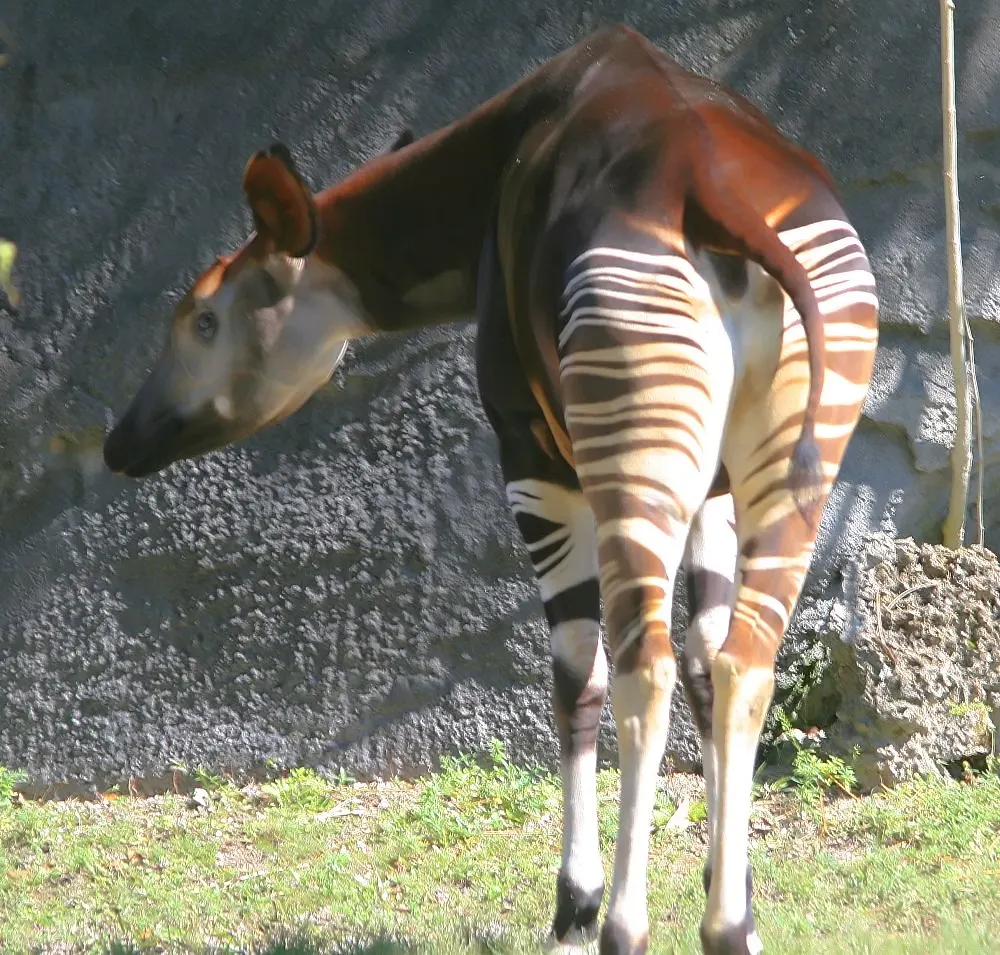
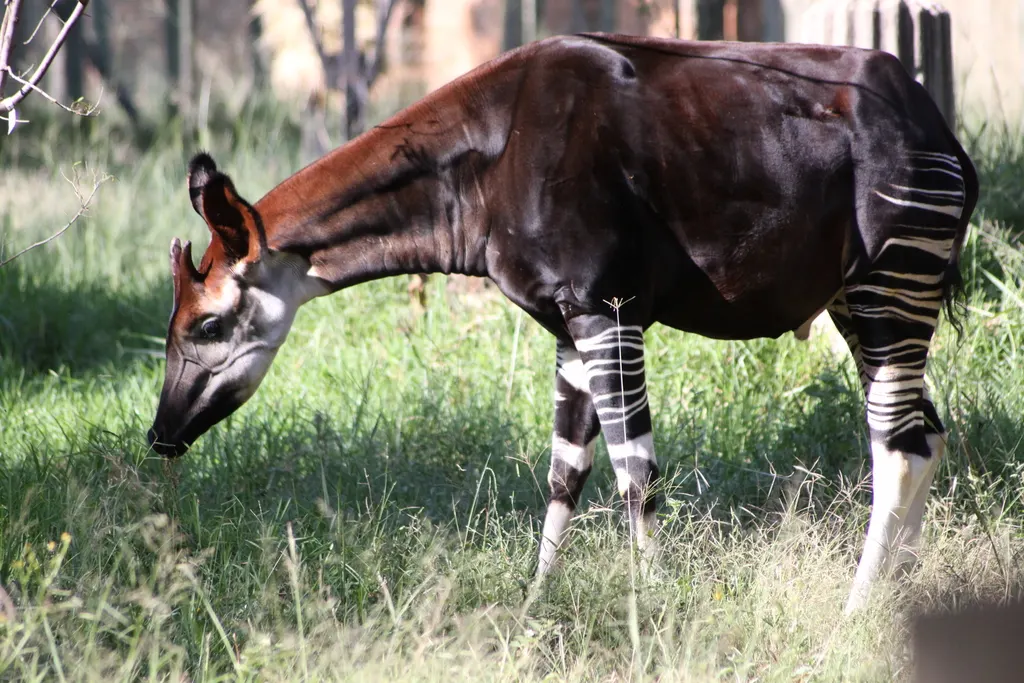
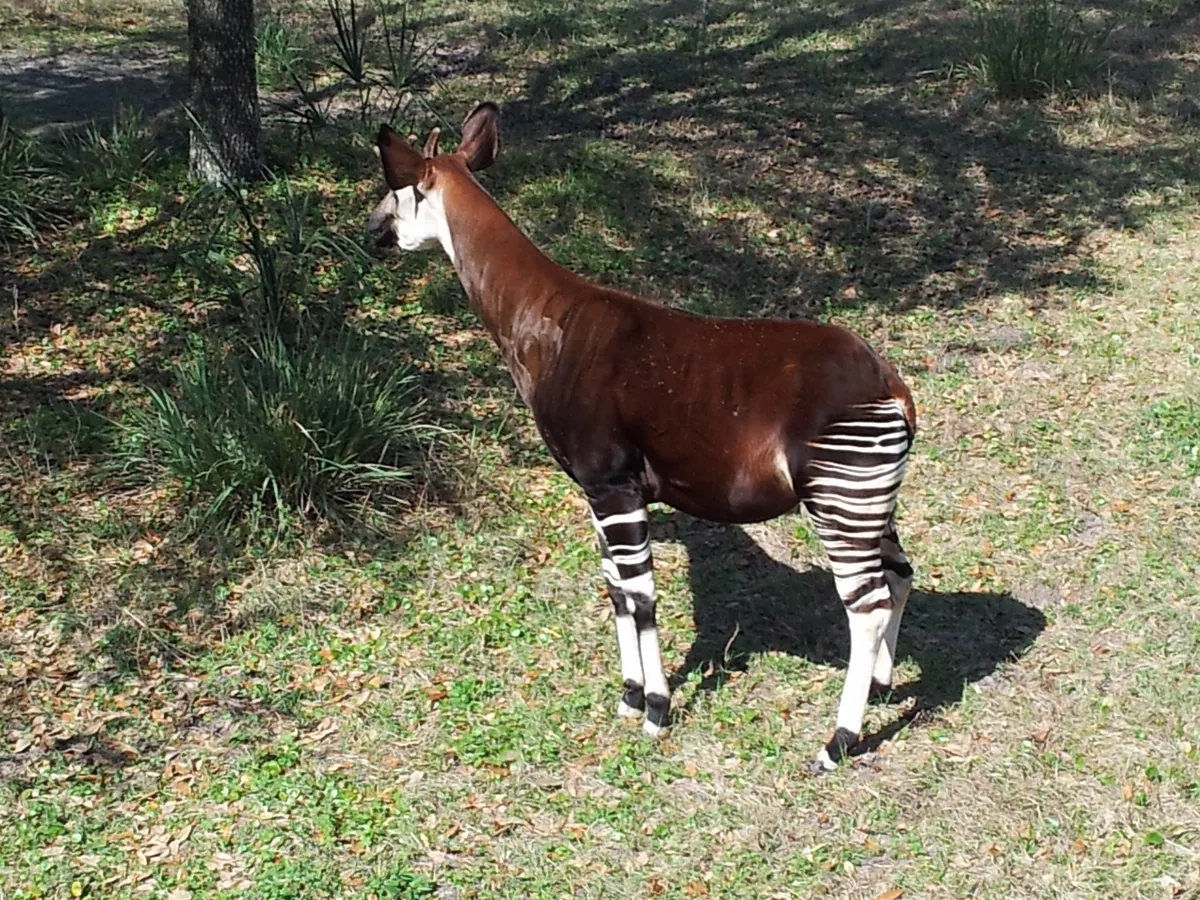
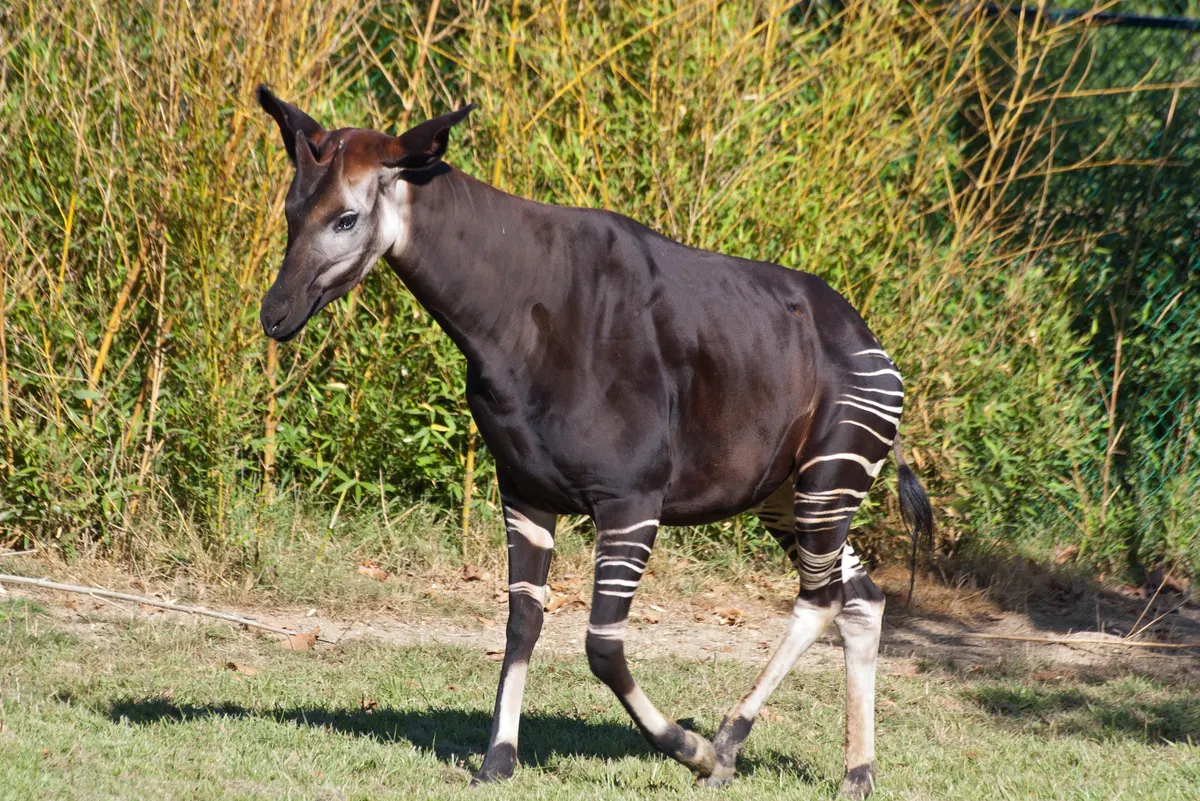
An adult okapi stands about 4 to 5 feet at the shoulder and weighs 450 to 800 pounds. Females are slightly taller than males. The body length runs roughly 6.5 to 8 feet, with a dark reddish-brown coat on the torso and white horizontal stripes on the legs and rump.
Only males grow ossicones—the short, fur-covered horn-like structures also seen on giraffes. Okapis have large, flexible ears that rotate to pick up sound in dark forest. Their most famous feature is a long, prehensile tongue, often 14 inches or more, which is dark bluish gray and used to strip leaves from branches.
Okapis secrete an oily substance from glands on their feet. When they walk established forest trails, this oil marks plants and may help individuals recognize paths and territories. Despite their bulky appearance, okapis can reach speeds near 37 mph over short distances when fleeing predators such as leopards.

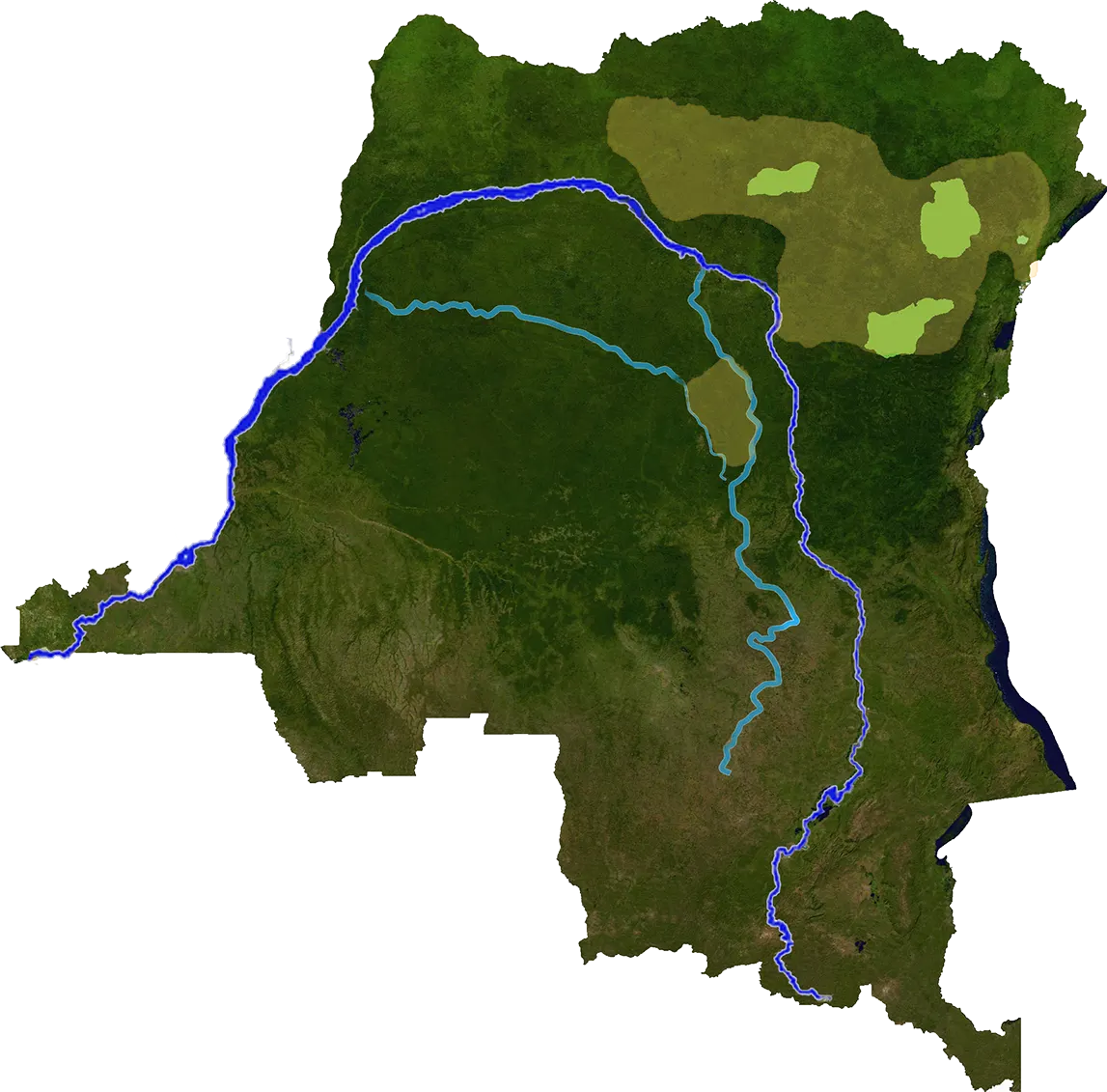
Wild okapis occur only in the DRC. Their range covers lowland and montane rainforest in the Ituri, Aruwimi, and Nepoko basins of the eastern Congo. They need closed-canopy forest with dense understory and access to mineral-rich soils.
Historically the range may have been wider, but surveys today focus on protected zones including Maiko National Park, the Okapi Wildlife Reserve, and parts of Virunga National Park. Okapis use well-worn single-file trails through the forest. These paths make them vulnerable to snares set along known routes.
They tolerate some small-scale human activity near forest edges but disappear when logging, mining, or settlement breaks up large habitat blocks.

Okapis are selective herbivores. Fecal studies show that their diet is almost entirely leaves from woody plants—more than 100 species recorded—along with buds, fruits, seeds, and ferns. Grass makes up a tiny fraction of intake.
They feed mainly in the understory and at shrub level, using the long tongue to reach vegetation other browsers cannot. Okapis also eat charcoal and clay from forest clearings, likely to obtain minerals. In some areas they consume bat guano for the same reason.
An okapi may eat 45 to 60 pounds of foliage daily. Because food is spread thinly through the forest, individuals spend much of the day moving and browsing alone.

Okapis are mostly solitary. Adult home ranges overlap, especially between males and females, but direct contact is infrequent outside the breeding season. Females occupy ranges of about 2.5 to 4 square miles; males may range over 4 to 7 square miles or more.
Communication relies on scent marking with urine and the foot-gland oil, plus quiet calls such as chuffs and bleats. Okapis are active mainly during daylight hours, resting at night. Calves remain hidden in vegetation for the first weeks of life while the mother feeds nearby.
In managed care, okapis breed year-round. In the wild, births may peak during the rainy season when food is most abundant.

Female okapis give birth to a single calf after a gestation of about 14 to 15 months. The calf can stand within 30 minutes but stays concealed in undergrowth. For the first two months it nurses and waits while the mother leaves to feed.
Weaning occurs around 6 months, though calves may stay with the mother for a year or longer. Females typically produce one calf every two to three years. In the wild, okapis may live 20 to 30 years.

(Population and conservation trend data sourced from the IUCN Red List of Threatened Species)
The okapi is listed as Endangered on the IUCN Red List. Reliable population estimates are lacking, but dung surveys in the Okapi Wildlife Reserve showed a 43% decline between 1995 and 2007, with evidence of further losses afterward.
Poaching for bushmeat and snaring along forest trails are major threats. Civil conflict in eastern DRC disrupts park management and increases illegal hunting. Habitat loss from logging, mining, and settlement fragments the forest blocks okapis need.
The species is fully protected under Congolese law and listed on CITES Appendix I. Conservation depends on securing protected areas, removing snares, and supporting ranger patrols in the Ituri region.
Okapis were unknown to Western science until 1901.
An okapi tongue can reach 14 inches and is dark bluish gray.
Only male okapis grow short fur-covered horn-like ossicones.
Okapis leave sticky oil on plants when marking territory with their legs.
Calves stay hidden in vegetation for weeks after birth.
Okapis follow the same narrow paths through the forest for generations.
Select a question to reveal the answer.
An okapi is a large forest mammal from the Democratic Republic of the Congo. It looks like a cross between a giraffe and a zebra but belongs to the giraffe family.
Yes. The okapi is the giraffe's closest living relative. Both belong to the family Giraffidae.
Wild okapis live only in lowland and montane rainforests in the eastern Democratic Republic of the Congo, mainly in the Ituri Forest region.
Okapis browse leaves, buds, fruits, and ferns from more than 100 plant species. They sometimes eat fungi and clay for minerals.
Bold white stripes on the hind legs and rump may help calves follow adults through dim forest light and break up the animal's outline among tree shadows.
Yes. The IUCN lists the okapi as Endangered. Poaching, snares, and habitat loss from logging and conflict have caused sharp population declines.
No. Okapis are wild, endangered animals that need vast forest habitat. They are protected under Congolese law and are not suitable for private ownership.