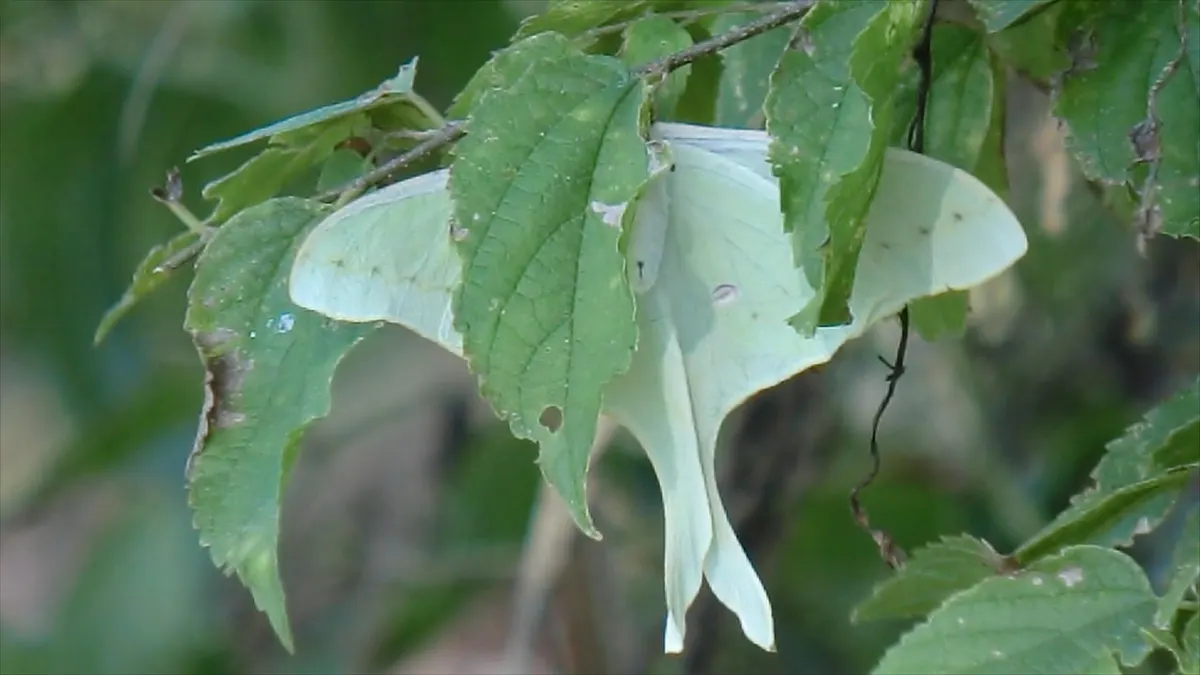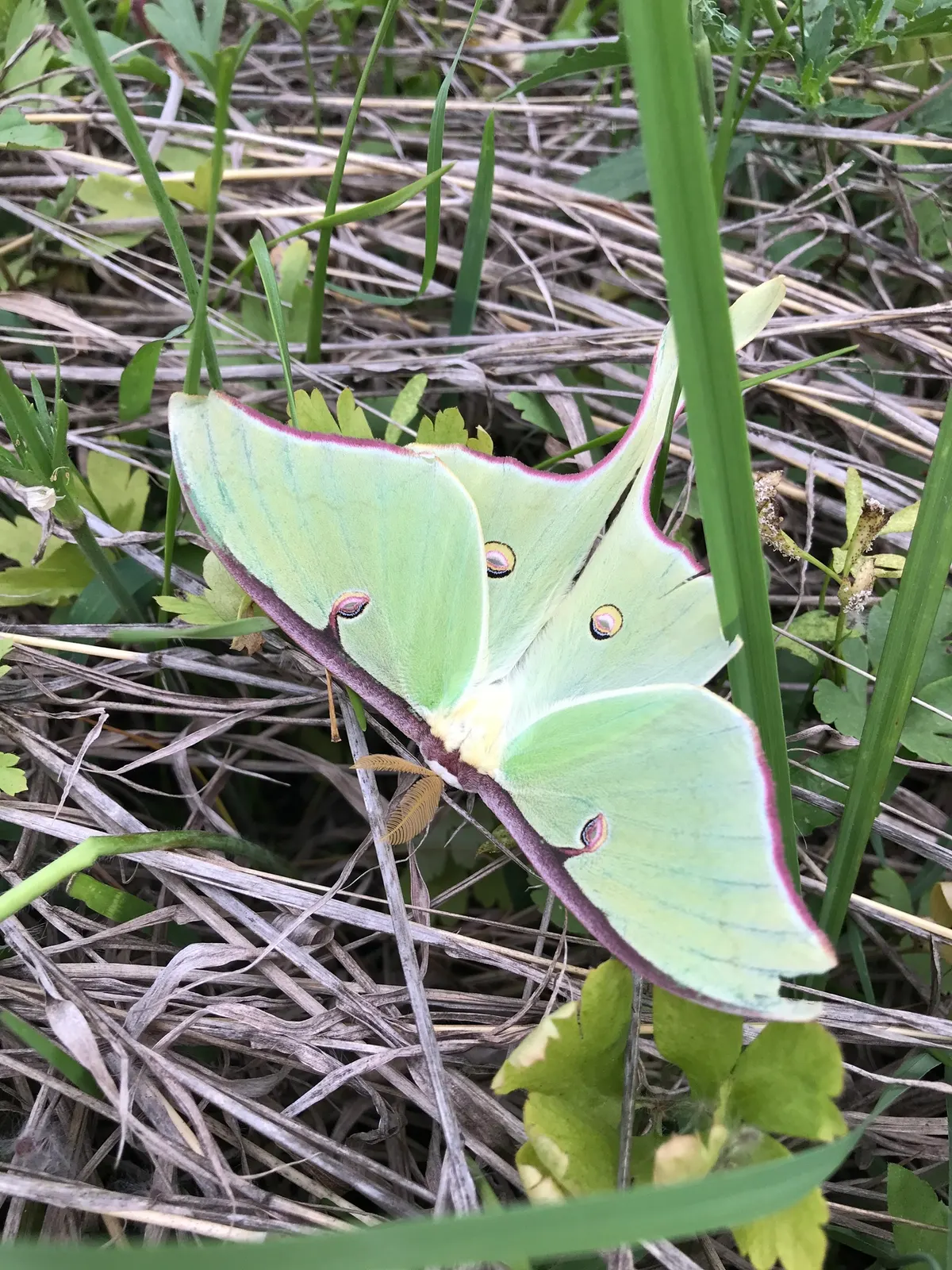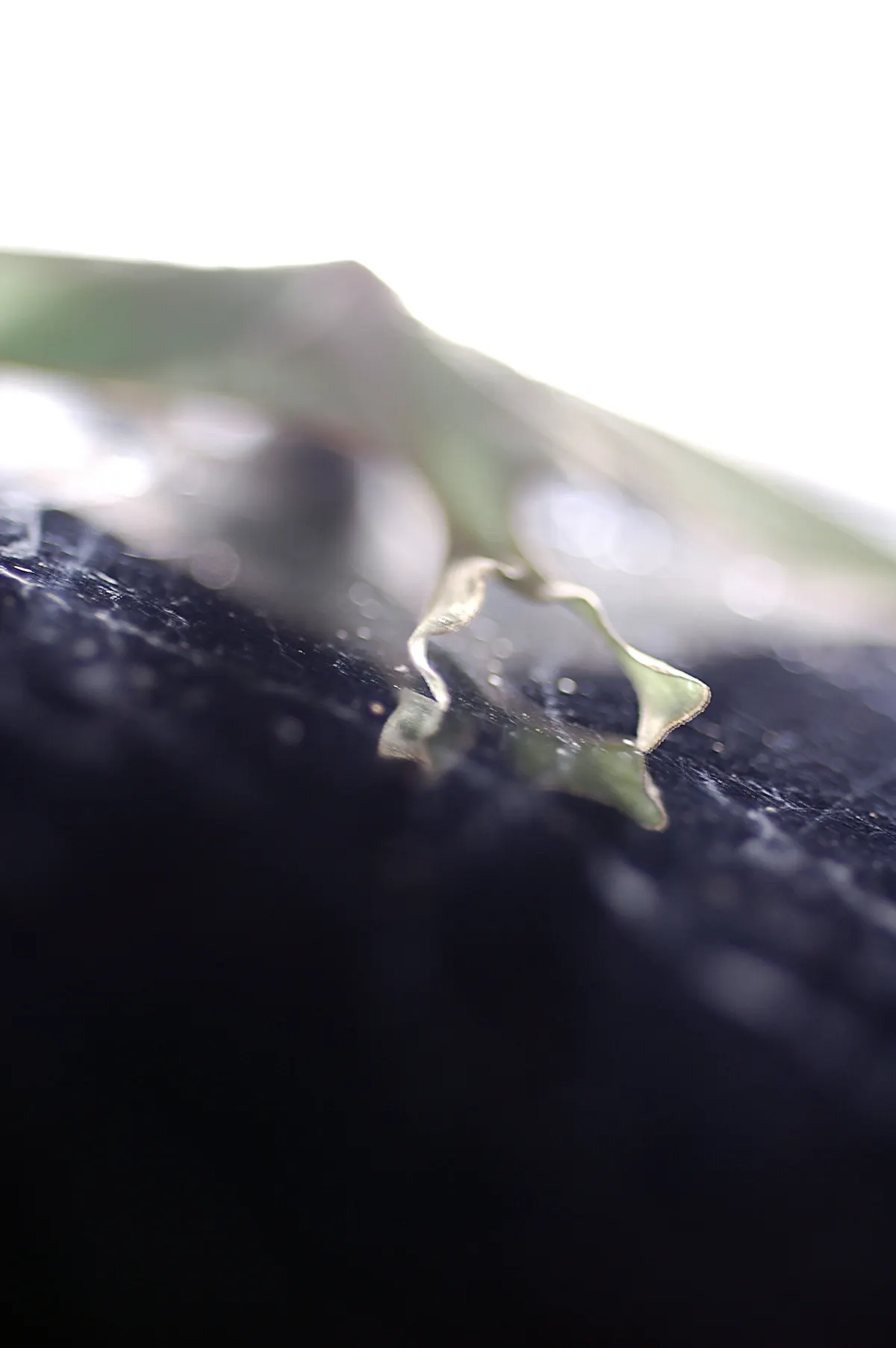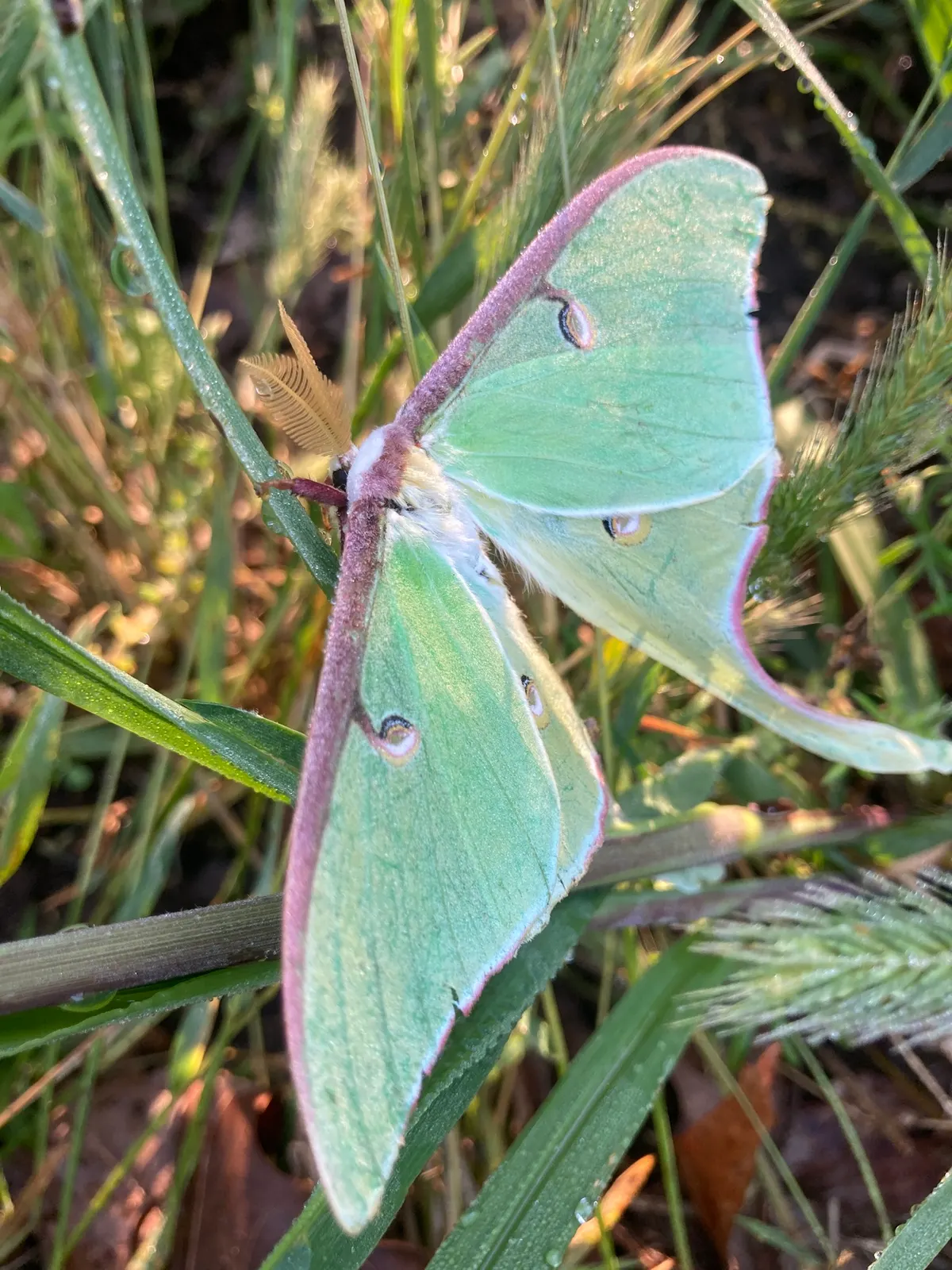
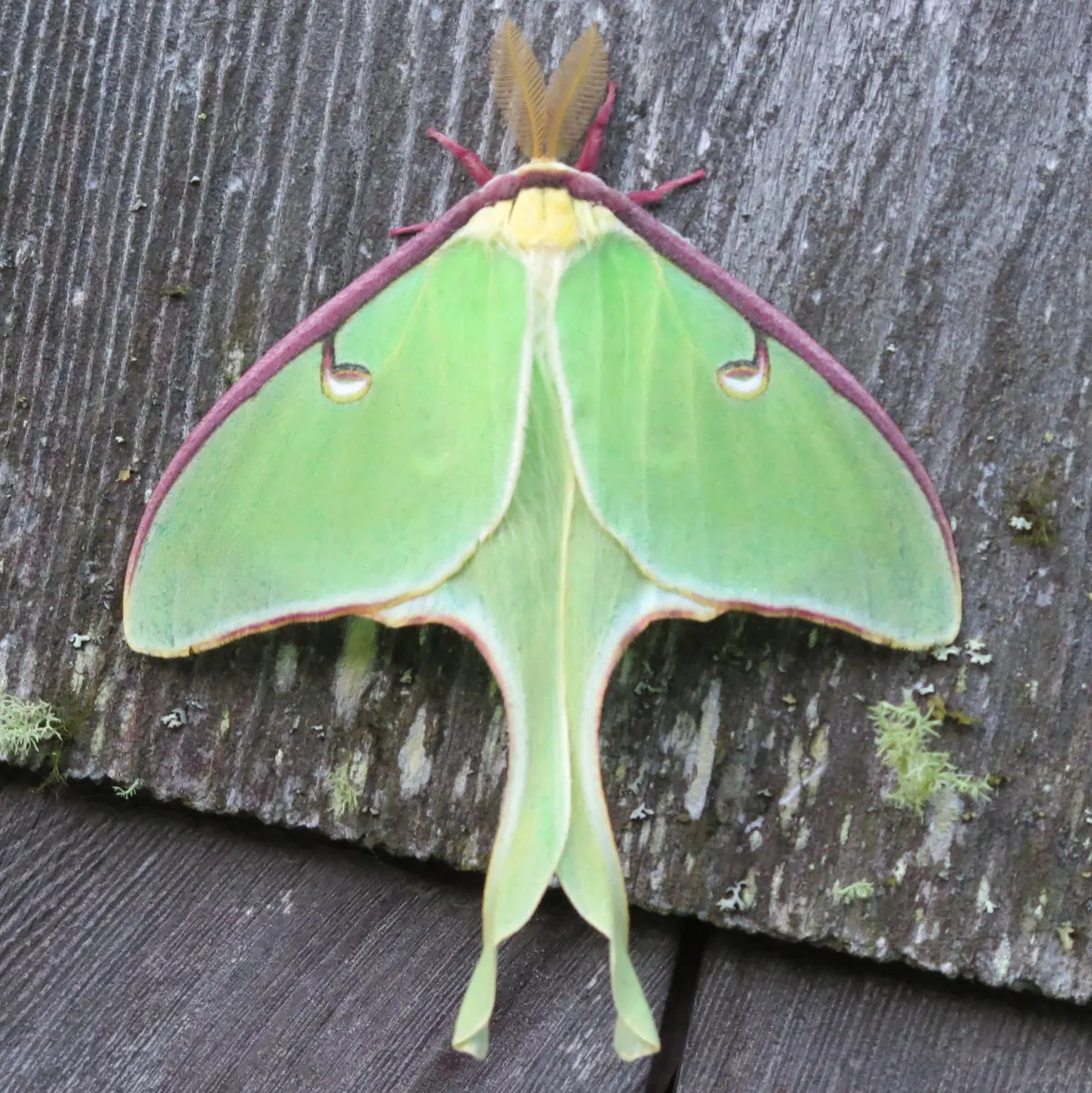
The life cycle of Actias luna is a textbook example of complete metamorphosis (holometabolism). Following a successful mating, the female immediately begins depositing her payload of 200 to 400 small, mottled brown eggs. She lays them singly or in small clusters on the underside of suitable host plant leaves. After 10 to 14 days of incubation, the eggs hatch into tiny, 2-millimeter-long caterpillars.
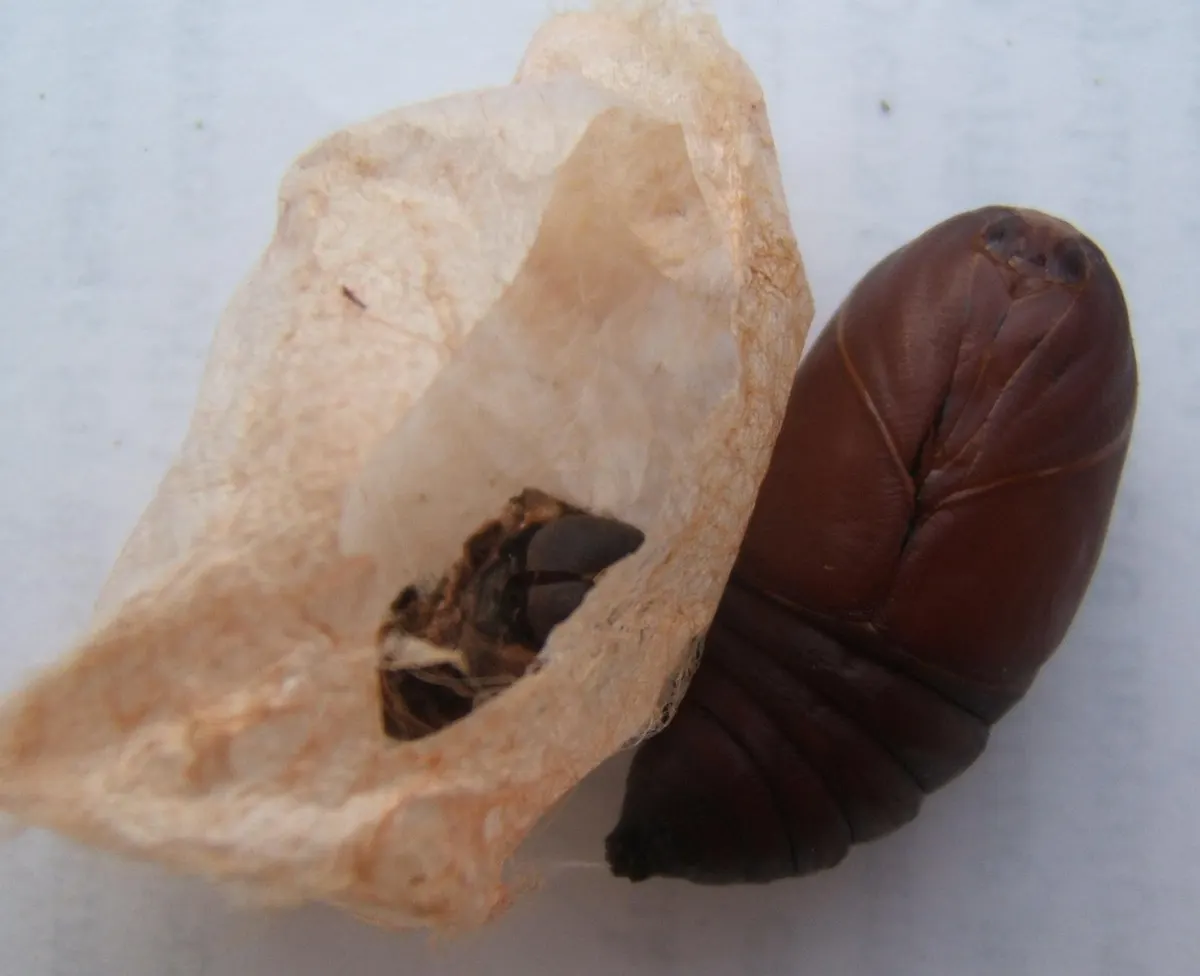
The larval stage lasts roughly a month. When the caterpillar is fully engorged and reaches its final instar, it descends to the forest floor. Here, it exhibits a fascinating behavioral sequence: it draws a fallen leaf around itself and secretes a strand of tough, brown silk from its spinnerets, weaving a papery, single-layered cocoon. Inside this protective casing, the caterpillar sheds its skin one final time to reveal the dark brown pupa.
Depending on the geographic latitude, Luna moths may be univoltine (producing one generation per year) in northern regions, or multivoltine (up to three generations per year) in the deep south. Pupae from the final generation of the season undergo diapause, entering a state of suspended metabolic animation to survive the freezing winter temperatures, emerging only when the photoperiod and temperatures increase the following spring. The adult moth then lives for a mere 7 to 10 days.