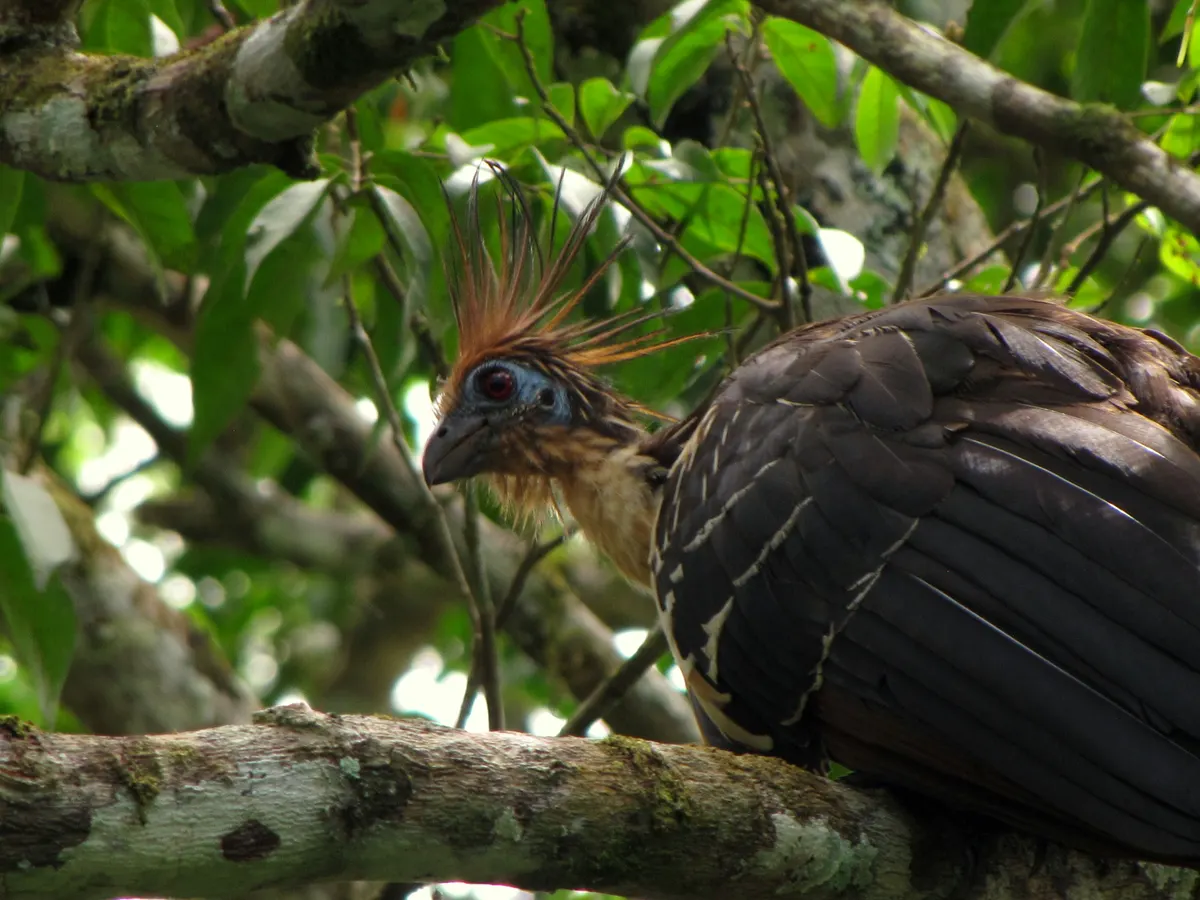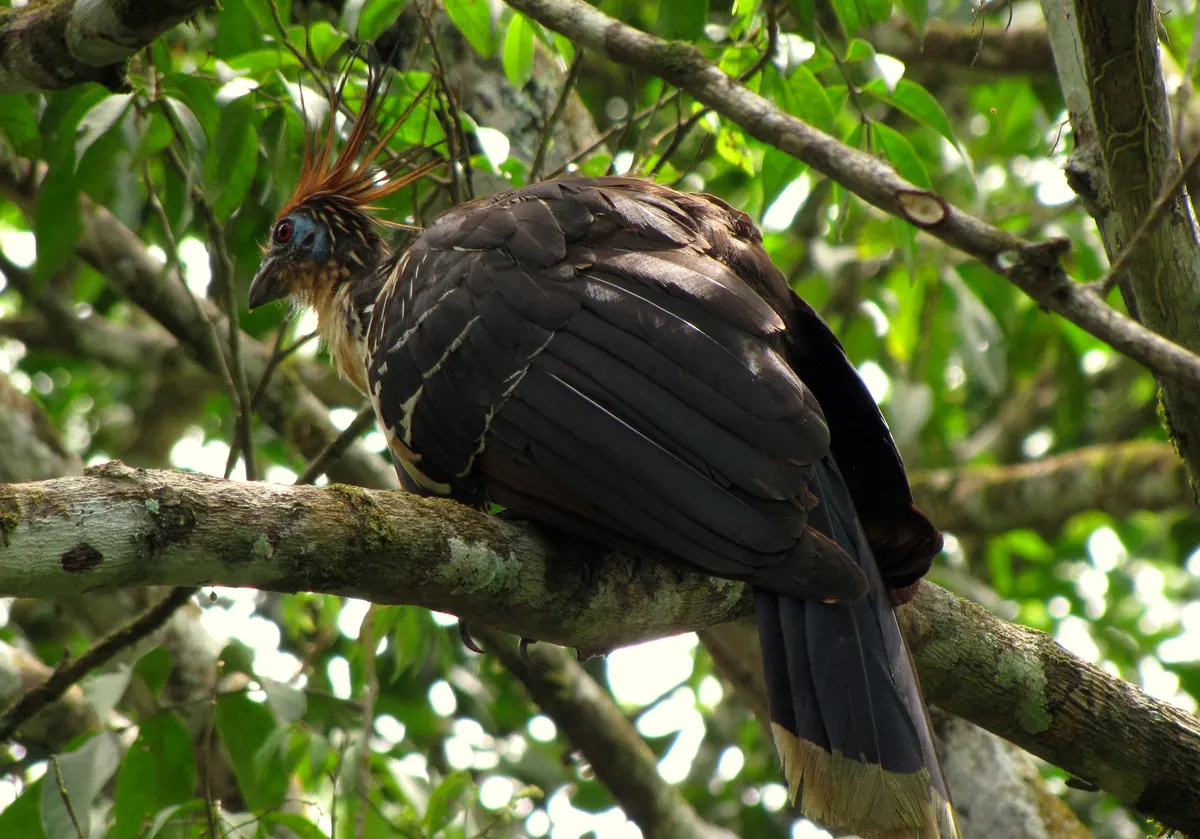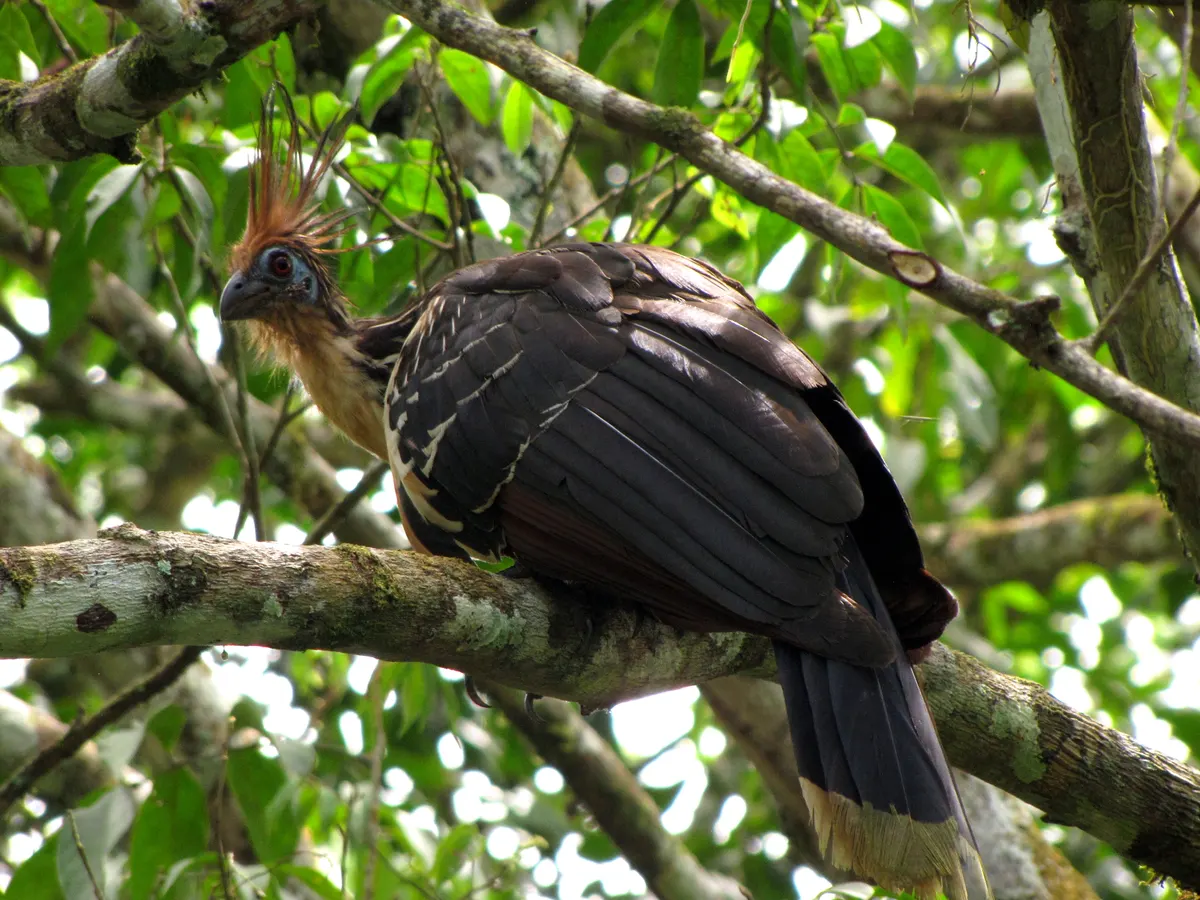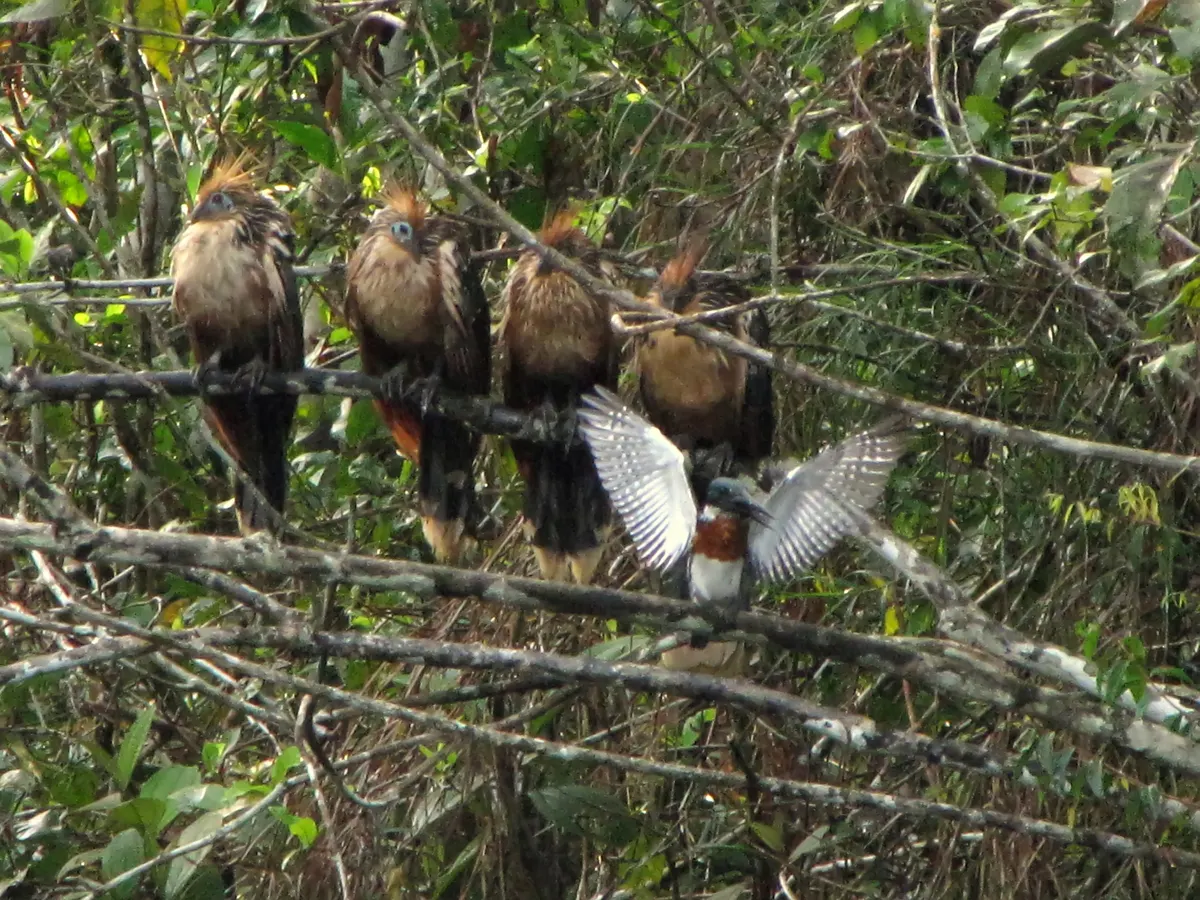
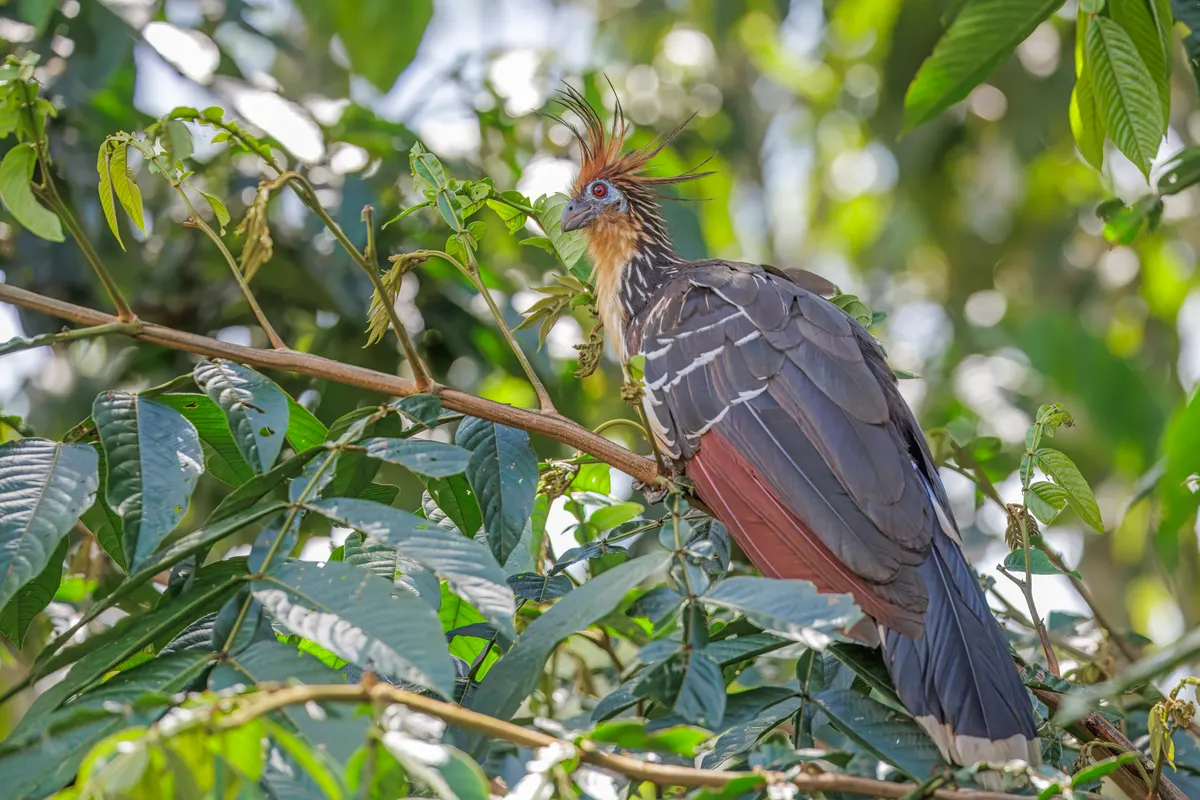
The physical anatomy of the hoatzin is a direct reflection of its extreme dietary specialization. It is a relatively large, pheasant-sized bird, typically measuring between 24 and 26 inches in length and weighing a modest 1.8 to 2.2 pounds. Visually, they are striking; the upper parts are dark brown heavily streaked with white, while the underparts are a pale buff transitioning to a rich chestnut on the abdomen. The head is small relative to the body, adorned with a ragged, spiky crest of reddish-brown feathers, a bright, unfeathered blue facial skin patch, and intense red eyes.
The most radical anatomical deviation lies internally. To process its highly toxic and fibrous diet, the hoatzin has evolved a massively enlarged crop—an expandable muscular pouch near the throat. This specialized foregut fermentation chamber is so enormous that it physically displaces the bird's flight muscles and significantly reduces the size of its sternum (keel bone). Consequently, the hoatzin is a remarkably clumsy and weak flier. It rarely takes to the air, preferring to awkwardly hop and climb through the dense branches. When forced to fly to cross a river, it executes short, desperate, gliding bursts, rarely exceeding 12 mph, often crashing haphazardly into the foliage on the opposite bank.
The chicks possess one of the most famous anatomical anomalies in the avian world: two functional, sharp, reptile-like claws on the leading edge of each wing (specifically on the first and second digits). These claws are a critical survival tool, allowing the helpless chicks to grip bark and physically climb up vertical branches, an ability they lose as they mature and the claws naturally fall off.