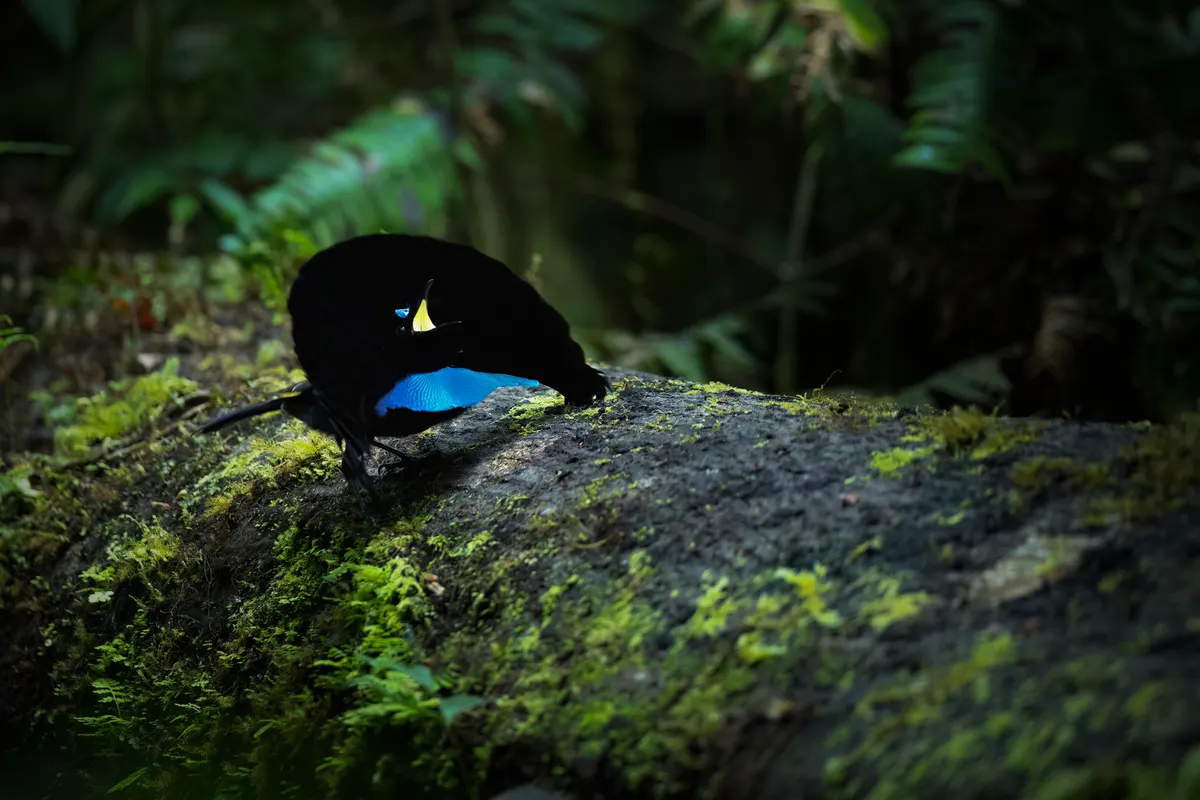
The superb bird-of-paradise is famous for its mesmerizing, shape-shifting courtship dance.
AvesLeast Concern
Superb Bird-of-Paradise Facts
“During courtship, the male flares his jet-black cape feathers forward to create an absolute black disc, framing a glowing neon-green 'smiley face' formed by his breast shield and eye spots.”
Male superb birds-of-paradise transform their black plumage into an oval courtship display edged with iridescent blue. Outside the display ground, these New Guinea forest birds forage alone for fruit and small animals through the midstory and canopy.