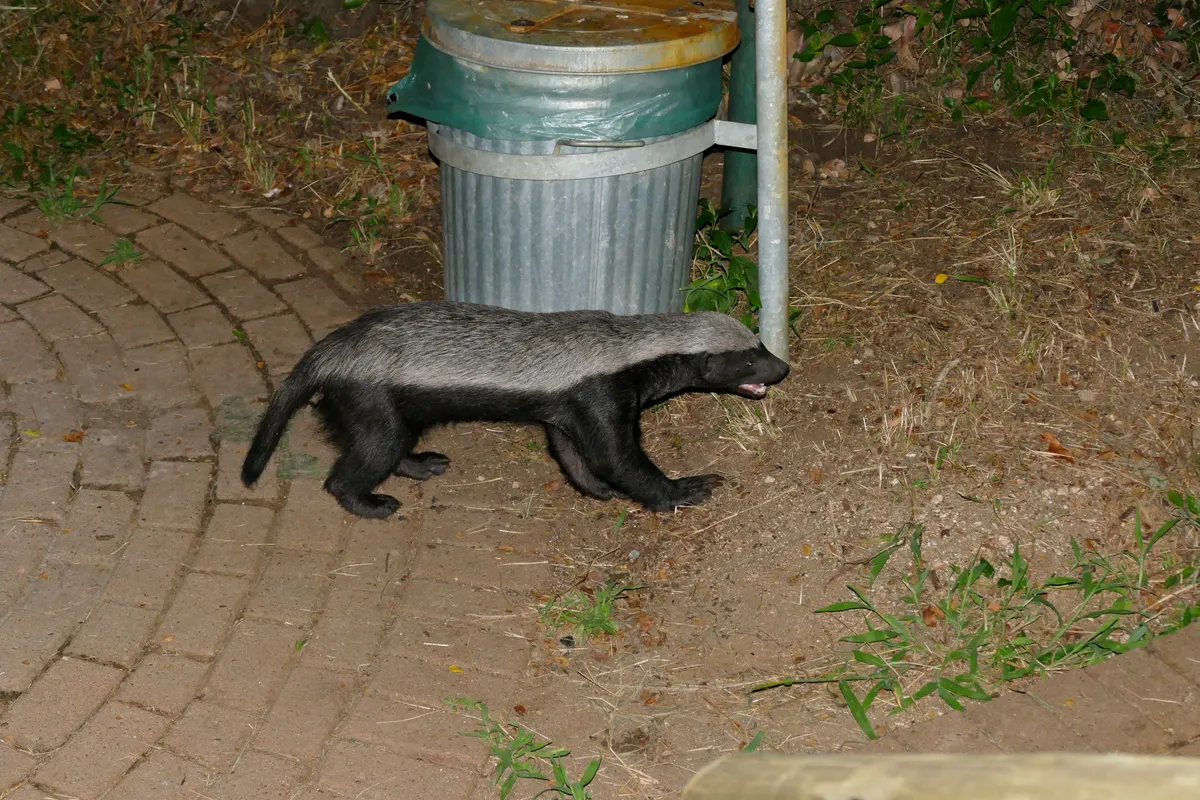
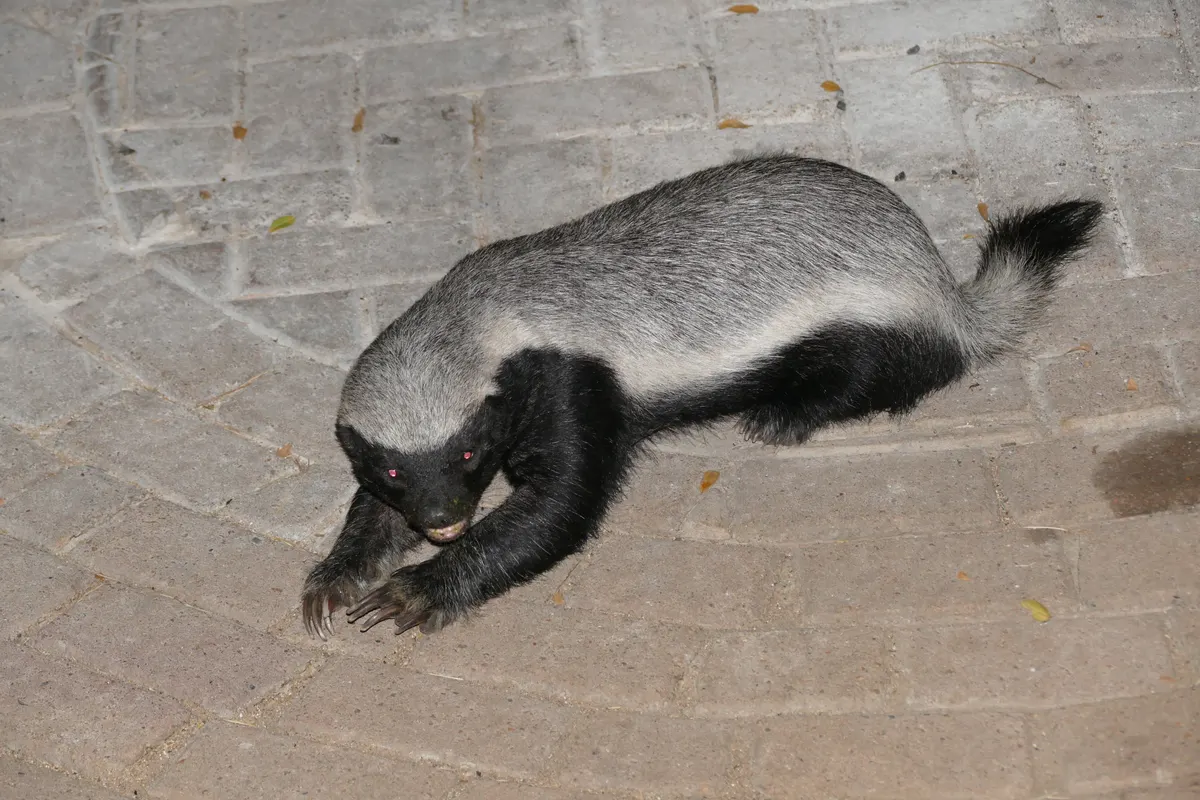
Honey badger walking through dry African bush with gray and black coat
Honey badgers are tough mustelids famous for fearless foraging across Africa and Asia.
MammaliaLeast Concern

Honey Badger Facts

Loose skin lets a honey badger twist and bite even while a predator holds it.

The honey badger is a tough African and Asian mustelid with thick loose skin and a fearless appetite. It digs for prey, raids bee nests, and ranges widely across savanna and scrub.
By · Published · Updated

Quick Facts

Honey Badger at a glance

Mellivora capensisCarnivoraMustelidae

About their home

Kind of animal

Mammalia

Where they live

What they eat

How safe?

Least Concern

Size and speed

How heavy

14 pounds – 35 pounds

How long

22 inches – 30 inches

How fast

Steady trotting and explosive digging; short bursts when chasing prey

Lifespan

About 7 to 10 years

Core article

Honey Badger: ecology and life history

A closer look at habitat, diet, behavior, reproduction, and conservation.

Start here

Honey Badger

Few animals punch so far above their weight as the honey badger (Mellivora capensis), also called the ratel. A stocky member of the weasel family, it is built for digging, raiding, and standing its ground across the savanna and scrub of Africa and southern Asia. Thick loose skin, heavy claws, and a broad appetite let this omnivore take on venomous snakes and bee nests that most predators avoid — the source of its fearless reputation.

Thick, Loose Skin and a Reputation for Fearlessness

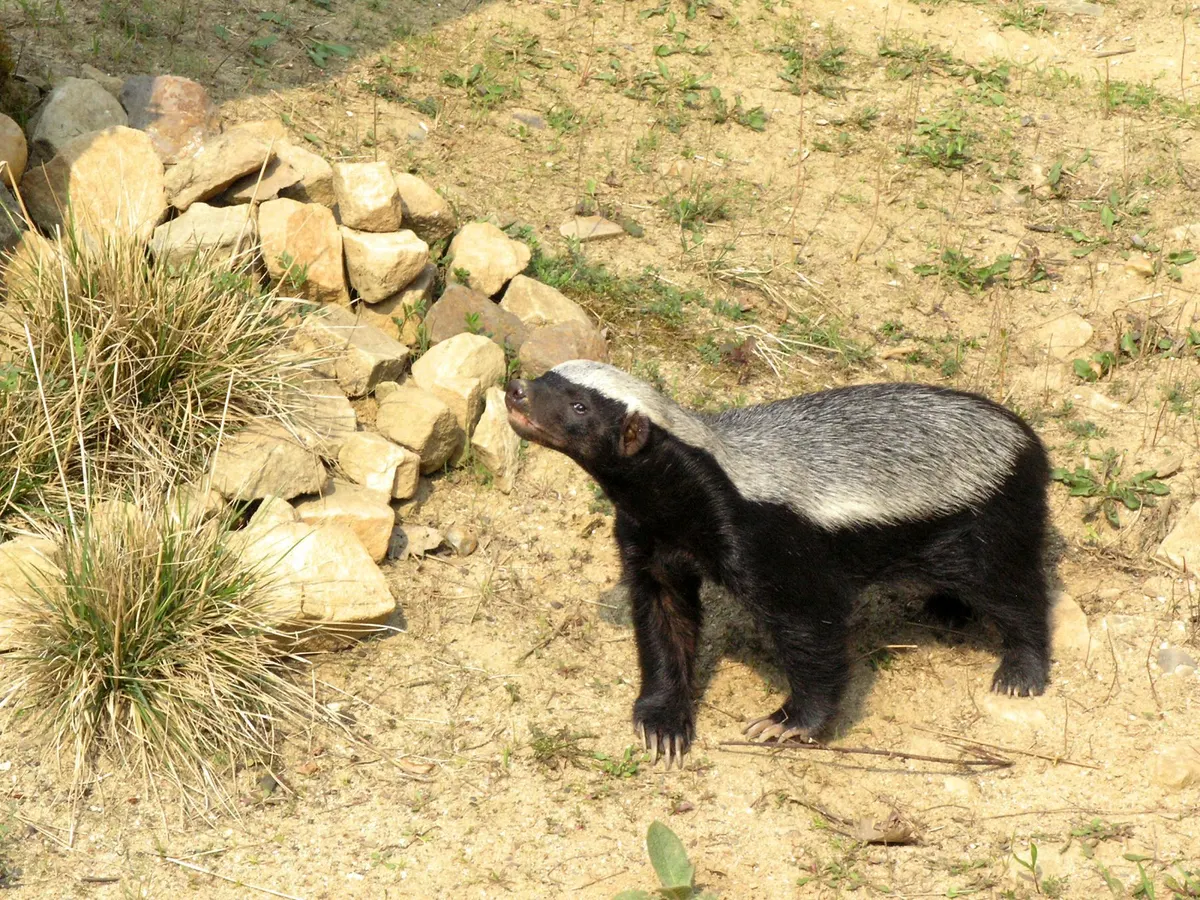
The honey badger's most useful defence is its hide: thick, rubbery, and loose enough that an animal grabbed by the neck can twist around inside its own skin to bite back, so a predator rarely gets a killing grip. The rest of the body is made for hard work — long foreclaws for digging dens and tearing open nests, broad jaws that crush beetle grubs, tough hide, and small bones, and small ears and a blunt snout that resist damage when it shoves into a bee colony or thorn scrub. Adults are only about 22 to 30 inches long and 14 to 35 pounds, with males larger, and a pale grey mantle over dark underparts. It is the only living species in its genus, related to wolverines and otters but following its own path as an open-country digger.

Where Honey Badgers Live

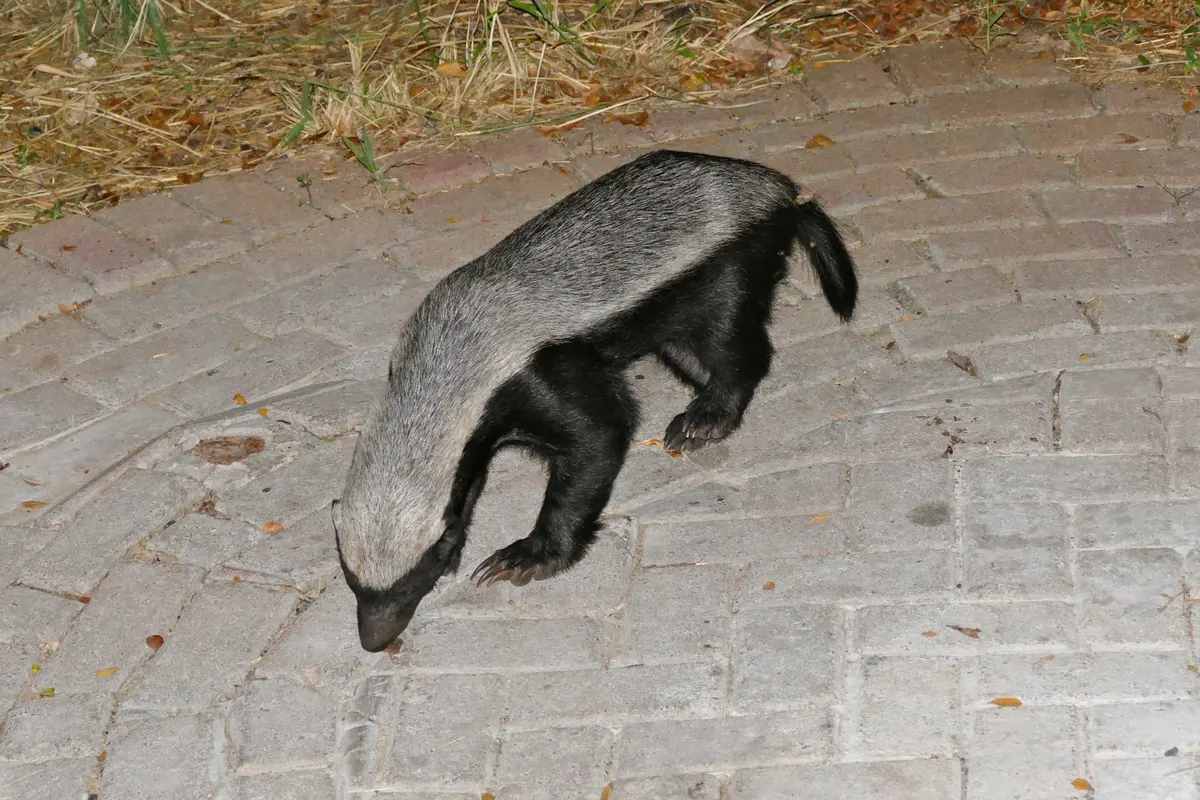
Honey badger crossing sandy savanna habitat at camp edge
Dense scrub and open plains both work if dens and prey are available.

The honey badger has one of the widest ranges of any African carnivore, using savanna, dry woodland, scrub, and semi-desert from sub-Saharan Africa through Arabia to India. Wherever there are dens, prey, and cover it can make a living. It sleeps and raises young in burrows, either dug itself or taken over and enlarged, and ranges widely at night because food is patchy — a single night's foraging may cover long distances between termite mounds, rodent colonies, and fruiting shrubs. By day it usually rests underground to escape the heat.

What Honey Badgers Eat (Including Venomous Snakes)

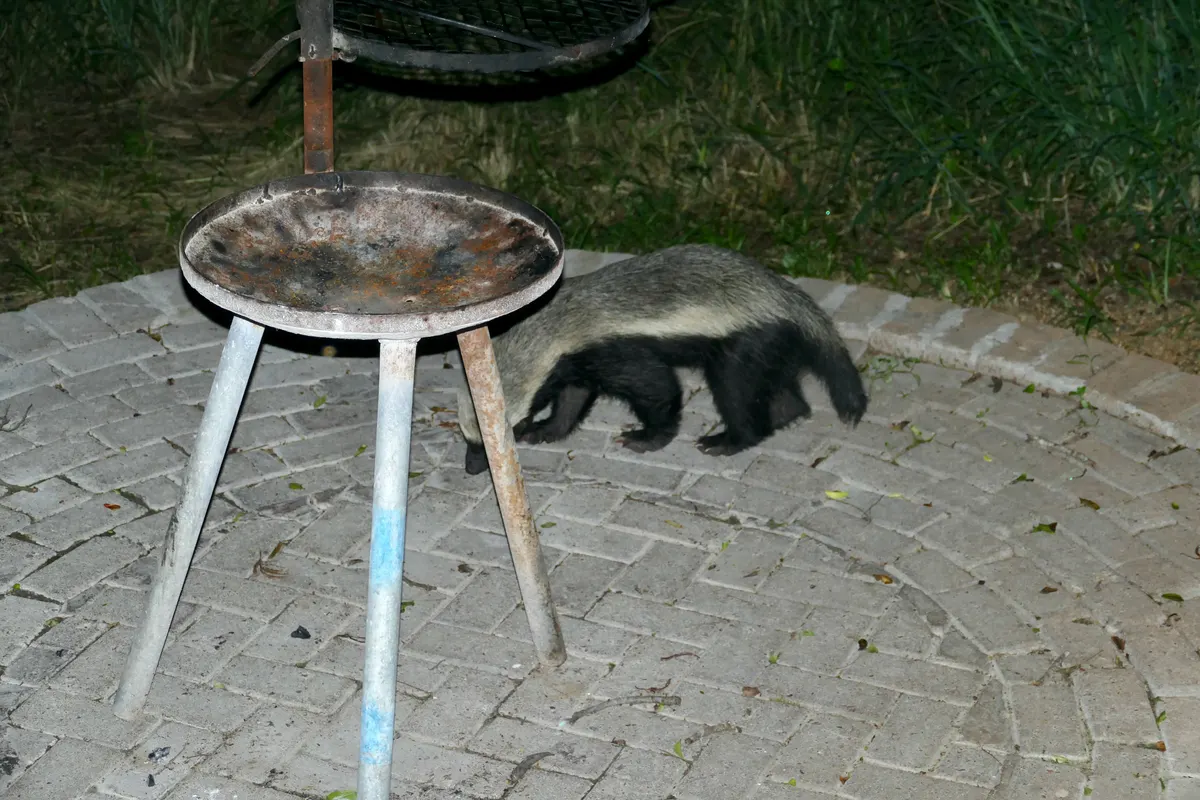
Honey badger investigating a campsite for leftover food
Opportunistic hunting includes reptiles, small mammals, and buried insect nests.

Honey is only one item on a long menu. Honey badgers eat rodents, birds, eggs, insects, carrion, roots, and fruit — and, notably, snakes, including venomous species that most predators leave alone. Digging is the signature technique, unearthing nests, burrows, and buried larvae that other hunters miss. Bee nests demand a special tolerance for stings as the badger tears in for larvae and honey, and it will cache food to return to later. This opportunism is what carries it through dry seasons when preferred prey is scarce.

Behavior: Solitary, Bold, and Musky

Adult honey badger representing solitary mustelid social structure
Outside pup-rearing, honey badgers rarely tolerate other adults nearby.

Adults are mostly solitary except when mating or raising pups, marking territory with a pungent musk from anal glands. Threatened, a honey badger often stands its ground — raising its mane, releasing musk, and facing the danger rather than fleeing — and has been recorded harassing much larger predators such as lions or trying to steal their kills, though that boldness is risky. More often it relies on dens and cover to avoid a direct fight. Close encounters come with growls, whines, and rattling calls.

Life Cycle: One or Two Well-Taught Pups

Honey badger in a zoo enclosure representing a younger-looking individual
Young honey badgers stay with the mother while learning to dig and raid nests.

Honey badgers can breed year-round in much of the range. After delayed implantation and roughly 50 to 70 days of active development, the female usually bears one or two pups in a den, born blind and helpless. The young stay underground for weeks while she forages nearby, then accompany her for many months — learning where to dig and how to handle dangerous prey, a longer apprenticeship than many small carnivores need because the skills are complex. Wild lives are often under a decade; in human care honey badgers may reach their twenties.

Conservation: Least Concern but Locally Declining

World map highlighting honey badger genus range in gold
Mellivora is a single-species genus spanning Africa and southern Asia.

The honey badger is Least Concern overall, but numbers are falling in parts of the range. Conflict with beekeepers and farmers leads to trapping and poisoning, and roadkill, snaring, and habitat fragmentation reduce local populations. Because each animal uses a large home range, even good habitat supports relatively few adults, so reducing conflict around apiaries, protecting mixed savanna, and limiting indiscriminate poisoning matter for keeping populations stable.

References and Authoritative Sources

Honey Badger: classification and fun facts

Classification

Scientific Taxonomy
  1. Kingdom

    Animalia

  2. Phylum

    Chordata

  3. Class

    Mammalia

  4. Order

    Carnivora

  5. Family

    Mustelidae

  6. Genus

    Mellivora

  7. Species

    M. capensis

Did You Know?

Fun Facts

1

Loose skin lets a honey badger twist and bite even while a predator holds it.

2

They raid beehives for larvae and honey and can endure many stings.

3

Honey badgers have been filmed attacking venomous snakes.

4

A single adult may travel many miles in one night of foraging.

5

They dig dens that stay cooler than the surrounding savanna.

6

Despite the name, they eat far more animals than honey.

Common Questions

FAQ about Honey Badger

Select a question to reveal the answer.

What is a honey badger?

A honey badger, or ratel, is a medium-sized mammal in the weasel family (Mustelidae). It is known for strength, tough skin, and bold foraging across Africa and southern Asia.

Where do honey badgers live?

They live in savanna, scrub, dry woodland, and some semi-desert habitats from Africa through the Middle East to India.

What do honey badgers eat?

Honey badgers are opportunistic omnivores. They eat rodents, snakes, insects, bee larvae, honey, birds, carrion, and occasional plant food.

Why are honey badgers so tough?

Thick loose skin, strong jaws, sharp claws, and a fearless hunting style help them survive bee stings, snake bites, and fights with larger predators.

Are honey badgers related to wolverines?

Yes. Both belong to the Mustelidae family, but they live on different continents and fill different ecological niches.

What is a baby honey badger called?

A baby honey badger is called a pup. Mothers raise one or two pups in dens and keep them for many months.

Show 1 more questionsExpand
Are honey badgers endangered?

They are listed as Least Concern overall, but local declines occur from human conflict, trapping, and habitat change.