
Animal guides
Why Are Red Pandas Not Giant Pandas?
The name is shared, the menu overlaps, but a red panda is neither a small bear nor a young giant panda.
By An Nguyen · Published · Updated
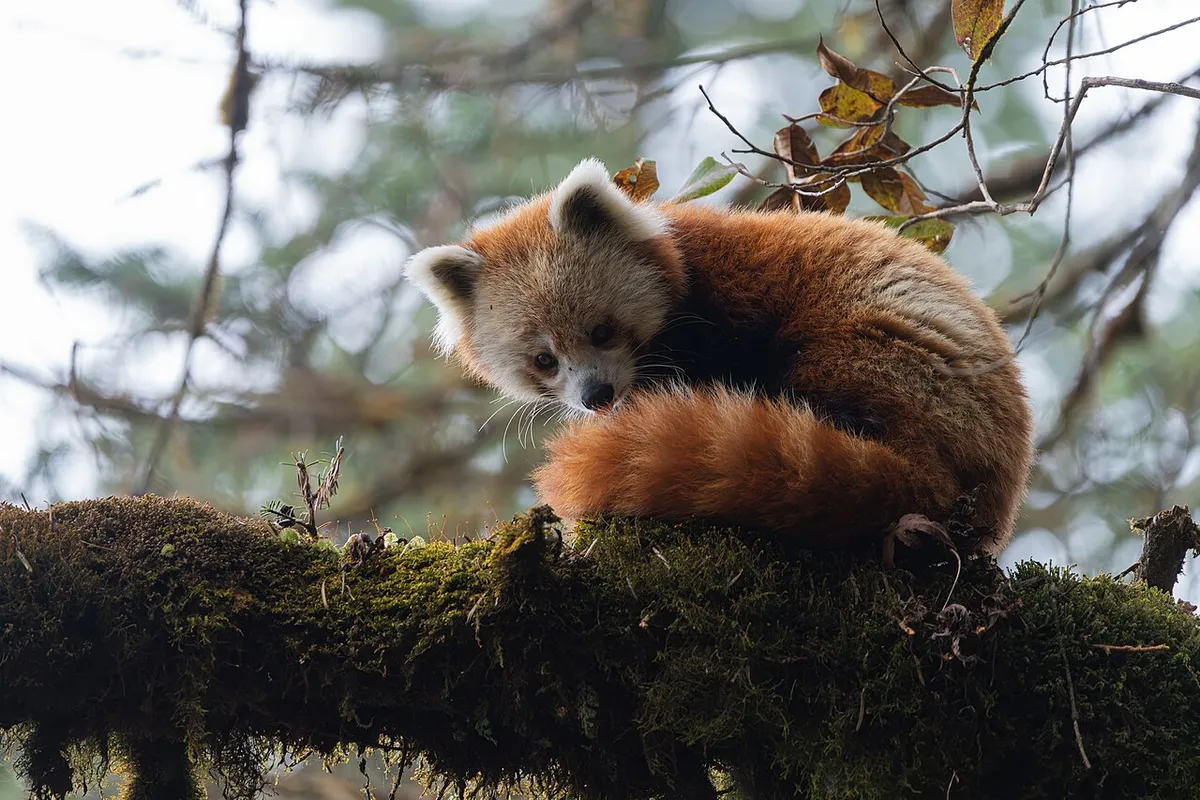
Red pandas and giant pandas share one very obvious habit: both eat bamboo. Their names, round faces, and black-and-white-or-red coats make the comparison feel natural. But a red panda is not a small giant panda, a bear cub, or a kind of raccoon. It is the only living member of its own animal family.
The shared name is about bamboo, not close family
The word “panda” is often linked to a Nepali word for a bamboo eater. That makes sense for both animals: bamboo is the main food of a red panda and a giant panda. But eating the same plant does not make two animals close relatives. Many animals evolve similar solutions when they live in similar habitats or use the same food source.
Smithsonian's National Zoo places red pandas in the family Ailuridae. Giant pandas are bears in the family Ursidae. Modern genetic work puts red pandas on their own branch among carnivores, nearer the broader group that includes raccoons, skunks, and weasels than the bear family.
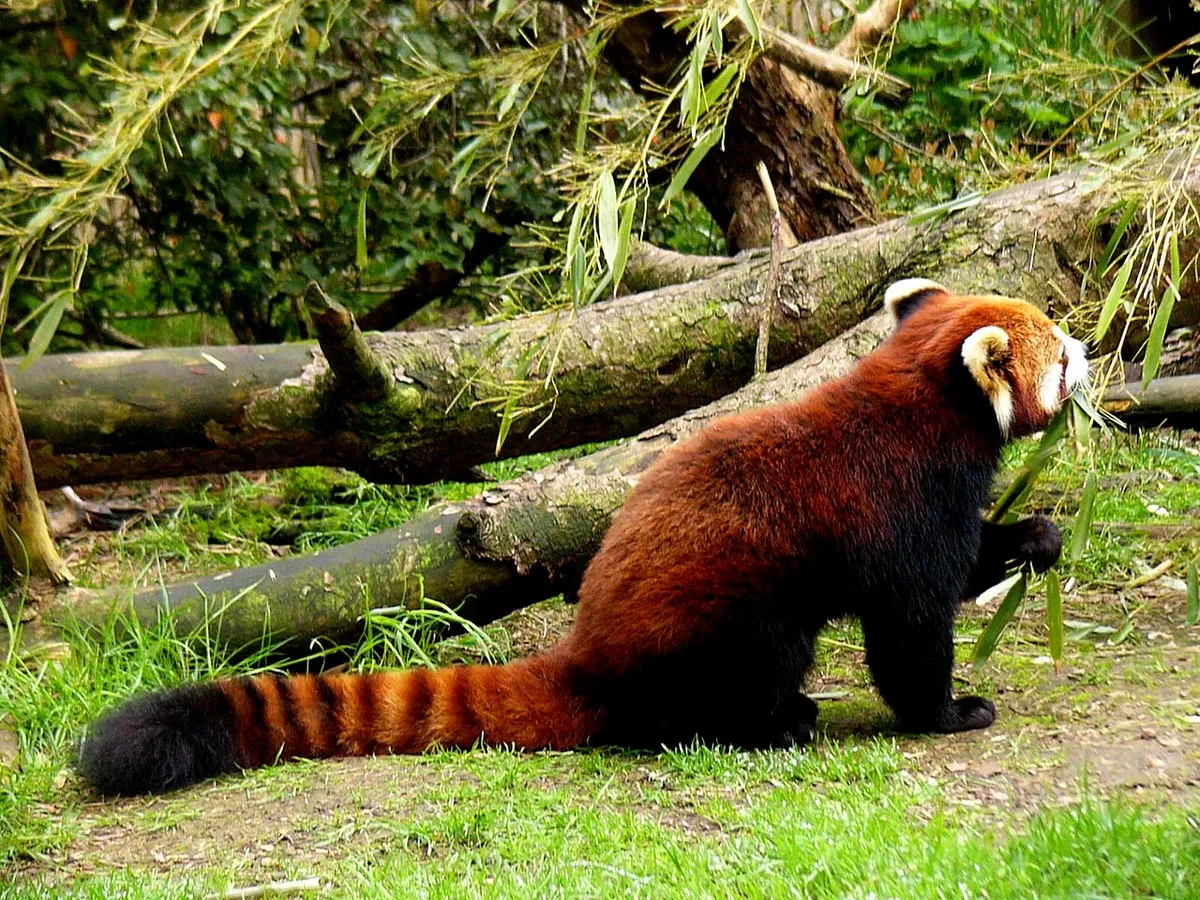
Photo by saska01 via Wikimedia Commons, CC BY 2.5.

Why do both animals eat so much bamboo?
Bamboo grows in the cool mountain forests where red pandas live. It is dependable, but not especially energy-rich, so a red panda is selective. It tends to choose tender shoots and leaf tips rather than chewing every tough woody stem. A modified wrist bone, sometimes called a pseudo-thumb, helps it grip a stem while feeding.
This is a useful example of convergence: giant and red pandas use bamboo and a thumb-like wrist adaptation, but their shared lifestyle is not proof of a close family relationship. It is an answer to the same practical problem — how to handle a slippery plant efficiently.
A red panda is built for the trees
Size is the first clue. A red panda is closer to a house cat in scale than to a giant panda. Its long, ringed tail is a balance tool on branches and can be wrapped around the body in cold weather. Dense fur also helps in the chilly forests of the Himalayas and nearby mountain ranges.
Red pandas are skilled climbers and spend much of their time above the ground. Trees offer resting places, routes through the forest, and a way to avoid predators. The species is usually solitary outside the breeding season, so seeing several together is more common among young animals or a family group.
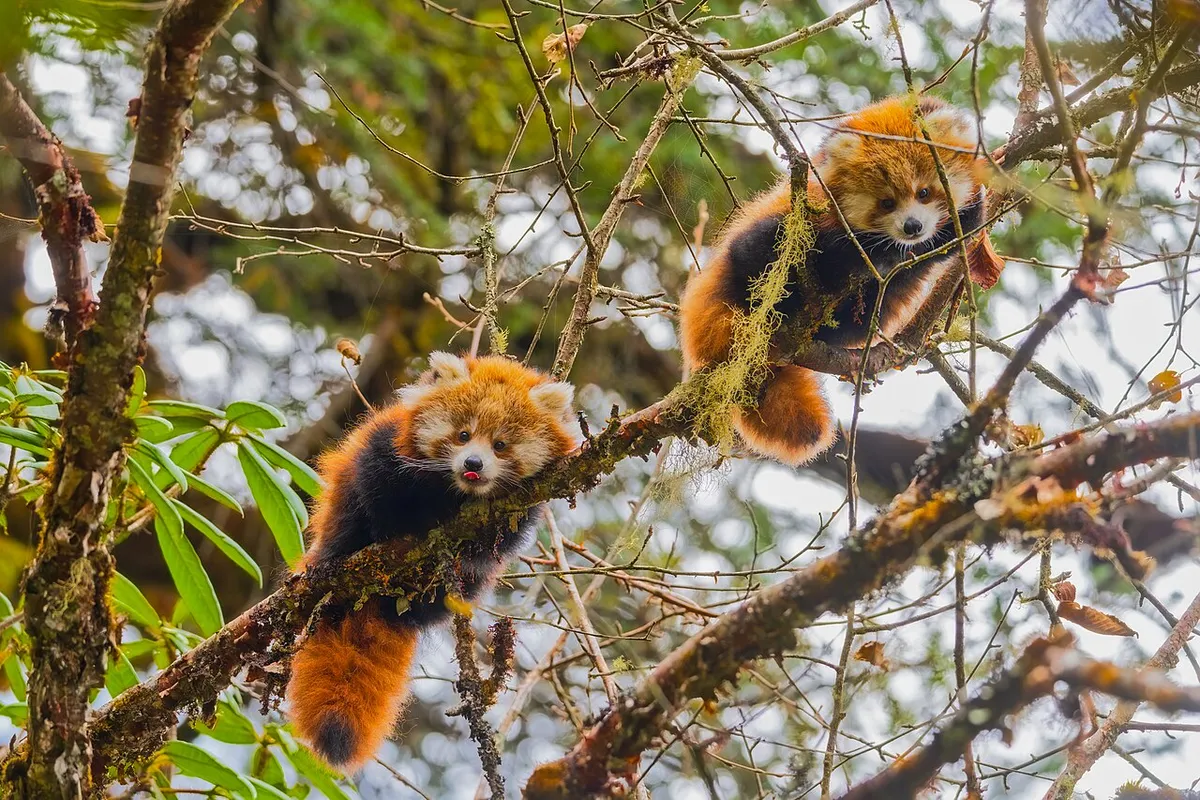
Photo by Ganga Raj Sunuwar and UnpetitproleX via Wikimedia Commons, CC BY-SA 4.0.

Why does the distinction matter?
Calling a red panda “a type of panda” is fine in everyday speech, but its separate family tells a more interesting story. Its survival depends on the high forests, bamboo, and connected tree cover of Asia. Protecting those places helps an animal with its own evolutionary history, not a smaller copy of a more famous bear.
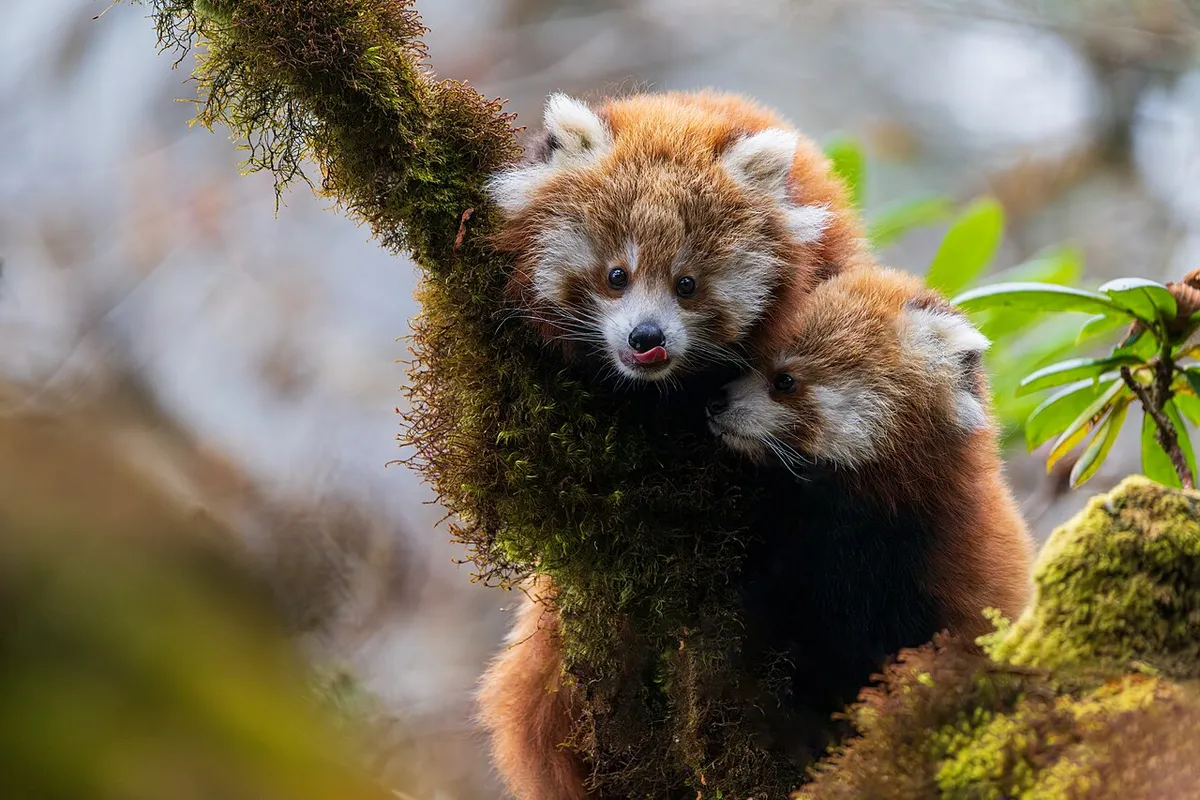
Photo by Sunuwargr via Wikimedia Commons, CC BY-SA 4.0.

Convergence is not kinship
Bamboo diets and thumb-like wrist bones make the two animals look like cousins in lifestyle, but the deeper family trees split. A red panda is the living representative of Ailuridae. A giant panda is a bear in Ursidae. Shared food and a gripping wrist are solutions that evolved more than once.
That distinction matters for education and conservation messaging. Protecting “pandas” as one vague category hides two different animals with different body plans, ranges, and threats. For a structured side-by-side, see giant panda vs red panda.
The short answer
Red pandas are called pandas because they eat bamboo, but they are not close relatives of giant pandas. A red panda belongs to the family Ailuridae, has a tree-climbing body and a balancing tail, and represents its own distinct branch of the carnivore family tree.
For habitat, diet, and conservation status, see the full red panda profile.