
Animal guides
How Do Tigers Ambush Prey?
A tiger hunt depends on getting close unseen; speed and strength matter only after the stalk has closed the distance.
By An Nguyen · Published · Updated
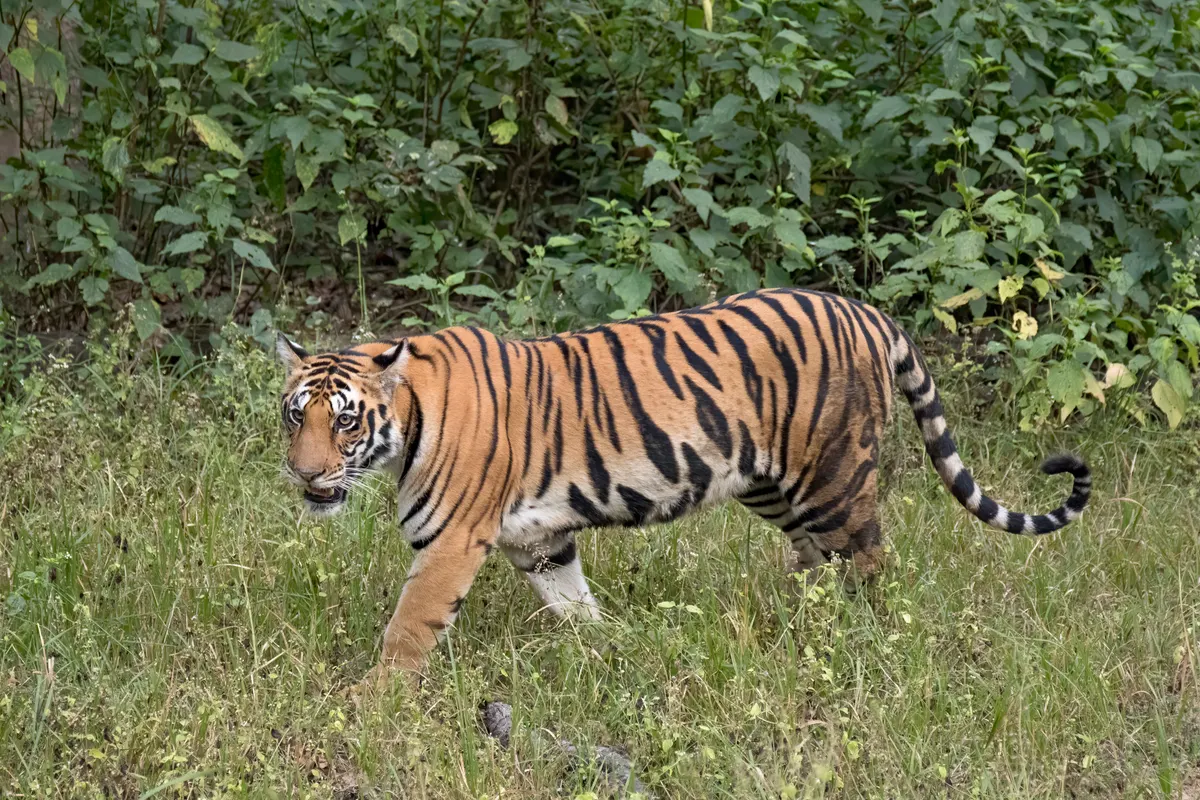
A tiger usually catches prey by approaching unseen and attacking over a short distance. Its heavy body can accelerate quickly, but it is not built to chase deer or wild pigs for kilometers. The decisive part of the hunt often happens before the tiger runs.
This solitary strategy combines concealment, careful foot placement, timing, and strength. Stripes help break up the cat's outline, but camouflage works only when the tiger also uses vegetation, terrain, wind, and low light effectively.
How does a tiger get close?
A hunting tiger moves slowly through grass, forest understory, reeds, or mangrove cover. It may pause whenever the target raises its head, then continue when the animal resumes feeding. Approaching from downwind can reduce the chance that scent reaches the prey.
Vertical black stripes interrupt the shape of the body among stems and shadows. They do not make the tiger invisible. A poor approach angle, an alarm call, or one alert member of a herd can end the attempt before the final rush.
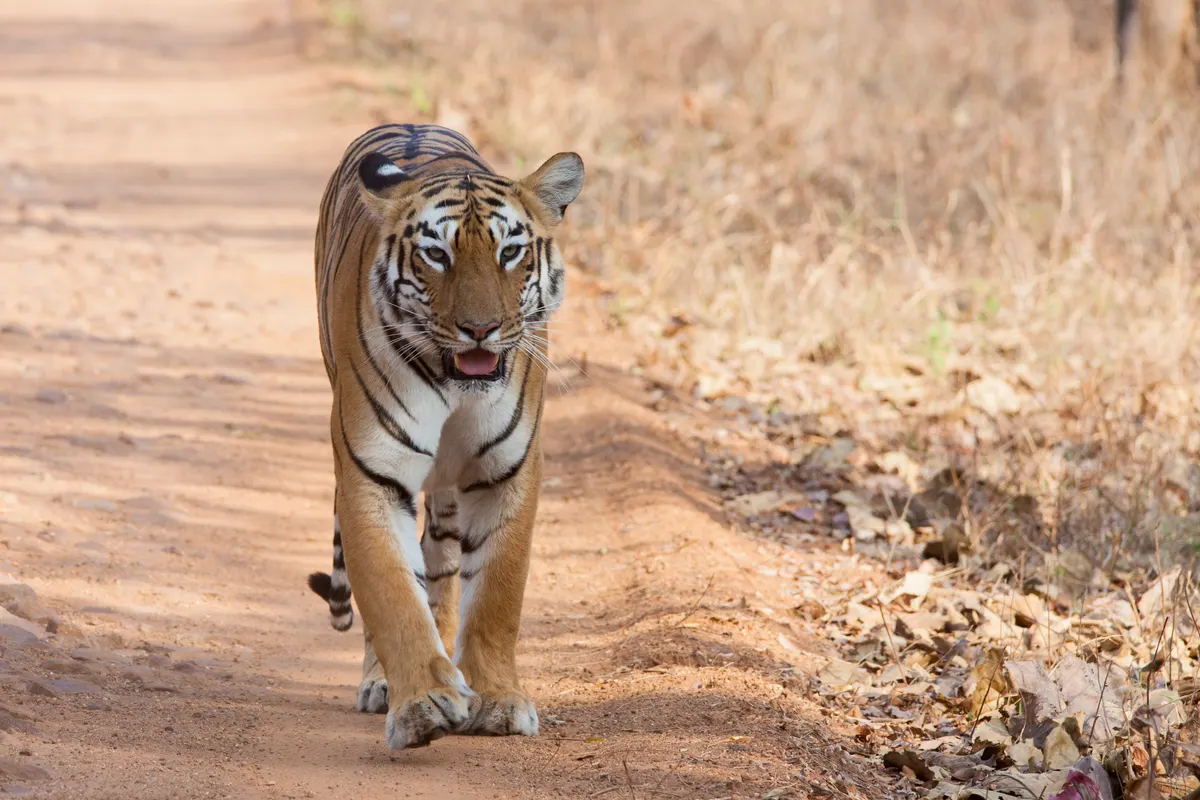
Photo by Stephenekka via Wikimedia Commons, CC BY-SA 4.0.

What happens during the attack?
Once close enough, the tiger accelerates in a short burst and tries to reach the prey before it gains speed or open space. Strong forelimbs and retractable claws help it grip, pull, or knock the animal off balance. The tiger then uses its jaws to control and kill the prey.
The exact bite depends partly on prey size and position. A bite to the back of the neck can damage the spinal cord in smaller prey. With larger animals, the tiger may hold the throat and restrict breathing. Hunts are dangerous: antlers, horns, hooves, and tusks can injure a predator, so surprise reduces both effort and risk.
After a successful hunt, a tiger may drag the carcass into cover and feed over several sessions. It can consume a large meal, then rest nearby and return until the meat is gone or scavengers take it.
How is this different from other big cats?
Tigers and leopards are both solitary ambush hunters, but a tiger is much larger and often targets heavier deer, wild pigs, or bovids. Leopards frequently haul prey into trees where conditions allow, a tactic unavailable to an adult tiger with a large carcass.
Lions can also stalk and ambush, but lionesses may cooperate by approaching from several directions or steering prey toward another hunter. The social contrast is explained in lion vs tiger. A cheetah uses concealment to reach a suitable starting distance too, then depends on a faster, more extended sprint and rapid turns in relatively open ground.
These categories overlap. Lions sometimes hunt alone, cheetahs still stalk, and tigers may pursue briefly after being detected. The difference is which part of the sequence each body and social system emphasizes.
Why do tiger hunts fail?
Prey animals are alert and often live in groups, where many eyes, ears, and noses can detect danger. A tiger may be seen, smelled, or heard before it reaches striking range. It may also choose not to continue if the target is too far away or the approach exposes it.
Abandoning a poor attempt conserves energy and avoids injury. An ambush predator does not need every stalk to succeed; it needs enough successful hunts over time to meet its energy needs.
The short answer
Tigers ambush prey by using cover and striped camouflage to stalk close, then launching a short rush. They seize the target with powerful forelimbs and usually use a neck or throat bite. Their method prioritizes surprise and strength rather than cooperative hunting or a long high-speed chase.