
Animal guides
Why Do Leopards Rest in Trees?
A leopard in a tree is not lost. Climbing gives this solitary cat a calmer place to rest, watch, and sometimes protect a meal.
By An Nguyen · Published · Updated
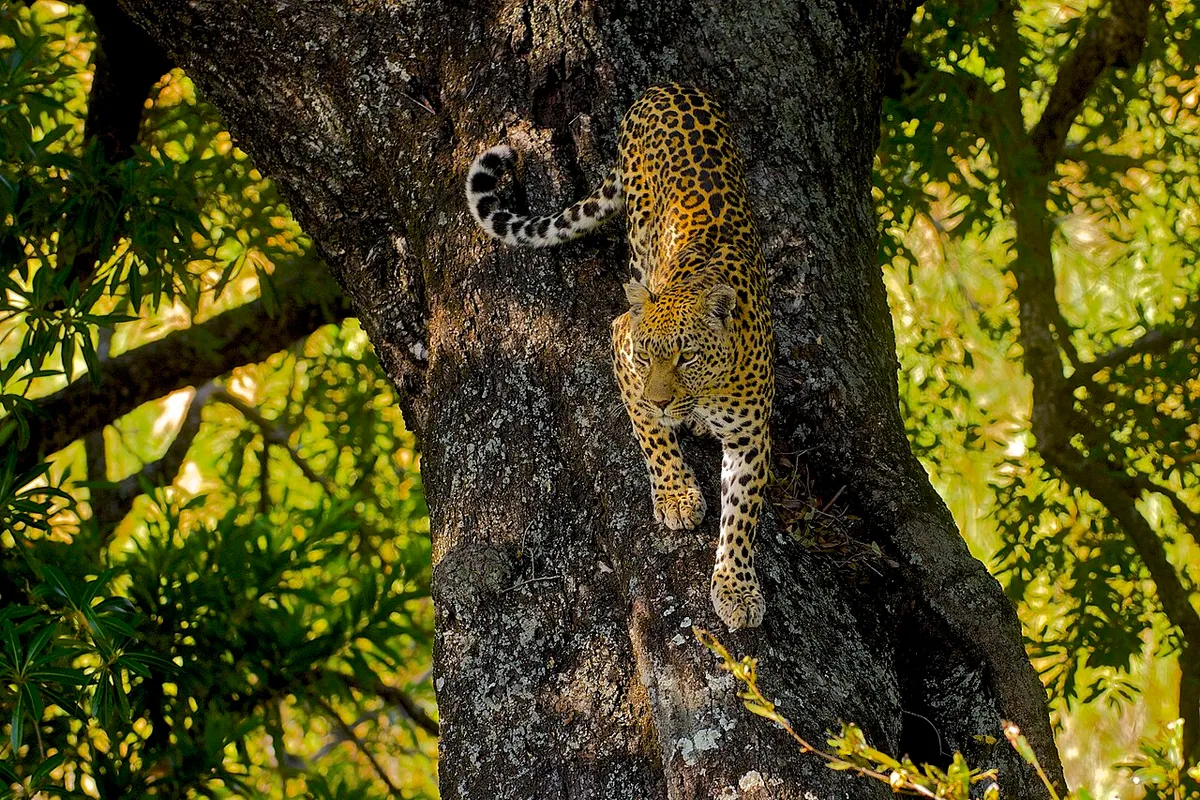
Seeing a leopard stretched along a branch can look like a nap with a view. Rest is part of it, but trees are also lookouts, escape routes, and sometimes food lockers. In landscapes shared with lions, spotted hyenas, and people, a climbing cat gains options that a ground-only hunter does not.
Leopards are not the only cats that climb, but they use trees more consistently than most large carnivores. The behaviour is flexible rather than fixed: a leopard may rest on the ground in dense cover, haul a kill into a fork when scavengers are close, or ignore a tree entirely when the habitat offers little useful height.
Trees are useful resting platforms
Leopards are capable climbers. A branch can be cooler than sunlit ground and gives a cat a place to rest while remaining alert. From above, a leopard can watch movement below without sitting in the middle of it.
That vantage point matters for a solitary ambush hunter. A leopard often works alone, so early detection of prey, competitors, or people can decide whether it stays hidden or moves on. Resting above the ground also reduces disturbance from insects, heat radiating off open earth, and the traffic of other animals along game trails.
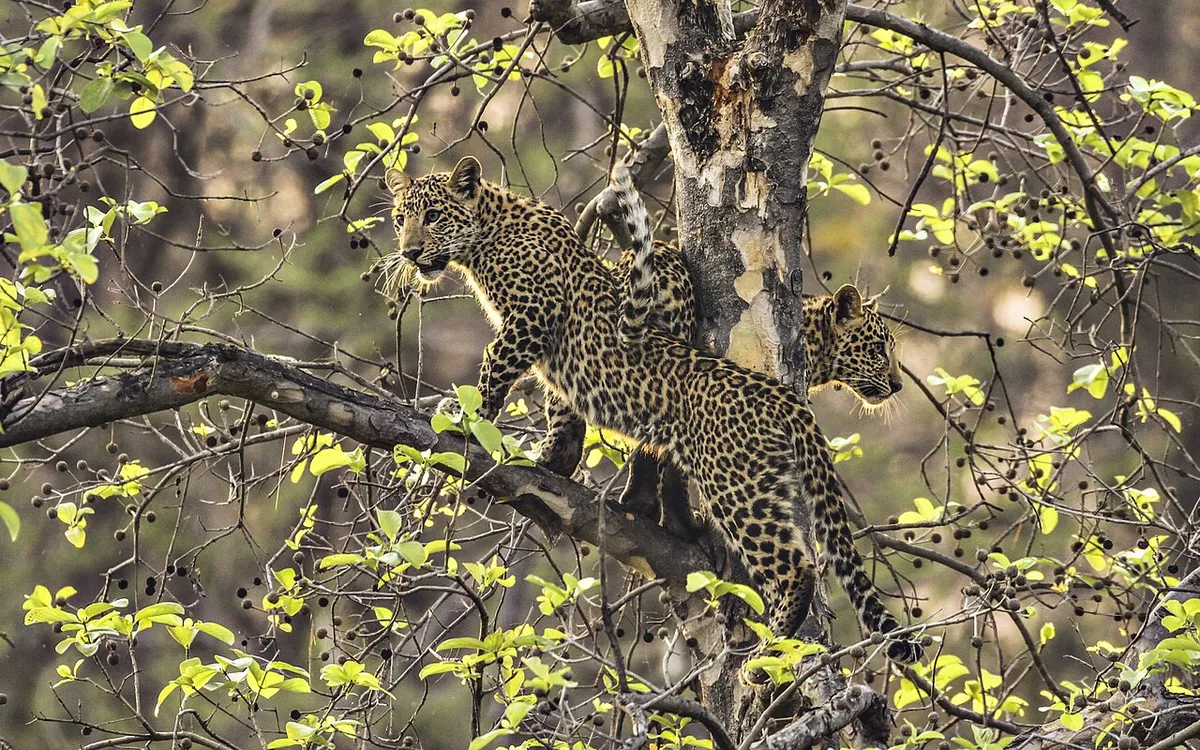
Photo by Davidvraju via Wikimedia Commons, CC BY-SA 4.0.
.jpg)
A way to reduce competition
In some habitats, lions and spotted hyenas may take a leopard's food. A leopard can drag a smaller kill into a suitable tree, keeping it out of reach of many scavengers on the ground. Not every leopard does this with every meal: the value of a tree depends on the animal, the prey size, branch strength, and local competition.
Caching food above ground also stretches a meal. A leopard may feed, leave the carcass, and return later. That pattern makes sense for a hunter that may not succeed every night and cannot afford to lose a hard-won kill to larger predators. When trees are scarce or prey is too heavy to lift, the same cat may feed quickly on the ground or abandon parts of the carcass.
Climbing fits a solitary hunter
Leopards spend much of their time alone. Cover, quiet resting sites, and the ability to move between ground and branches all support a hunter that benefits from avoiding attention. Their spotted coat also helps break up the body outline among leaves, grass, and shade.
Climbing is therefore part of a broader toolkit rather than a single trick. Leopards live across a wide range of habitats—from forest and woodland to rocky hills and more open country—so the same species can look like a tree specialist in one place and a ground stalker in another. Where canopy and forks are available, the tree becomes another layer of the home range.
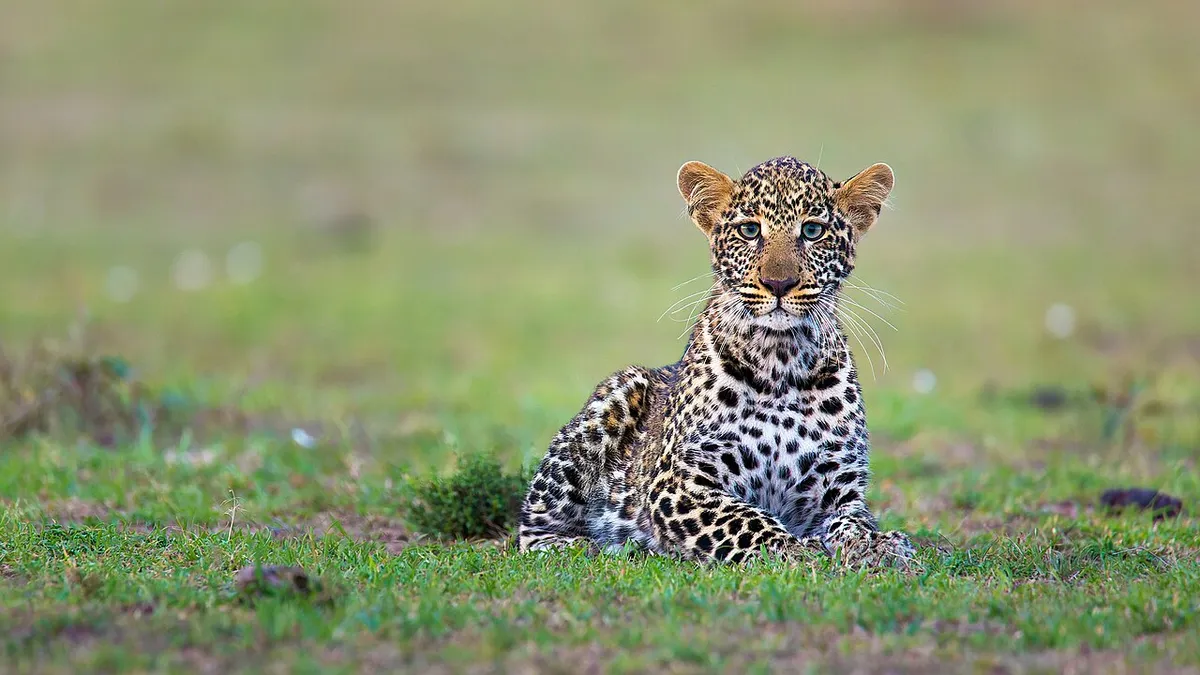
Photo by Sumeet Moghe via Wikimedia Commons, CC BY-SA 4.0.

Not every big cat uses trees the same way
Comparisons with other cats help clarify what is distinctive. A cheetah is built for open-ground sprinting and rarely depends on climbing. A jaguar is powerful in water and forest habitats, but the classic image of a carcass draped over a branch is more strongly associated with leopards in many African and Asian landscapes. Lions may climb in some places, yet they are not tree specialists in the same way.
The difference is ecological as much as anatomical. Leopards combine stealth, climbing skill, and a solitary feeding strategy. Trees reward that combination when competitors are larger, denser, or more social. For a side-by-side look at related cats, see leopard vs cheetah and jaguar vs leopard.
Why the behaviour still varies
Tree use can change with age, sex, prey, weather, and human pressure. A leopard carrying a heavy impala may choose a strong, low fork. The same animal resting in midday heat may pick shade higher up. In areas with few tall trees, rocky ledges or thick scrub can play a similar role: elevated or concealed rest sites that reduce conflict.
That variation is why a single photograph of a leopard in a tree should not be read as a universal rule. It is one common solution inside a flexible species. The more useful question is what problem the tree solves in that landscape—heat, visibility, food security, or all three.
The short answer
Leopards rest in trees because a branch can offer shade, a lookout, and sometimes a safer place for food. Climbing supports a solitary hunter that often shares landscapes with stronger scavengers and competitors. It is one flexible behaviour in a cat adapted to moving through both ground cover and trees.
For range, diet, hunting behaviour, and conservation status, see the full leopard profile. Related cats in the same family hub are listed under Felidae.