
Animal guides
Why Do Lions Live in Prides? Territory and Cubs
Pride life helps lions hold productive territory and protect cubs, while cooperation can improve some hunts.
By An Nguyen · Published · Updated
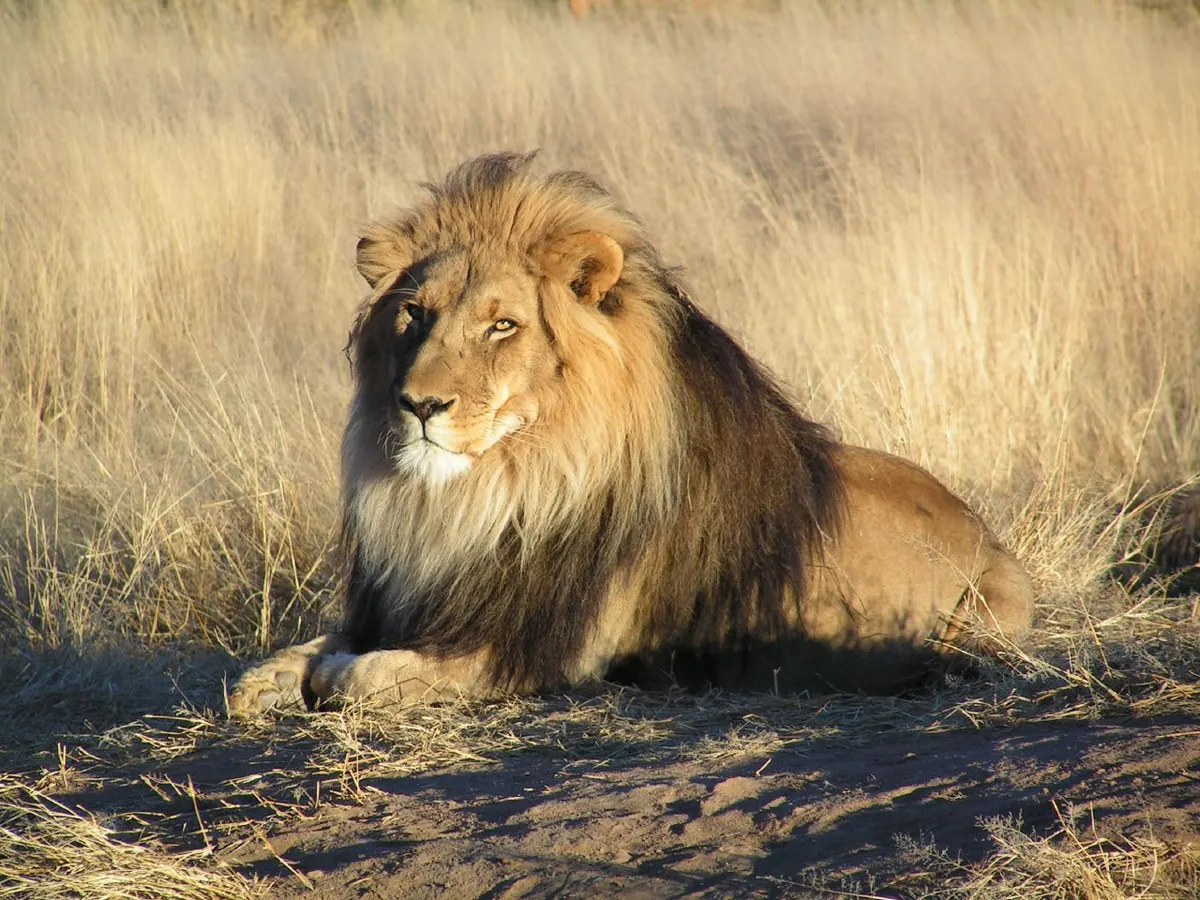
Most lions are more social than other wild cats because group living can help them hold territory, protect cubs, and use large prey. A pride is not a permanent crowd led by one unchanging ruler. It is a flexible social unit whose core usually consists of related adult females and their dependent young.
One or more adult males may associate with and defend a pride for a period. These males often form a coalition, sometimes with brothers or other relatives, while females commonly remain in or near the group into which they were born.
Who belongs to a pride?
Mothers, daughters, sisters, and aunts often form the stable center of a pride. They share a range and tolerate close contact around resting sites, kills, and cubs. Females may give birth around similar times, and cubs can grow up among several adults and litters.
Male membership changes more often. Young males usually leave their birth pride as they mature and may join other males. A coalition that gains control of a pride helps defend its territory and access to the females. Rival coalitions can later displace it, so this association may last only part of an adult male's life.
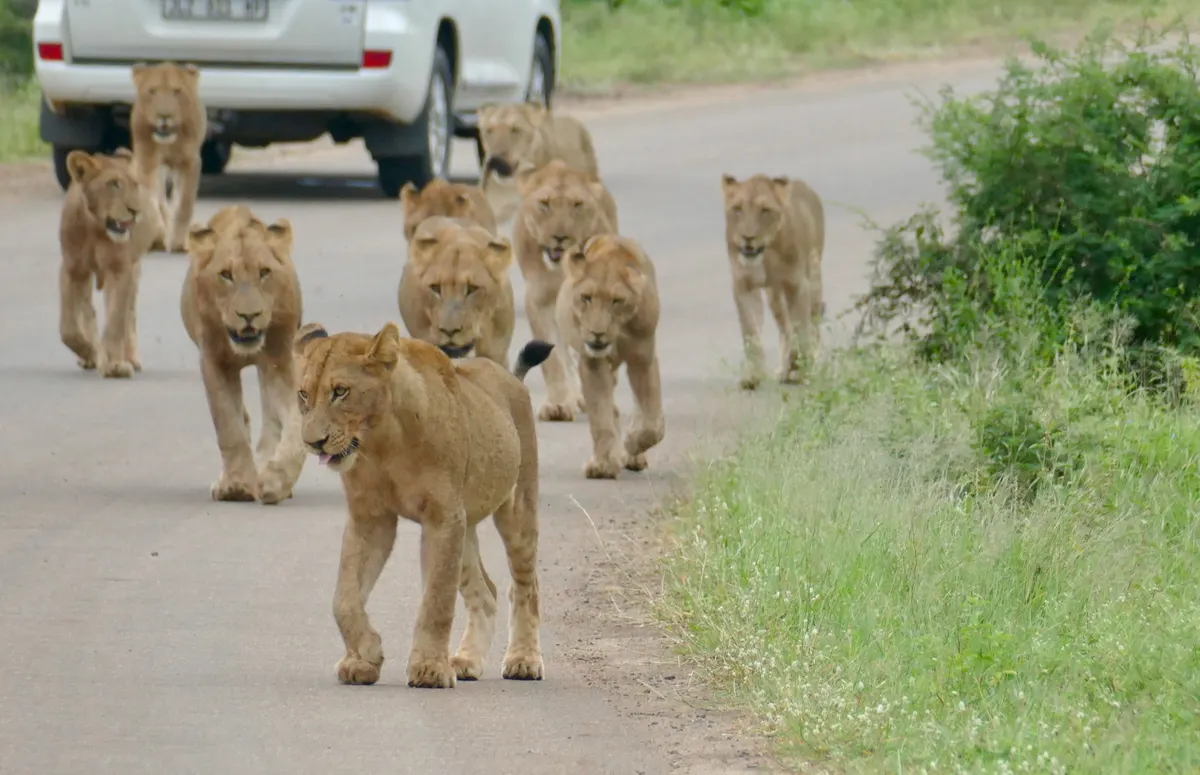
Photo by Bernard DUPONT from FRANCE via Wikimedia Commons, CC BY-SA 2.0.
_pride_..._(52742147651).jpg)
Does pride life make hunting easier?
Cooperation can help lionesses surround or redirect prey and can improve their ability to tackle animals such as wildebeest, zebra, or buffalo. Several hunters may approach from different directions, reducing the prey's escape routes before a short attack.
That does not mean every lion hunts in a coordinated group. Lions also hunt alone, in pairs, or in small subgroups, depending on prey, cover, and who is nearby. Large groups must share a carcass, so more hunters do not automatically mean more food for every individual. The value of cooperation changes with the size and danger of the target.
This differs from a tiger's usual strategy. Tigers are mainly solitary stalk-and-ambush hunters. The broader contrast in social life, range, and hunting is covered in lion vs tiger.
How does the pride protect cubs?
Cubs face threats from hyenas, leopards, starvation, accidents, and unfamiliar male lions. Several resident females can detect danger, defend a resting group, and maintain access to productive habitat. Lionesses may also nurse cubs other than their own, although milk and protection are not distributed equally in every pride.
Coalition males can deter rival males and other large competitors. Their presence does not remove all danger: when a new coalition takes over, incoming males may kill dependent cubs. Pride life therefore reduces some risks while creating competition and conflict within a changing social system.
Why do other big cats live alone?
Social behavior depends on the costs and benefits of sharing space and food. African savannas can support concentrations of large hoofed prey, and open habitat makes group defense and cooperative attacks useful under some conditions. A solitary forest cat may gain less from sharing a dispersed prey base.
Lions still need personal space, and pride members frequently split into smaller parties before reuniting. Biologists call this fission-fusion behavior: group size and composition change through the day and across seasons.
The short answer
Lions live in prides because related females can cooperate in territory defense, cub protection, and some hunts, while coalitions of males defend access to the group and its range. The pride is a flexible network of relatives and temporary associates, not a rigid hierarchy from mythology.
For anatomy, diet, distribution, and conservation status, see the full lion profile.