
Animal guides
Where Do Axolotls Live in the Wild?
Captive axolotls live around the world, but the wild species is confined to a fragmented freshwater landscape of canals, chinampas, and refuges in Xochimilco.
By An Nguyen · Updated
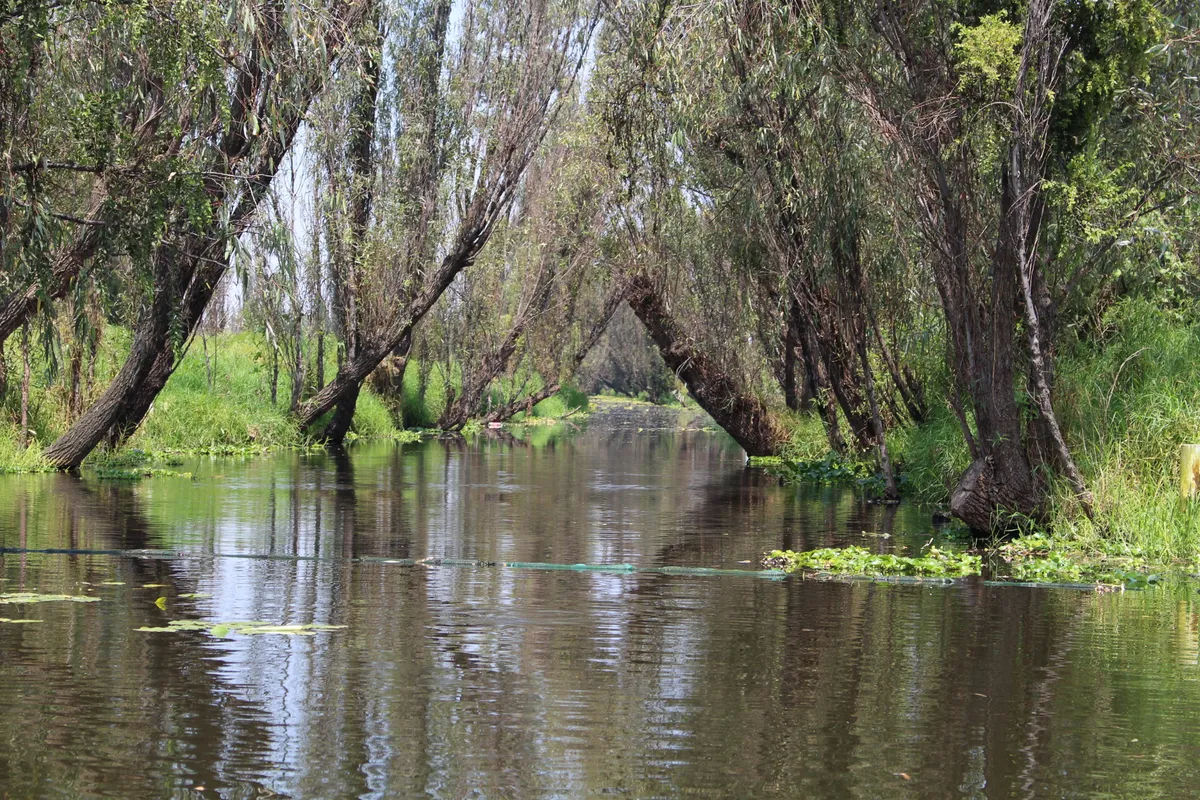
Wild axolotls live in the canals and remnant wetlands of Xochimilco in southern Mexico City. That is the central fact hidden by their popularity: captive axolotls are found in homes, zoos, and laboratories around the world, but the native species survives in a small, fragmented freshwater system at roughly 2,200 meters above sea level.
The habitat is not an untouched wilderness. Xochimilco is a working cultural landscape of canals and chinampas—raised agricultural plots built in shallow lake water. Wild axolotls persist along its muddy canal bottoms, vegetated edges, and quieter pockets, sharing the system with farmers, boats, urban runoff, and introduced fish.
From a lake system to a canal refuge
The Basin of Mexico once contained an interconnected complex of highland lakes and wetlands. Axolotls were associated with the freshwater southern part of that system, especially Xochimilco and Chalco. Centuries of drainage, flood-control work, groundwater extraction, agriculture, and urban expansion transformed those waters as Mexico City grew.
Lake Chalco was largely drained. Xochimilco remained, but mostly as a network of canals around chinampas rather than an open lake. The surviving habitat is therefore both small and broken into sections that differ in water quality, temperature, vegetation, boat traffic, and abundance of invasive fish.
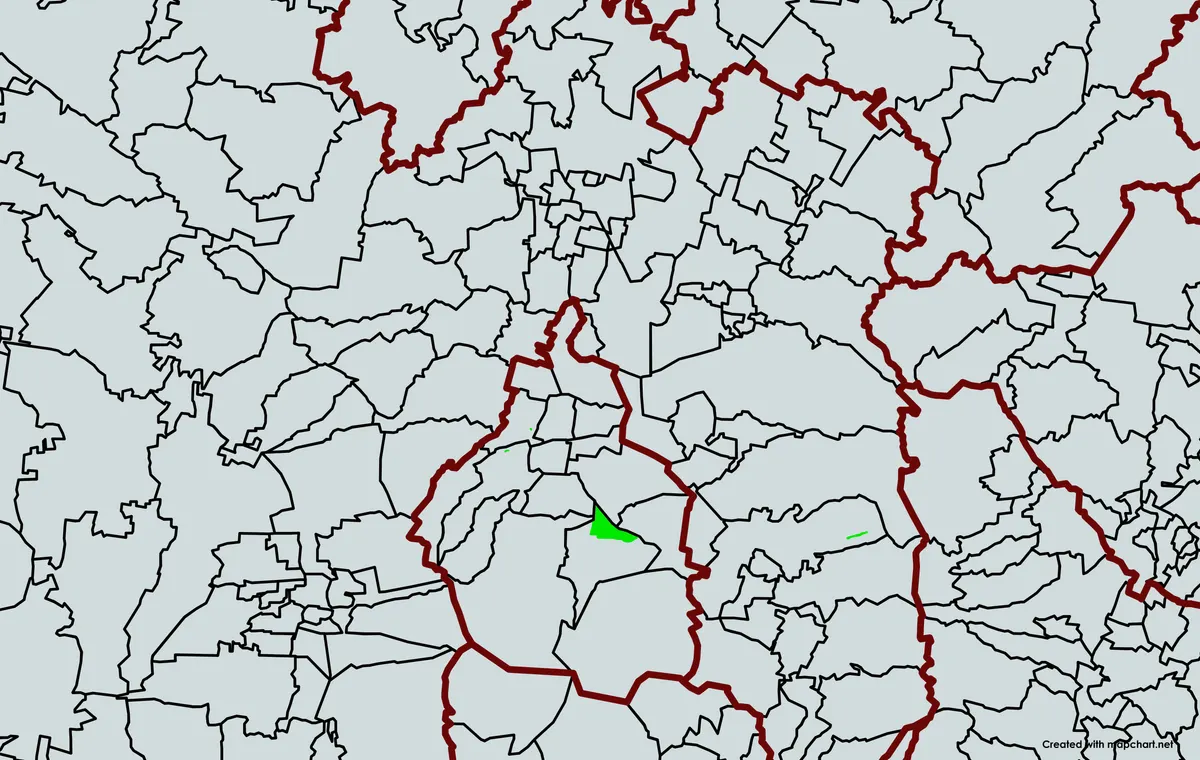
The confirmed wild distribution is now concentrated in Xochimilco. Map by Vaquita marina via Wikimedia Commons, CC BY-SA 4.0.

What does suitable axolotl habitat look like?
An axolotl remains aquatic as an adult, retaining its external gills and finned tail instead of completing the usual salamander transition to life on land. It needs permanent freshwater rather than a temporary breeding pond.
Within Xochimilco, useful habitat tends to include relatively cool, quiet water, cover along canal edges, aquatic vegetation, and a bottom where the animal can forage for worms, insect larvae, small crustaceans, and other prey. Shade from vegetation and chinampa margins can limit heating and provide structure. Submerged plants also offer surfaces for eggs.
Those features do not turn every green-looking canal into healthy habitat. Axolotls have permeable skin and exposed gills, so dissolved oxygen, salinity, ammonia, pollutants, and temperature all affect them directly. A canal can look lush from above while containing poor water or many predators below.
Why are wild axolotls so difficult to find?
Their range is narrow, the water is often turbid, and axolotls spend much of their time near the bottom or under cover. Researchers do not obtain a reliable population total by simply looking into the canals. Surveys instead use standardized nets and repeated sampling to estimate density over suitable habitat.
The figures often quoted online are survey estimates, not exact head counts. Researchers at the National Autonomous University of Mexico reported a steep historical decline in sampled density, from thousands per square kilometer in the late 1990s to a little over 30 per square kilometer in the 2014 survey.
UNAM began a new census after a decade without a comparable system-wide estimate. Its 2024 census announcement described the first phase and the methods being used. A 2026 update said the results were still being processed while describing the wild situation as alarming. Claims that a finished new count has already proved a precise current population should therefore be treated cautiously.
Introduced fish changed the food web
Tilapia and carp are among the major pressures in Xochimilco. They compete for food and can consume axolotl eggs and young. Their feeding activity also disturbs sediments and vegetation, altering the shallow-water habitat.
Pollution and invasive fish interact with habitat fragmentation. An axolotl cannot simply move to another clean lake when one canal becomes unsuitable. Barriers, poor water, and stretches dominated by fish can isolate the remaining pockets.
Climate and water management add further stress. Warmer water holds less dissolved oxygen, while the city's demand for water and the use of treated water to maintain canal levels can change the habitat's chemistry. Conservation must therefore manage the water system, not only breed more animals.
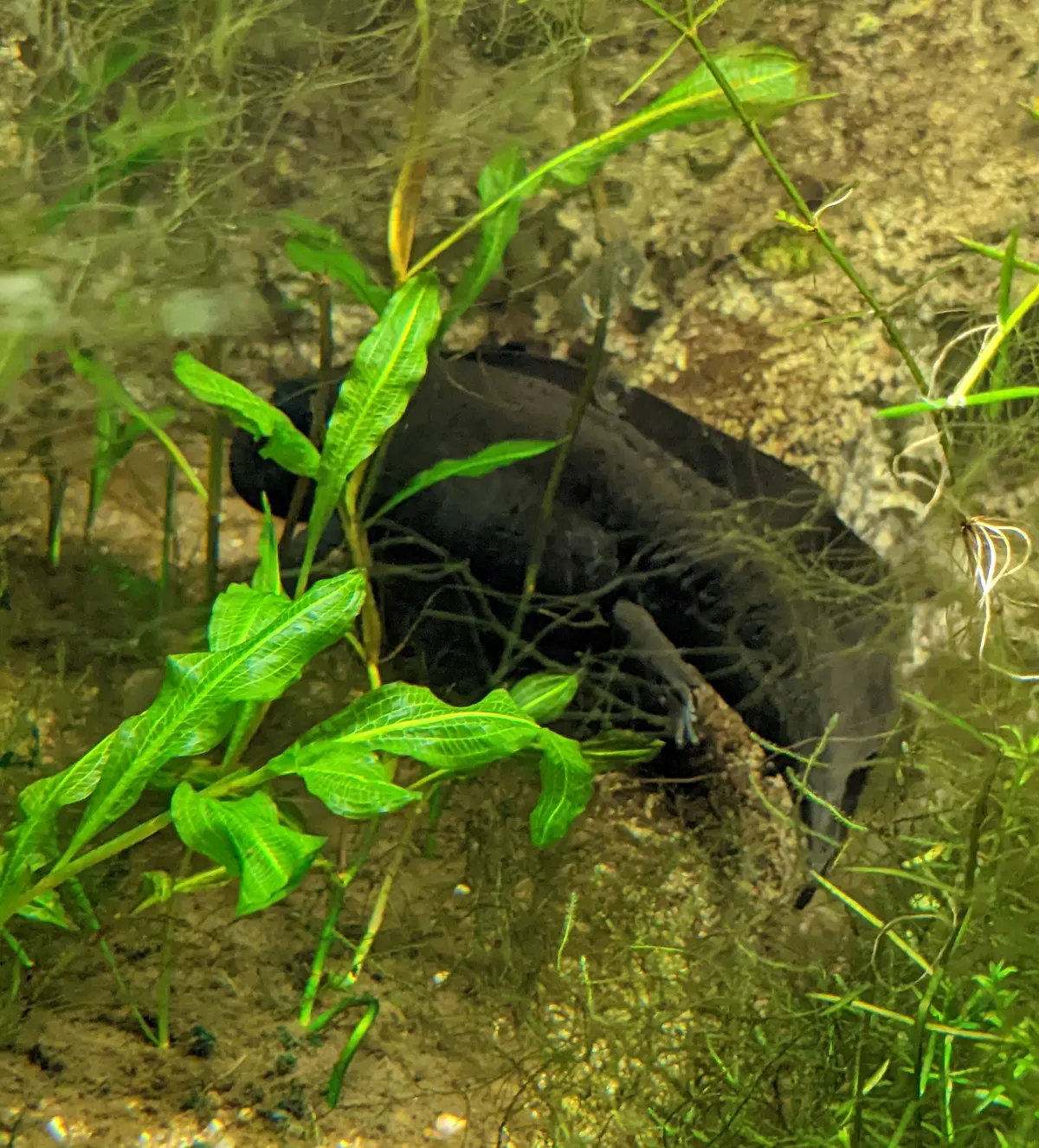
This animal was photographed in a managed habitat, but its dark pigmentation resembles the wild-type form. Photo by FakirNL via Wikimedia Commons, CC BY-SA 4.0.

Why do wild axolotls look different from many pets?
Wild-type axolotls are generally dark brown, olive, or blackish with mottling that blends into mud and vegetation. The pale pink body and red gills familiar from photographs usually belong to a leucistic captive-bred morph.
Color does not decide whether an individual is wild or captive, but the distinction prevents a common misunderstanding. Large captive populations do not mean the wild population is secure. Laboratory and pet lineages have been bred under managed conditions, and releasing them can introduce disease, unsuitable genetics, or additional ecological pressure.
What is a chinampa-refugio?
One conservation approach works with chinampa farmers to create protected canal sections called chinampa-refugios. Simple filters or barriers allow water to pass while excluding larger carp and tilapia. Managers can then improve water quality, monitor the section, restore vegetation, and in carefully controlled programs maintain axolotls with less pressure from introduced fish.
UNAM researchers report that these refuges can support better water conditions and native species. Their current footprint remains small relative to the canal network, so the method is a practical unit of restoration rather than a complete solution. Expanding it depends on long-term cooperation with local farmers, water managers, and communities.
The short answer
Wild axolotls live only in the remaining canal and wetland habitat of Xochimilco, Mexico City. They need permanent cool freshwater, cover, suitable water chemistry, and relief from invasive fish. The same canal landscape that makes their survival possible is under intense urban and ecological pressure, which is why a globally familiar animal can still be critically endangered in nature.
For the species' regeneration, anatomy, diet, breeding, and conservation status, see the full axolotl profile.