
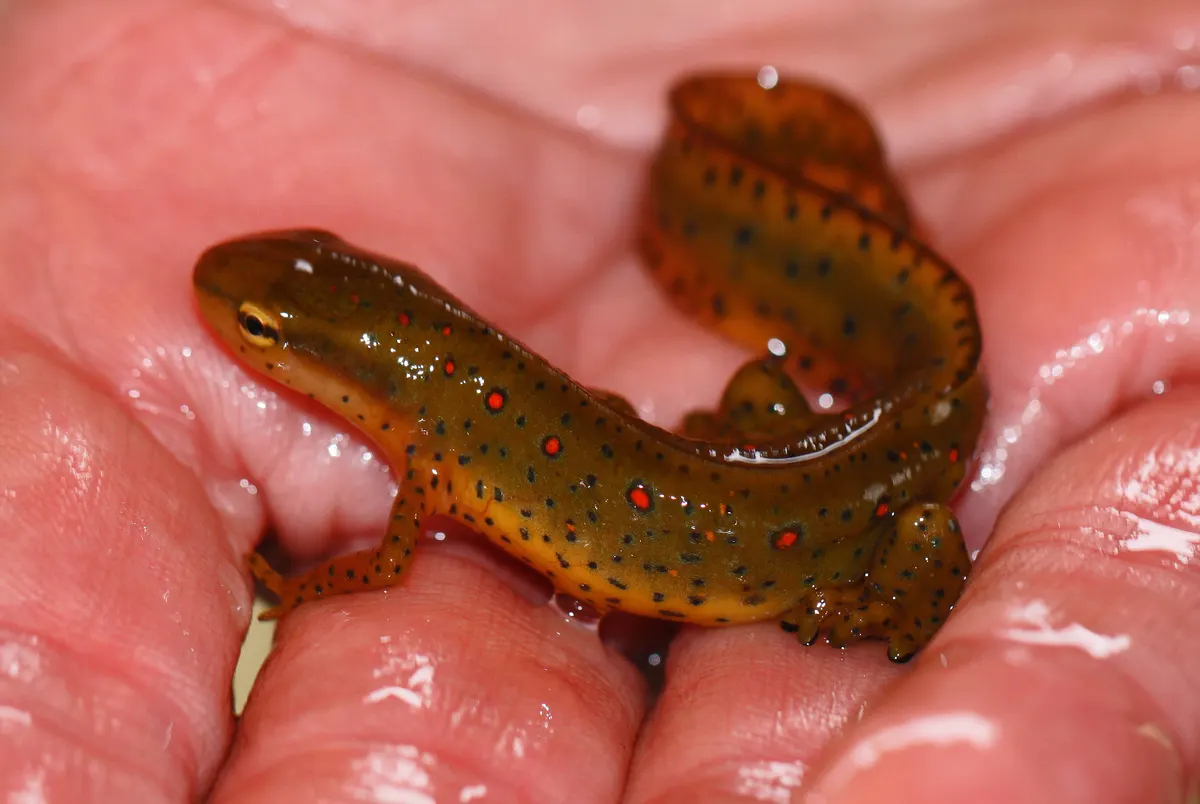
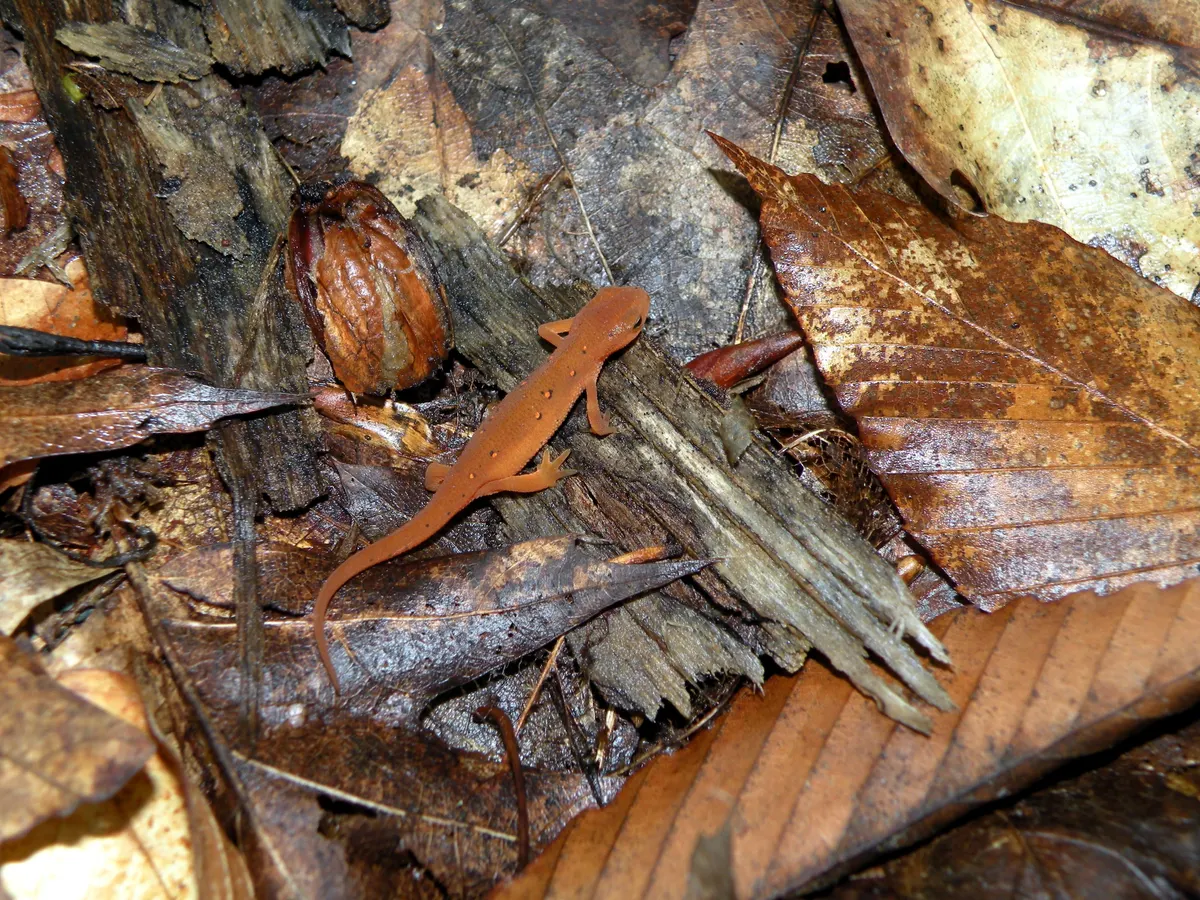
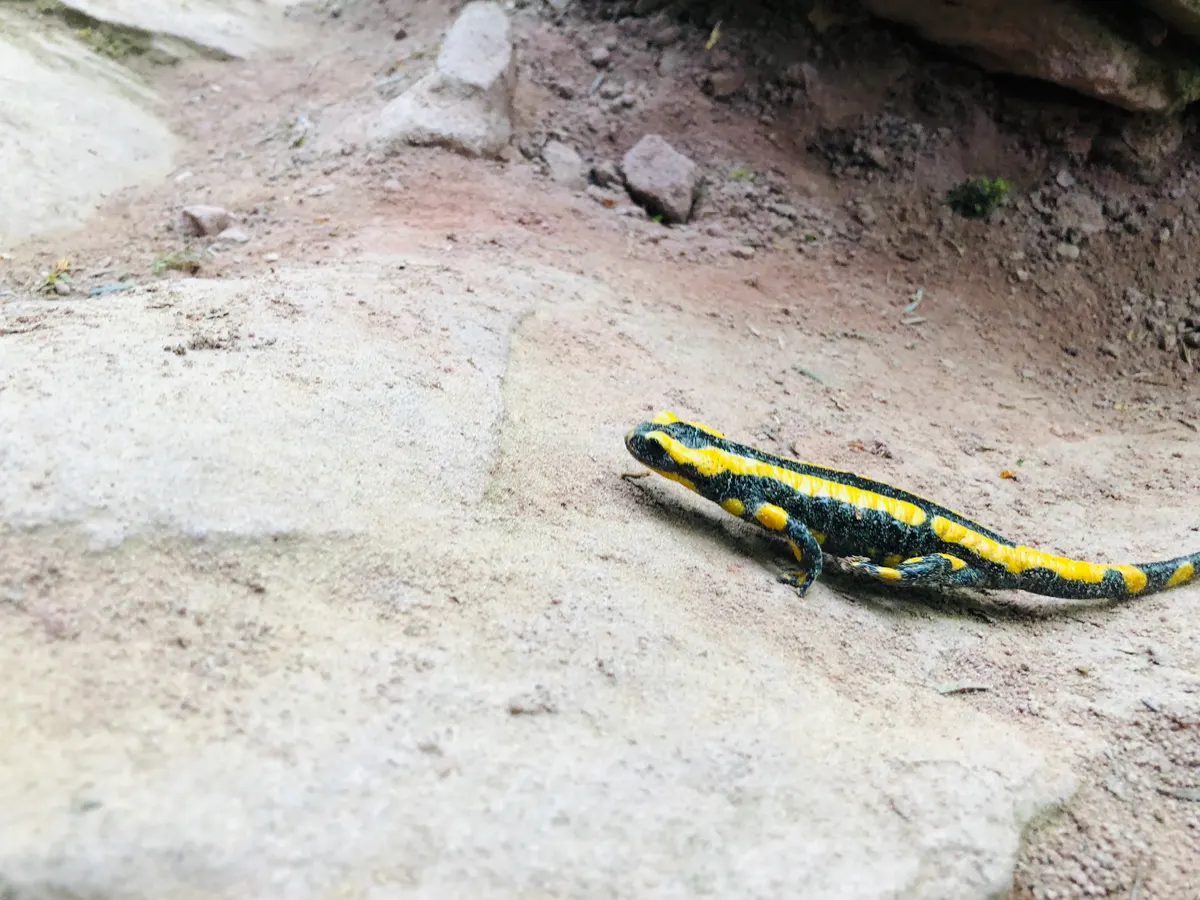
Both species are carnivores that hunt insects, worms, snails, slugs, and small aquatic invertebrates, but they divide their lives between water and land in strikingly different ways:
- Three distinct life stages in the eastern newt: Female eastern newts lay individual fertilized eggs wrapped in submerged pond vegetation. Gilled aquatic larvae hatch and feed in water for several months before transforming into a lung-breathing, rough-skinned terrestrial juvenile called a red eft. The eft wanders the damp forest floor for two to three years—dispersing between ponds—before transforming a second time into an olive-green, fin-tailed aquatic adult that returns to still water to breed.
- Ovoviviparous larval birth in the fire salamander: Adult fire salamanders are strictly terrestrial and poor swimmers. Mating takes place on land via a spermatophore, and females retain developing embryos internally for months. In most populations, the female wades into the shallow edge of a cool forest brook or spring pool to deposit live, gilled aquatic larvae directly into the water; in some high-alpine populations, females give birth on land to fully metamorphosed juveniles.