
Vulpes vulpes / Canis lupus
Fox vs Wolf
Foxes and wolves are both canids, but their size, social systems, prey choices, and use of territory make them very different animals in the field.
By An Nguyen · Updated
At a glance
Published species data from both WildlifeDB profiles, aligned trait by trait. Size metrics highlight the larger value with a relative bar.
- Scientific name
- FoxVulpes vulpes
- WolfCanis lupus
- Classification
- FoxMammalia · Canidae
- WolfMammalia · Canidae
- Native range
- FoxNorth America, Europe, Asia, Africa
- WolfNorth America, Europe, Asia
- Primary habitat
- FoxForest
- WolfForest
- Diet
- FoxCarnivore
- WolfCarnivore
- Typical food
- FoxMice, Voles, Rabbits, Birds, Insects
- WolfDeer, Elk, Moose, Bison, Caribou
- Body length
- Fox18 inches – 35 inches
- Wolf3.5 feet – 6.5 feet
- Shoulder height
- Fox14 inches – 20 inches
- Wolf2 feet – 3 feet
- Weight
- Fox6 pounds – 24 pounds
- Wolf50 pounds – 175 pounds
- Top speed
- FoxUp to 30 mph in short bursts
- WolfUp to 37 mph in short chases
- Wild lifespan
- Fox3 to 6 years
- Wolf6 to 8 years
- Social pattern
- FoxNocturnal hunting, Den rearing, Scent marking
- WolfPack living, Cooperative hunting, Howling
- Key adaptations
- FoxExcellent hearing, Bushy tail for balance, Sharp teeth
- WolfKeen sense of smell, Endurance running, Strong jaws
- Conservation
- FoxLeast Concern · Stable
- WolfLeast Concern · Stable
- Reproduction
- FoxAbout 52 days; Usually 4 to 6 kits
- WolfAbout 63 days; Usually 4 to 6 pups
Seven times the weight, one family
An adult red fox, Vulpes vulpes, is about 18–35 inches long and weighs 6–24 pounds. A gray wolf, Canis lupus, spans roughly 3.5–6.5 feet and weighs 50–175 pounds. At the upper end a wolf can be more than seven times the mass of a fox.
Shoulder height tells the same story: foxes stand around 14–20 inches, wolves about 2–3 feet. Both are canids with pointed ears, long muzzles, and scent-based communication, and both live across northern temperate landscapes — but they are not two sizes of the same predator.
Different genus, not just different size
The two animals sit in separate genera. The red fox is Vulpes; the wolf is Canis, the genus that also holds the coyote. A fox is not a small wolf in the way a coyote is sometimes mistaken for one, and the gap between fox and wolf is wider than the gap between coyote and wolf.
The bushy tail and the paw print
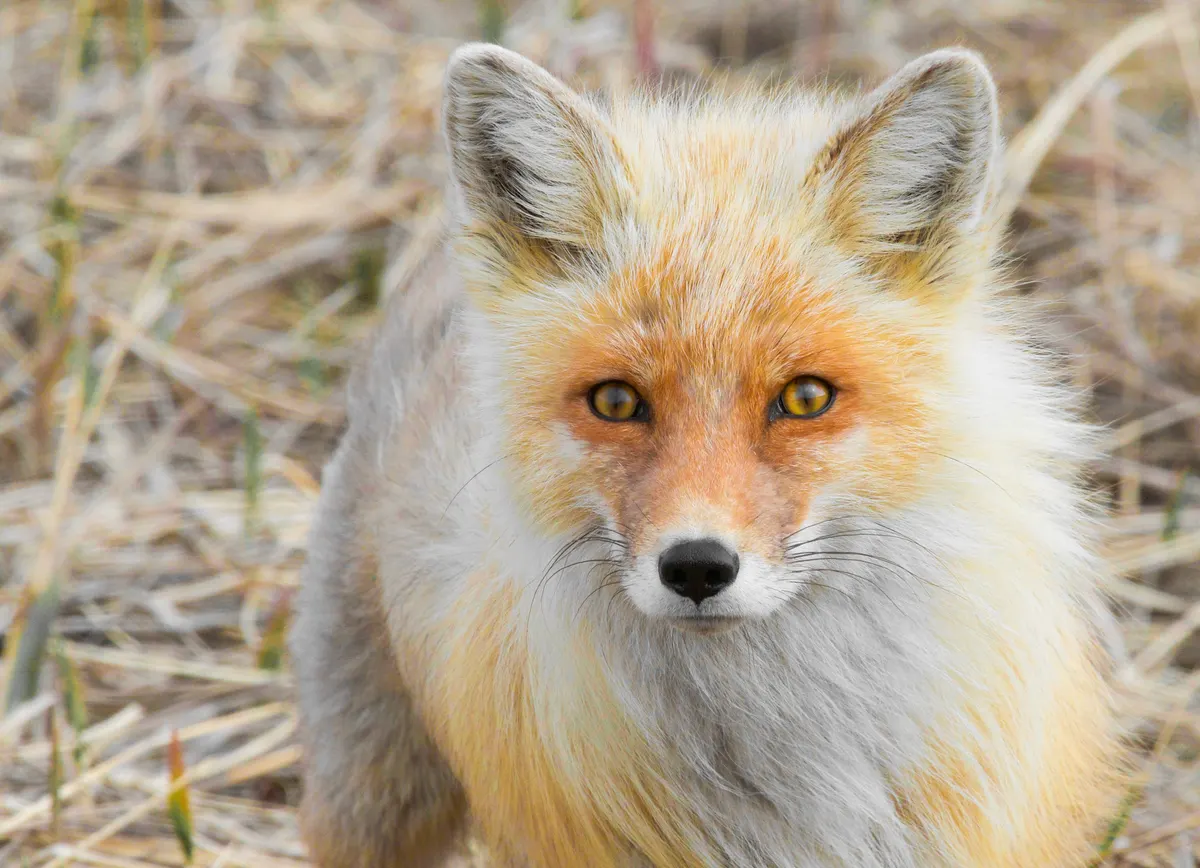
A fox has a narrow face, fine legs, and a very bushy tail that can look nearly as prominent as its body, used for balance and for warmth when curled up. It is often held low or straight behind the animal. A wolf's tail is less plume-like relative to the body and usually hangs low when the animal is relaxed.
Distance distorts apparent size in both directions, so tracks are the stronger evidence. Wolf prints are markedly larger and more elongated than fox prints, and a stretch of trail showing stride length is better than any single track.
Mice against moose
Prey size is the real division. Foxes take mice, voles, rabbits, birds, insects, and seasonal fruit or berries, and a fox can hear rodents moving underground before it pounces. They also cache surplus food by burying it. The diet shifts quickly with what is available locally, which is one reason red foxes persist near people; they remain classed as carnivores because animal prey is central to their ecology.
Wolves concentrate on large ungulates — deer, elk, moose, bison, caribou, and wild boar. A pack can test, pursue, and isolate prey no fox could approach. Wolves also scavenge and take small animals, but large prey is the contrast that defines this pair.
Solitary pouncer against pack traveller
Red foxes usually hunt alone, especially at dusk and at night, listening for prey beneath grass or snow and finishing with a steep, controlled pounce. They scent-mark routes and dens, and their social unit is smaller and less coordinated than a pack. Fox kits play-fight to practise the hunting moves they will need.
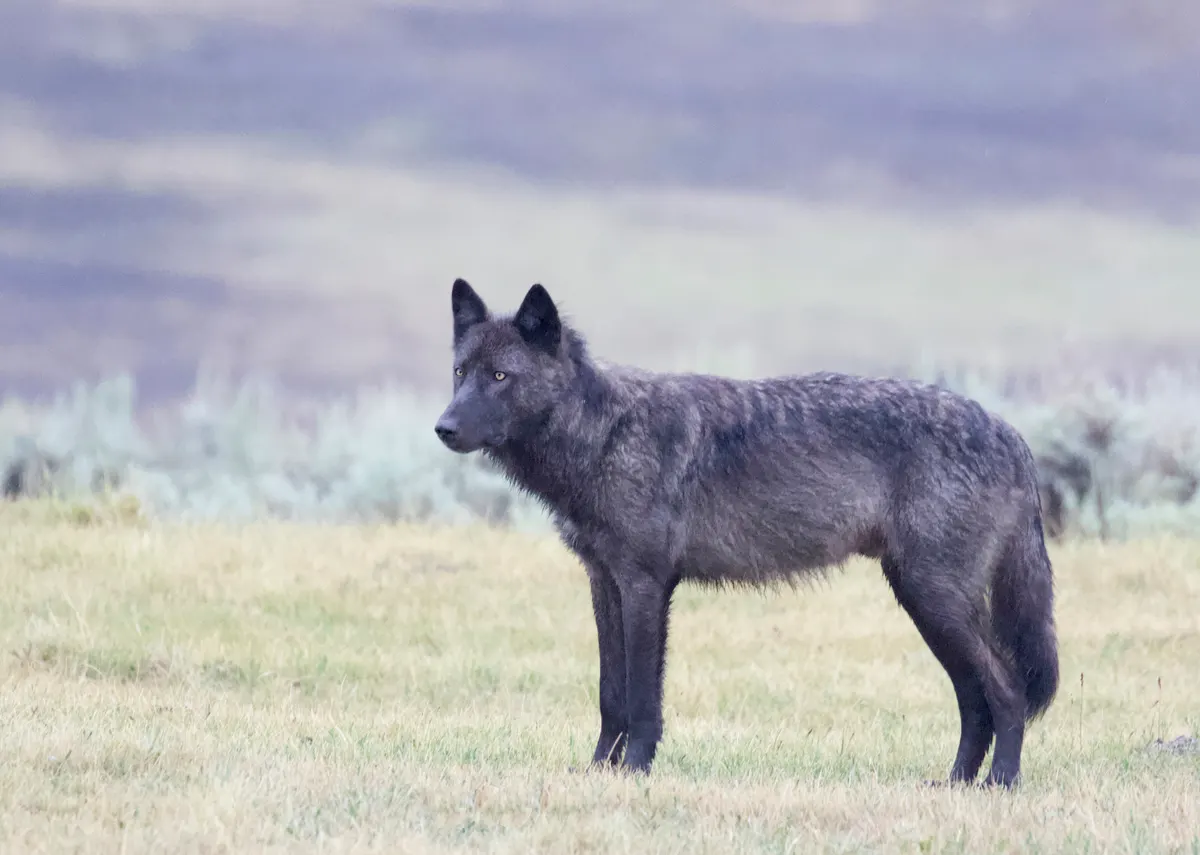
Wolves live in family-based packs across much of their range: related adults and their offspring travel, communicate, and help raise pups together. Howling maintains contact across distance, while scent marks and visual signals organise relationships and territory. Both species use dens for young, but only one is organised around cooperation.
Why a fox fits into farmland and cities
Foxes exploit hedgerows, forest edges, farmland, and urban margins wherever small prey and cover remain. The red fox's range is one of the widest of any wild carnivore, spanning North America, Europe, Asia, and North Africa, and its coats vary from red through black and silver.
Wolves need larger connected landscapes with enough prey for several related animals, and they are far more sensitive to direct persecution and habitat fragmentation. Both species use forest, but forest alone does not sustain a wolf pack the way it can sustain a fox.
What to check in an overlap zone
Fox and wolf ranges overlap across parts of North America, Europe, and Asia, particularly in forested and mixed country — and wolves are listed among the red fox's predators, so the two do meet.
Look for the smaller body, narrow muzzle, oversized tail, and solitary hunting of a fox. A wolf is taller, heavier, longer-legged, and more likely to leave signs of a group moving through the same area. Neither animal is a stage in the other's life cycle.