
Gulo gulo / Mellivora capensis
Wolverine vs Honey Badger
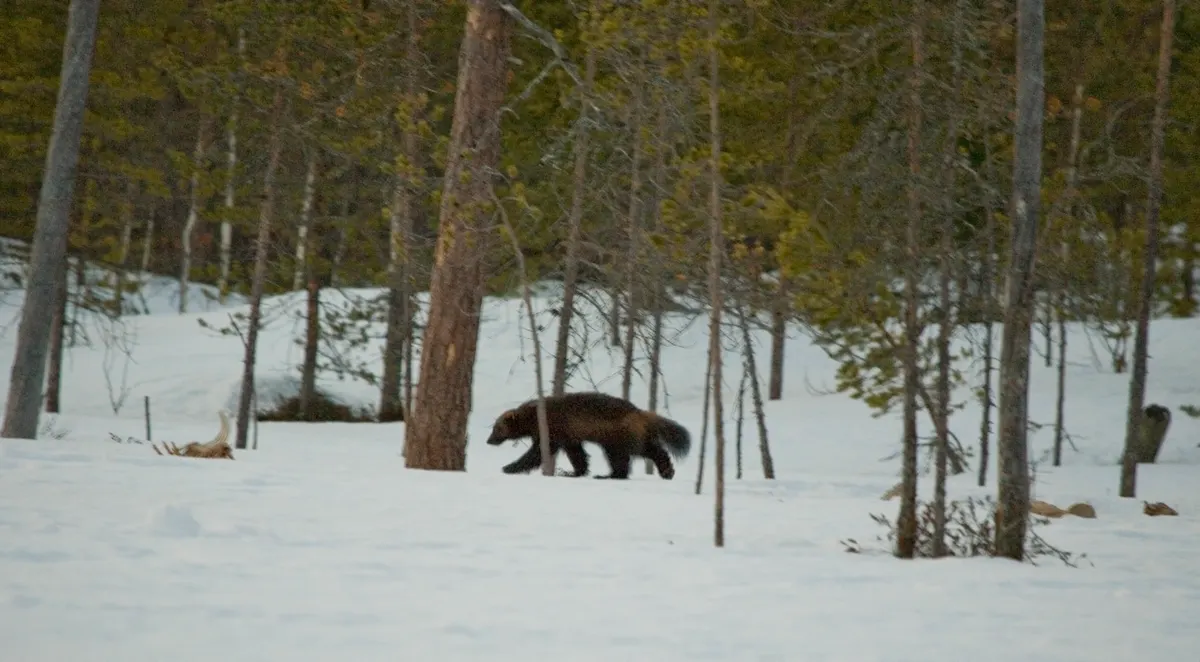
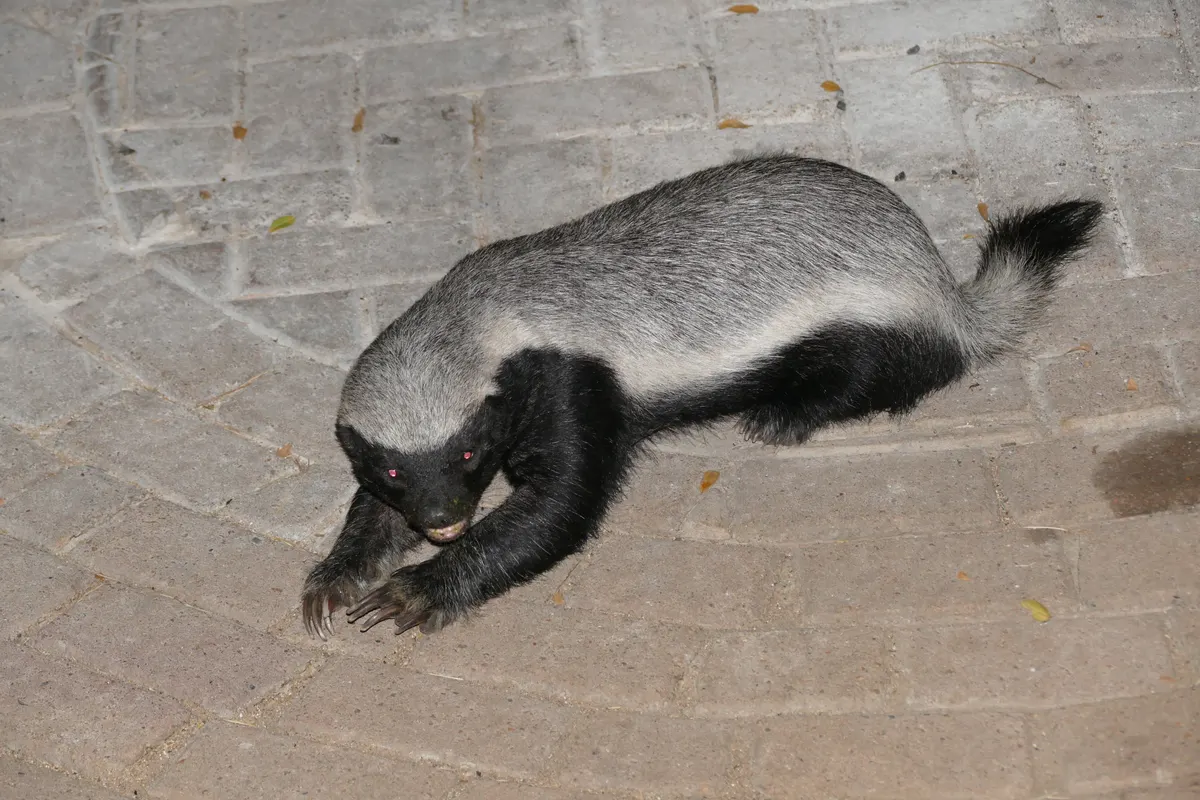
Wolverines and honey badgers are separate mustelid genera on different continents that arrived at a similar build, a similar diet breadth, and the same reputation for confronting larger animals.
By An Nguyen · Updated
At a glance
Published species data from both WildlifeDB profiles, aligned trait by trait. Size metrics highlight the larger value with a relative bar.
- Scientific name
- WolverineGulo gulo
- Honey BadgerMellivora capensis
- Classification
- WolverineMammalia · Mustelidae
- Honey BadgerMammalia · Mustelidae
- Native range
- WolverineNorth America, Europe, Asia
- Honey BadgerAfrica, Asia
- Primary habitat
- WolverineForest
- Honey BadgerSavanna
- Diet
- WolverineOmnivore
- Honey BadgerOmnivore
- Typical food
- WolverineCarrion, Small mammals, Birds, Berries, Roots
- Honey BadgerRodents, Snakes, Insects, Bee larvae, Honey
- Body length
- Wolverine26 inches – 34 inches
- Honey Badger22 inches – 30 inches
- Shoulder height
- Wolverine14 inches – 18 inches
- Honey Badger9 inches – 11 inches
- Weight
- Wolverine20 pounds – 55 pounds
- Honey Badger14 pounds – 35 pounds
- Top speed
- WolverineUp to 30 mph in short bursts
- Honey BadgerSteady trotting and explosive digging; short bursts when chasing prey
- Wild lifespan
- Wolverine5 to 13 years
- Honey BadgerAbout 7 to 10 years
- Social pattern
- WolverineScavenging, Food caching, Territorial marking
- Honey BadgerSolitary foraging, Burrow digging, Hive raiding
- Key adaptations
- WolverinePowerful jaws that crush frozen bone, Thick frost-resistant fur, Large snowshoe-like paws
- Honey BadgerThick loose skin, Powerful digging claws, Anal scent glands
- Conservation
- WolverineLeast Concern · Stable
- Honey BadgerLeast Concern · Decreasing
- Reproduction
- Wolverine30 to 50 days after delayed implantation; Usually 2 to 3 kits per litter
- Honey BadgerAbout 50 to 70 days (after delayed implantation); Usually 1 or 2 pups
One family, two continents, one reputation
The wolverine, Gulo gulo, and the honey badger, Mellivora capensis, sit in separate genera within Mustelidae, the weasel family. They do not overlap anywhere: the wolverine occupies boreal forest, taiga and alpine tundra across North America, Europe and Asia; the honey badger occupies savanna, dry woodland, scrubland and semi-desert across Africa and into Asia.
What they share is a body plan — stocky, low, heavily clawed, disproportionately strong — and the reputation that follows from it. The wolverine's profile records it driving grizzly bears and wolf packs off kills; the honey badger's records it attacking venomous snakes and raiding hives through the stings.
The wolverine is the heavier animal
A wolverine runs 26 to 34 inches in body length, stands 14 to 18 inches at the shoulder, and weighs 20 to 55 pounds. A honey badger runs 22 to 30 inches, stands 9 to 11 inches, and weighs 14 to 35 pounds.
The wolverine is the larger animal on every measure, and the shoulder height is the clearest gap: it stands roughly half again as tall. The honey badger is the flatter, lower-slung of the two, which suits an animal that spends much of its time digging into ground and hives.
Jaws for frozen bone against jaws for hives and snakes
Both have crushing jaws, aimed at different materials. The wolverine's are built to work frozen carrion — its profile records the strongest bite force relative to body size among carnivores, enough to crush frozen bone and meat. In a taiga winter, a carcass no other scavenger can open is a reliable food source.
The honey badger's broad jaws work on rodents, snakes, insects and bee larvae. Its specialisation is less about force than tolerance: it raids beehives and endures repeated stings, and it hunts venomous snakes.
Loose skin against frost-resistant fur
The two defences are unrelated. A honey badger's skin is thick and loose enough that the animal can twist inside it and bite an attacker that already has hold of it. Against lions, leopards and hyenas — its recorded predators — that buys the one thing that matters.
The wolverine's hide is a thermal tool rather than a defensive one. Its fur is hydrophobic and frost-resistant, valued by northern peoples for lining parka hoods because exhaled moisture does not freeze into it. Its protection against wolves, bears and mountain lions is bulk and jaws.
A winter carcass against a night of digging
Both are omnivores with wide menus. The wolverine takes carrion, small mammals, birds, caribou calves, berries and roots, caches food, and covers long distances — up to 15 miles a day through deep snow on oversized paws that work as snowshoes. A single male may patrol as much as 240 square miles.
The honey badger takes rodents, snakes, insects, bee larvae, honey, birds, carrion and roots, forages alone, and may travel many miles in one night. Despite the name, animal prey makes up far more of its diet than honey. It digs dens that stay cooler than the surrounding savanna.
Both pause the pregnancy
Delayed implantation appears in both species: a fertilised embryo waits before implanting, so birth timing is set separately from mating. A wolverine's active gestation runs 30 to 50 days after that pause, producing 2 to 3 kits, with births timed to spring food. A honey badger's runs about 50 to 70 days, producing 1 or 2 pups.
For the wolverine the mechanism is clearly tied to a short northern season. In the honey badger it operates in a climate without that hard seasonal edge, which makes the shared trait more interesting than a simple convergence.
Taiga and alpine tundra against savanna and scrub
Nothing about their ranges overlaps. The wolverine needs cold, and much of its recorded behaviour — caching, frozen-carcass feeding, snowshoe paws, frost-resistant fur — only makes sense there. The honey badger needs diggable ground and a year-round prey supply.
Both are wide-ranging animals at low density that require a great deal of space per individual, which is the practical thing they have in common as conservation subjects.
Both Least Concern, one of them falling
Each is listed Least Concern, but the trends differ: the wolverine's population is recorded as stable, the honey badger's as decreasing. Humans appear in the honey badger's predator list and not the wolverine's.
A shared IUCN label can hide opposite directions of travel, and that is the case here.