
Vulpes lagopus / Vulpes zerda
Arctic Fox vs Fennec Fox
Arctic and fennec foxes are both Vulpes species whose bodies solve opposite thermal problems: the arctic fox is built to keep heat in, the fennec to get rid of it.
By An Nguyen · Updated
At a glance
Published species data from both WildlifeDB profiles, aligned trait by trait. Size metrics highlight the larger value with a relative bar.
- Scientific name
- Arctic FoxVulpes lagopus
- Fennec FoxVulpes zerda
- Classification
- Arctic FoxMammalia · Canidae
- Fennec FoxMammalia · Canidae
- Native range
- Arctic FoxNorth America, Europe, Asia
- Fennec FoxAfrica, Asia
- Primary habitat
- Arctic FoxPolar
- Fennec FoxDesert
- Diet
- Arctic FoxCarnivore
- Fennec FoxCarnivore
- Typical food
- Arctic FoxLemmings, Voles, Birds, Bird eggs, Carrion
- Fennec FoxInsects, Rodents, Birds, Bird eggs, Lizards
- Body length
- Arctic Fox18 inches – 27 inches
- Fennec Fox9 inches – 16 inches
- Shoulder height
- Arctic Fox10 inches – 12 inches
- Fennec Fox8 inches – 12 inches
- Weight
- Arctic Fox6 pounds – 17 pounds
- Fennec Fox1.5 pounds – 3.5 pounds
- Top speed
- Arctic FoxSteady long-distance travel across ice and tundra; quick pounces on rodents
- Fennec FoxQuick dashes when hunting or escaping predators
- Wild lifespan
- Arctic FoxAbout 3 to 6 years
- Fennec Fox10 to 12 years
- Social pattern
- Arctic FoxLemming hunting, Carrion scavenging, Den rearing
- Fennec FoxNocturnal hunting, Burrow digging, Ear thermoregulation
- Key adaptations
- Arctic FoxDense multi-layer fur, Furry foot pads, Compact ears and muzzle
- Fennec FoxOversized ears for heat loss, Thick fur on feet for hot sand, Acute hearing for underground prey
- Conservation
- Arctic FoxLeast Concern · Stable
- Fennec FoxLeast Concern · Stable
- Reproduction
- Arctic FoxAbout 52 days; Usually 5 to 10 pups; occasionally more in peak lemming years
- Fennec FoxAbout 50 days; Usually 2 to 5 kits per litter
The same genus, opposite thermal problems
The arctic fox, Vulpes lagopus, and the fennec fox, Vulpes zerda, are both true foxes in the genus Vulpes. Neither is likely to be mistaken for the other in a photograph, which makes them a useful pair for a different reason: they show what the same basic canid body does when the temperature requirement is reversed.
The arctic fox lives on tundra, coastal plain and the edge of the sea ice across North America, Europe and Asia. The fennec lives in the Sahara, the Arabian Desert and semi-desert scrub. Almost every visible difference between them traces back to that split.
Ears that shed heat against ears that hold it
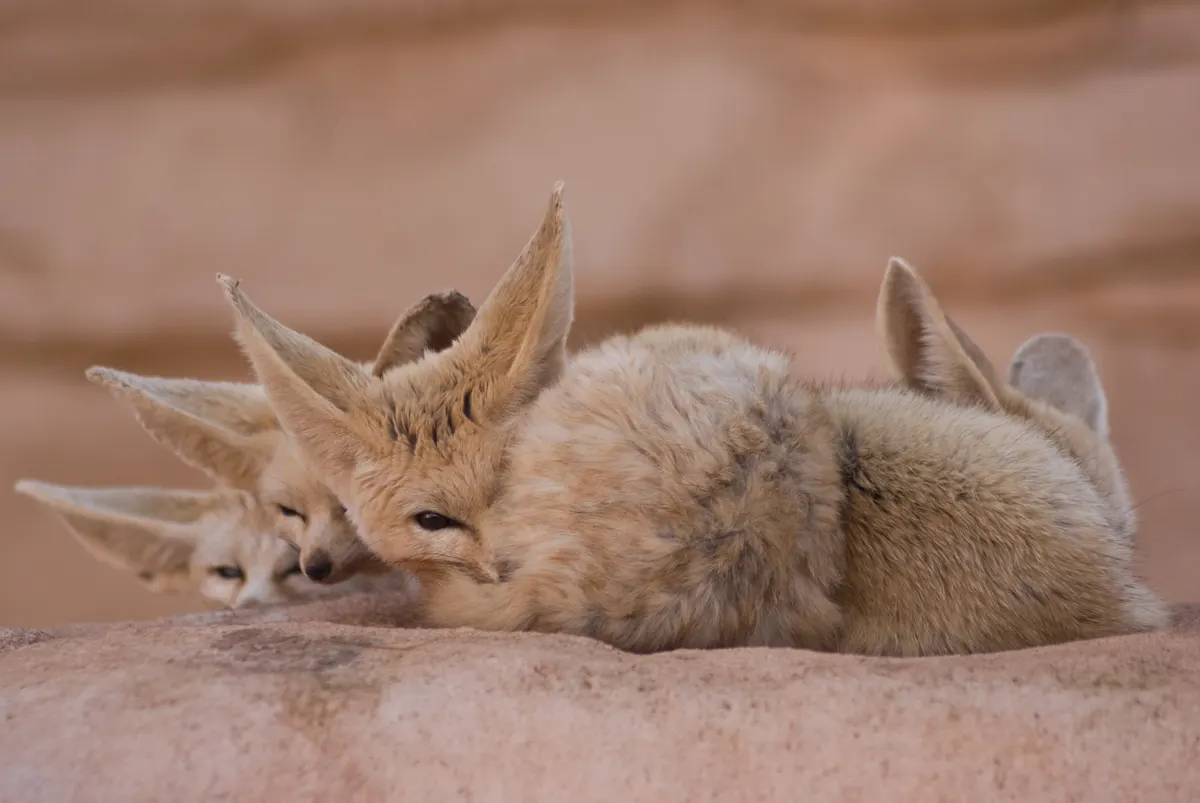
The fennec has the largest ears relative to body size of any canid — up to about six inches on an animal smaller than most house cats. Large, thin, well-supplied ears work as radiators: they give a hot animal a large surface to lose heat from. They double as listening equipment, and a fennec can locate prey moving under desert sand.
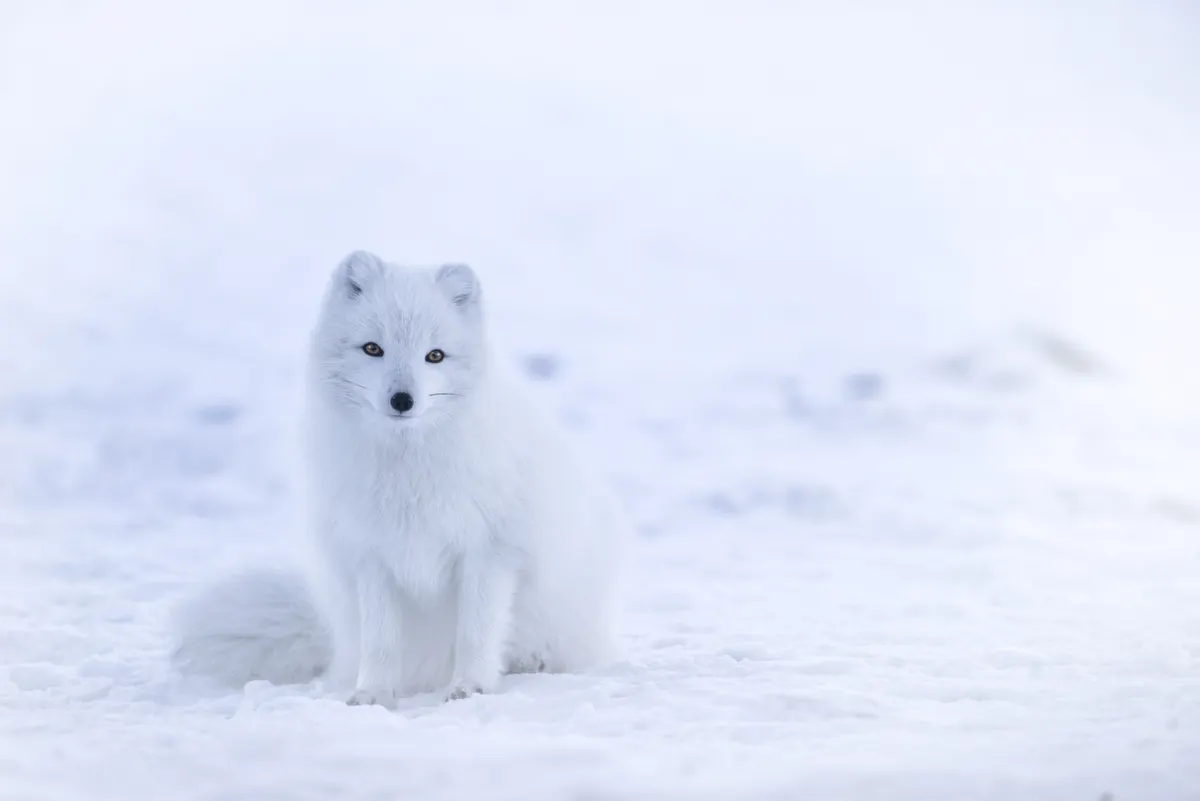
The arctic fox does the reverse. Its ears are compact and rounded and its muzzle is short, which reduces the exposed surface through which body heat escapes. The same organ is small for one fox and enormous for the other because one is trying to keep warmth and the other is trying to lose it.
Close to five times the weight
An arctic fox runs 18 to 27 inches in body length, stands 10 to 12 inches at the shoulder, and weighs 6 to 17 pounds. A fennec runs 9 to 16 inches, stands 8 to 12 inches, and weighs 1.5 to 3.5 pounds.
At the top of each range that is a gap of close to five to one. Size itself is part of the thermal answer: a larger, rounder body loses heat more slowly, which suits the Arctic and would be a liability in the Sahara.
Fur on the soles, for ice and for hot sand
Both foxes have furred foot pads, and the shared trait solves two unrelated problems. On the arctic fox the fur gives grip on ice and insulates the feet from it — the species name lagopus, "hare-foot", refers to it. On the fennec the same fur protects the soles from sand hot enough to burn.
Coats differ more plainly. The arctic fox carries dense multi-layer fur and switches between a white winter coat and a brown or gray summer one, so its camouflage tracks the season. The fennec keeps one sand-coloured coat year round, because its background does not change.
Lemming booms against a steady desert menu
Both are classed as carnivores with broad, opportunistic diets. The arctic fox concentrates on lemmings and voles, adding birds, eggs, carrion, insects and berries, and it will scavenge seal remains — it is known to follow polar bears and feed on what they leave.
The fennec takes insects, rodents, birds, eggs and lizards, plus roots and fruit. Water is the constraint rather than prey: a fennec meets most of its needs from food and rarely has to drink. It hunts at night and shelters in deep burrows that stay cooler than the surface through the day.
The smaller fox lives longer
Recorded wild lifespan runs about 3 to 6 years for the arctic fox and 10 to 12 years for the fennec — two to three times longer for the smaller animal, which is the opposite of the usual pattern among related mammals.
The profiles do not settle the cause, but the predator lists differ in a suggestive way. Arctic foxes are taken by wolves, polar bears, golden eagles and red foxes; fennecs by eagles, jackals and hyenas. A food supply that swings with the lemming cycle adds a second source of mortality that the desert fox does not face in the same form.
Litter size tracks the food supply
Arctic foxes carry about 52 days and produce 5 to 10 pups, and in peak lemming years litters can exceed a dozen — reproduction scales up when prey is briefly abundant. Fennecs carry about 50 days and produce 2 to 5 kits, a steadier output matching a steadier food base.
Arctic fox dens are long-term structures with many entrances that families can reuse for decades. Fennec burrows serve the immediate problem of daytime heat.
Both Least Concern, and both stable
Each species is listed as Least Concern with a stable population trend, which makes this one of the few comparisons here without a conservation contrast. Humans appear in the arctic fox's recorded predator list and not the fennec's, but neither population is currently assessed as declining.