
Animal guides
Why Are Cheetahs So Fast?
Speed is a cheetah's hunting tool, but it only lasts for a short, demanding sprint.
By An Nguyen · Published · Updated
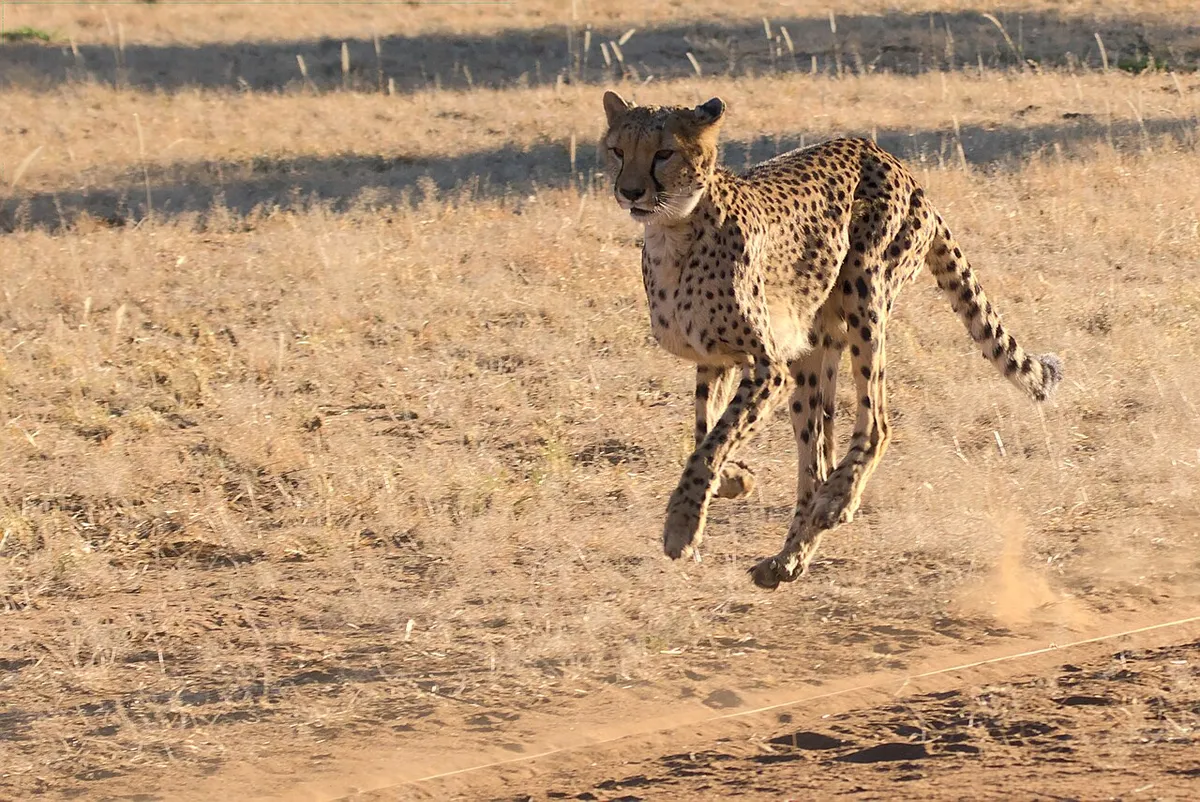
Cheetahs are fast because their bodies are built around one job: a short, explosive chase over open ground. They are not simply "normal cats that run faster." Their skeleton, muscles, claws, breathing system, and tail all push in the same direction.
That specialization makes a cheetah the fastest land animal, but it also creates limits. A cheetah is a sprinter, not an endurance runner. The animal has to get close before the chase starts, accelerate hard, turn with the prey, and end the attempt quickly.
The body works like a spring
A cheetah's flexible spine is one of the clearest reasons it can run so quickly. During a sprint, the back bends and extends, helping the front and rear legs reach farther than they could with a stiffer body. That long stride means the cat covers more ground with each bound.
The shoulders and hips also help. Cheetahs have a light, streamlined build, long legs, and a narrow waist. Their paws are different from many other cats: the claws are only partly retractable, which gives extra grip on the ground. The paw pads are hard and ridged, helping with traction when the animal accelerates or changes direction.
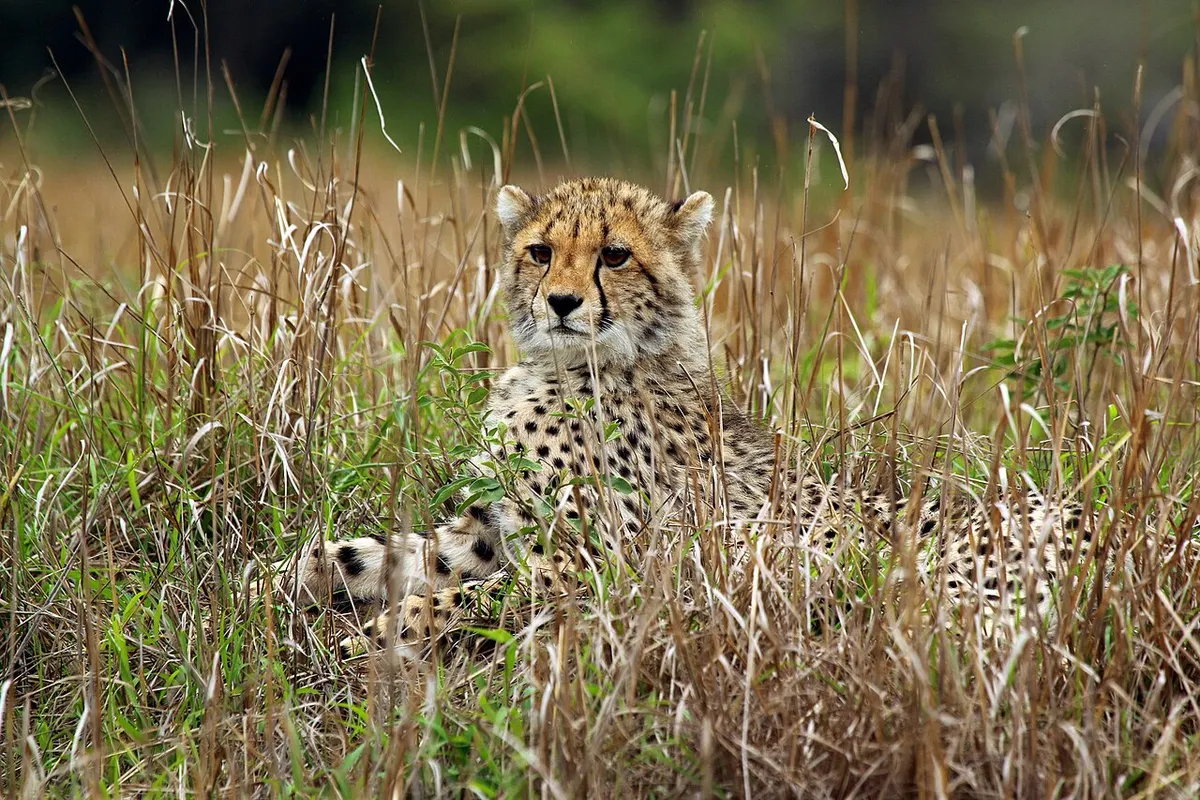
Photo by Charles J. Sharp via Wikimedia Commons, CC BY-SA 4.0.
_cub.jpg)
Speed is also about steering
Running fast is only useful if the cheetah can still control the chase. Prey animals rarely run in a straight line. Gazelles and other targets may turn sharply to break the attack.
That is where the cheetah's tail matters. The long tail works as a counterbalance. When the body turns one way, the tail can swing to help stabilize the animal. This is closer to steering a fast vehicle than simply dragging a tail behind.
The head and respiratory system are also part of the sprint package. Large nasal passages and lungs help move air quickly during intense effort. The whole system is tuned for a brief burst of power.
Speed has a limit
A cheetah cannot sprint at top speed for long. The chase uses a lot of energy and produces heat quickly, so the cat needs time to recover after an attempt. If it misses, it may not be able to chase again immediately.
This is why stalking distance matters. A cheetah usually needs to get close before it runs. Speed helps finish the hunt, but patience and positioning make the sprint possible.
That limit also explains why cheetahs are not built like leopards or lions. They trade some strength and climbing power for acceleration and agility on open ground. The result is very effective in the right habitat, but less useful in dense cover or long pursuits.
Fast is not the same as dominant
Top speed does not make a cheetah the strongest cat in its landscape. Larger predators may steal kills, and cubs face high mortality. The sprint package works best in open savanna and grassland where prey can be spotted and pursued over short distances.
Compared with a leopard, a cheetah is more specialized for running and less for climbing or hauling heavy carcasses into trees. For a direct comparison of those hunting styles, see leopard vs cheetah.
The short answer
Cheetahs are fast because their entire body is specialized for a brief sprint: flexible spine, long legs, gripping claws, strong breathing capacity, and a tail that helps with balance. They are built to accelerate and turn quickly, not to run at maximum speed all day.
For range, hunting behaviour, and conservation status, see the full cheetah profile.